
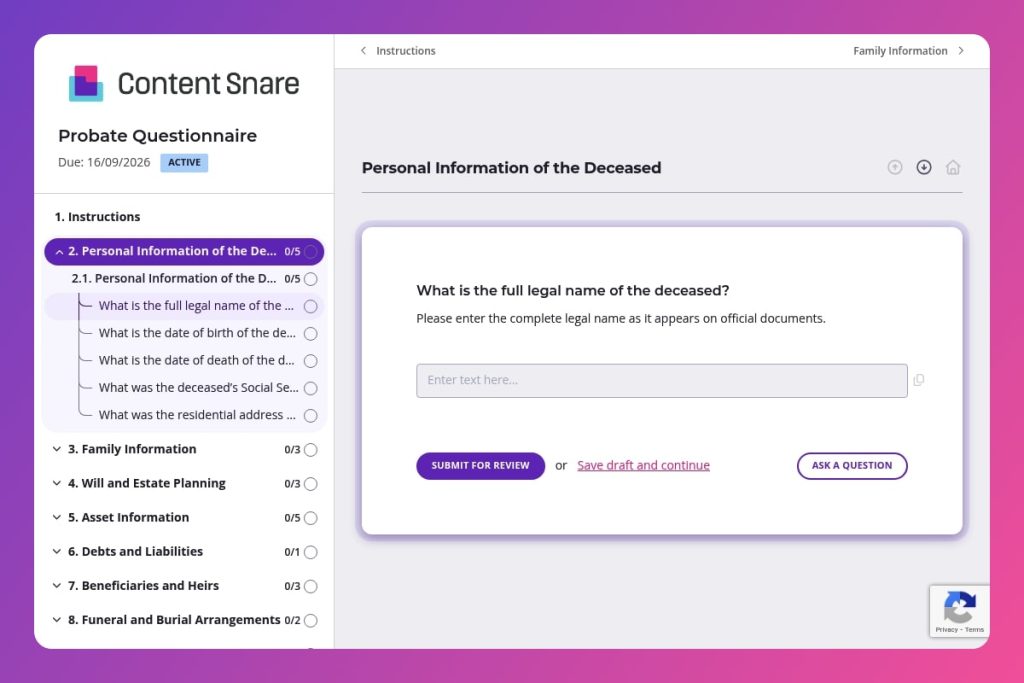


A structured intake form that collects comprehensive estate information including deceased details, assets, debts, beneficiaries, and will documentation for probate cases.

Probate attorneys and estate law firms who need to gather complete client information upfront and reduce time-consuming back-and-forth during case intake.

Send to clients 48 hours before the initial consultation to arrive prepared with a complete picture of the estate's complexity, potential disputes, and documentation status.
How many hours does your firm waste chasing down missing asset details, tracking beneficiary information, and piecing together incomplete estate data? Probate cases generate endless back-and-forth emails and phone calls - frustrating your team and delaying settlements. A probate questionnaire changes that. It's a structured online form that captures every critical detail upfront: deceased information, assets, debts, beneficiaries, and potential disputes.
This post walks you through what a probate questionnaire should include, how to deploy it effectively with clients, and where to grab a free template you can customize today. You'll reduce intake time, eliminate information gaps, and keep cases moving forward. Let's break it down.
Personal Information of the Deceased
Use this section to confirm identity and vital statistics needed for filings and record requests.
Family Information
Capture next-of-kin data to establish notice requirements, intestacy analysis, and minor-dependent considerations.
Will and Estate Planning
Confirm existence and custody of testamentary documents and any prior counsel involvement.
Asset Information
Inventory probate and non-probate assets to scope administration and plan marshaling.
Debts and Liabilities
Document creditor landscape to plan claims, notices, and solvency analysis.
Beneficiaries and Heirs
Identify takers under the will or via intestacy and flag any specific gifts.
Funeral and Burial Arrangements
Note disposition wishes and arrangements that may affect estate liquidity and immediate reimbursements.
Additional Information or Concerns
Surface risk items and disputes that can alter forum, timelines, or strategy.
Send the form before the initial consultation: Get clients to complete the probate questionnaire 48 hours before your first meeting. You'll arrive prepared with a clear picture of the estate's complexity, potential disputes, and missing documentation. This transforms intake calls from fact-finding missions into strategic planning sessions where you can immediately address concerns about will validity, creditor claims, or beneficiary conflicts.
Include a brief intro explaining what to gather: Most clients don't have asset details or Social Security numbers memorized. Add a short note at the top listing what they'll need: the will, property deeds, bank statements, insurance policies, and a list of debts. This prevents half-completed forms and reduces follow-up requests. Consider creating a simple PDF checklist they can download before starting.
Flag incomplete asset sections for immediate follow-up: Real estate holdings, investment accounts, and life insurance policies are frequently underreported in initial submissions. Review these sections first and send a targeted follow-up email within 24 hours if anything looks sparse. Clients often forget about old 401(k)s, safe deposit boxes, or jointly-owned properties - prompt them specifically rather than asking vague questions about "other assets."
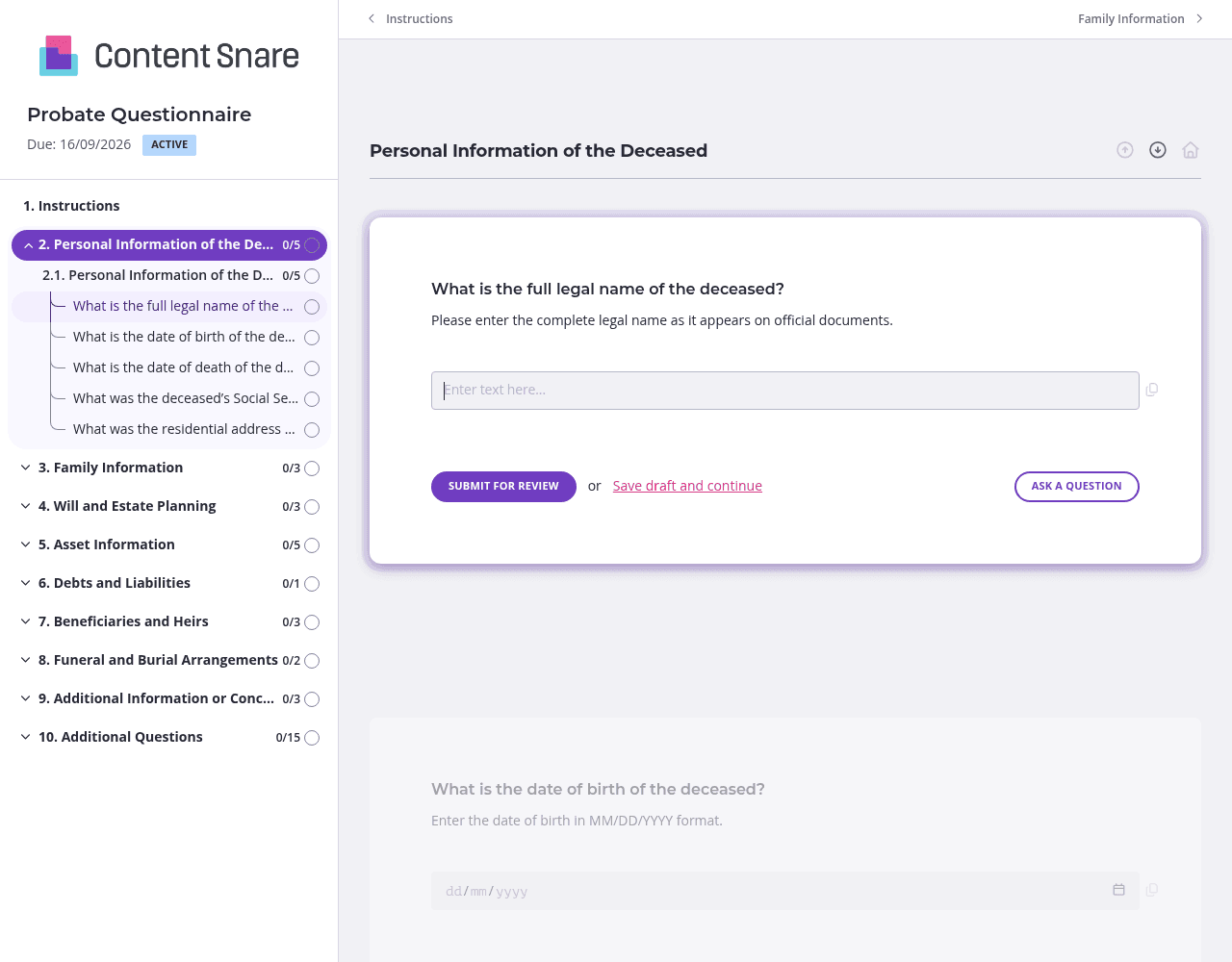
Probate questionnaires cover a lot of ground - from deceased information to assets, debts, and beneficiaries. Dump 30+ questions on one screen and clients freeze up.
Content Snare lets you organize questions into separate pages: one for personal details, another for assets, a third for debts and liabilities. Clients tackle one section at a time, save their progress, and return later when they've located that missing insurance policy or mortgage statement. The progress bar shows them exactly how much is left, reducing abandonment.
Not every probate case needs every question. Conditional logic adapts the form to each client's situation.
If a client answers "No" to "Did the deceased have a will?", you can skip questions about will location and named beneficiaries - then immediately show fields for listing potential heirs under intestacy laws. If they indicate a surviving spouse exists, reveal follow-up questions about spousal details. If there are no trust documents, hide that entire section. Clients only see what's relevant to their case, making the process faster and less overwhelming.
Clients often stumble on specific fields: they'll enter a nickname instead of a full legal name, forget to include account numbers for banks, or list "some credit card debt" without specifics.
Content Snare lets you add instruction text directly below questions where clarification helps. Under "What is the full legal name of the deceased?", note that it must match the death certificate exactly. For bank account questions, specify you need institution names, account types, and approximate balances. In the debts section, remind clients to include creditor names and outstanding amounts. These small prompts dramatically reduce back-and-forth revisions.
You likely already have basic details about the deceased - name, date of death, last known address - from your initial client conversation or referral.
Prefill those fields in Content Snare before sending the questionnaire. Clients appreciate not re-entering information they've already shared, and you eliminate transcription errors. It also builds confidence that you're paying attention and managing their case carefully from day one.
Probate work involves sensitive personal and financial information that can't be handled through basic email attachments or generic survey tools. Content Snare is ISO 27001 certified and built specifically for professional service firms that need secure, organized client data collection. You get automatic follow-ups, progress tracking, and structured responses - without the chaos of scattered emails or the liability risks of unsecured file sharing.
Thousands of businesses worldwide trust Content Snare for client intake, and it's earned hundreds of 5-star reviews across G2, Capterra, and Trustpilot for its ease of use and reliability.
Probate questionnaires are just one application. Law firms use Content Snare to streamline:
Content Snare integrates with tools you already use - your practice management software, CRM, and cloud storage - so client information flows directly into your existing workflows without manual data entry.


