
Breathe Accounting is an Australian bookkeeping and accounting firm. When its AML requirements kicked in, it built the checks into the new client form it already had in Content Snare instead of adding a separate system. Onboarding time didn't change, the AML review takes about 10 to 15 minutes per client, and new clients tell the firm the process is simple.

Breanna Ursino looks after compliance at Bunbury-based Breathe Accounting. When anti-money laundering (AML) requirements came in, her team had to decide whether to bring in a separate system built for AML or make the tool they already used do the job.
They went with the tool they already used. The team added AML checks to the new client form they had already built in Content Snare, and onboarding took no longer than it did before.
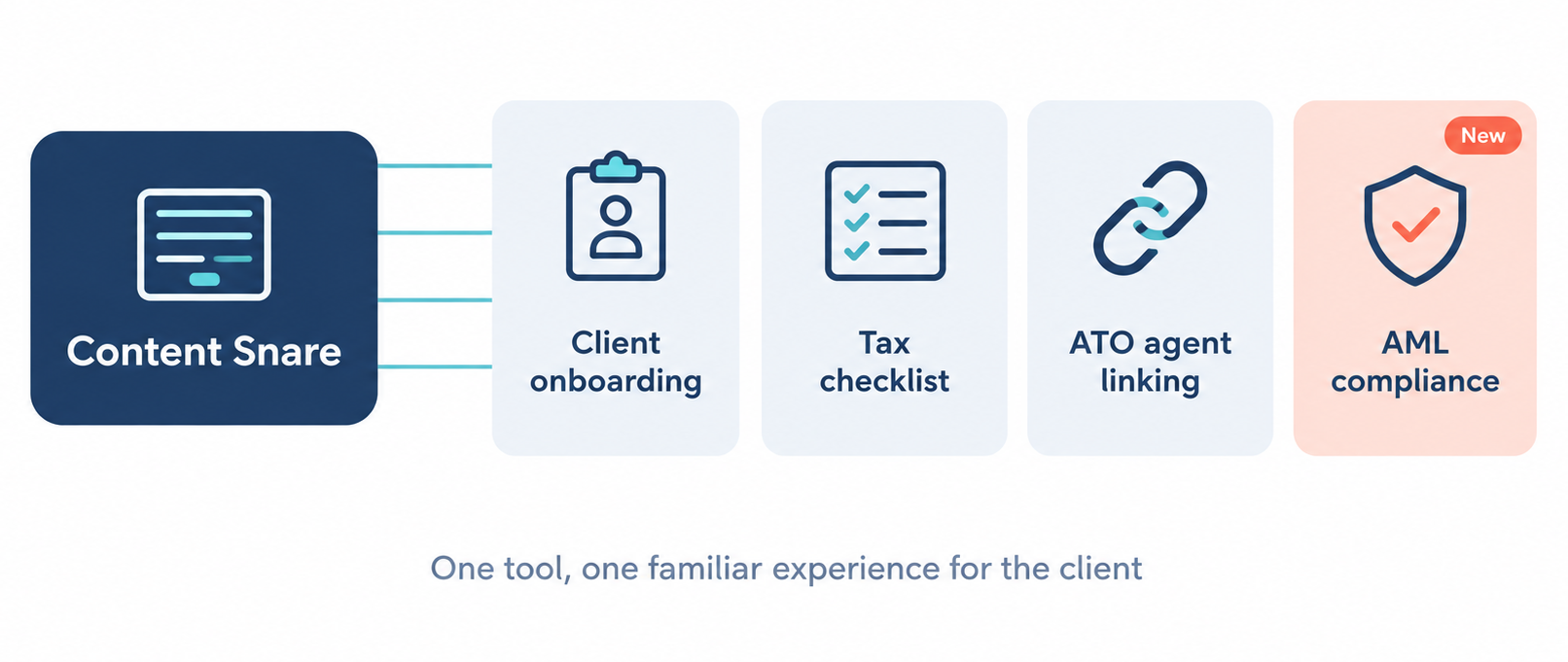
Breathe Accounting works with clients anywhere in Australia. The team handles bookkeeping, accounting and tax work, and also trains clients on Xero and helps with whatever else they need on the accounting side. Content Snare now sits behind four parts of that work:
Because it’s all one tool, a client who onboards with Breathe Accounting already knows the drill when the tax checklist shows up the following year.
Before AML came into the picture, Breathe wanted two things. The first was a simple experience for clients, since the firm cares a lot about how easy it is for them to find documents and complete forms. The second was less manual work for the team. Onboarding and tax work in the old system took more hands than they should have.
Content Snare changed that on the admin side. Admin sends the request out, and when the accountants are ready to do the tax work, they don’t get a pile of emails telling them so. They get a link, click into it, and can comment back to the client if they have a question.
There’s a trust side to it too. Every form a client receives comes through the same system, so they know what a Breathe request looks like. Breanna says that matters:
They have the reliability that we’re using the same system and they’re not wondering whether or not it’s a scam email.
It works the other way as well. A rogue email that doesn’t look like a Content Snare request is more likely to get questioned by the client.
Breathe’s team was comfortable with its setup and wanted to streamline things instead of rebuilding them. Then Content Snare mentioned it was creating AML templates that could be customised into forms Breathe already had, like its new client form. Breanna’s reaction was quick:
We were on board pretty much straight away.
It also helped that the templates were built with AUSTRAC requirements in mind, so the team knew the setup it already used would keep the firm compliant.
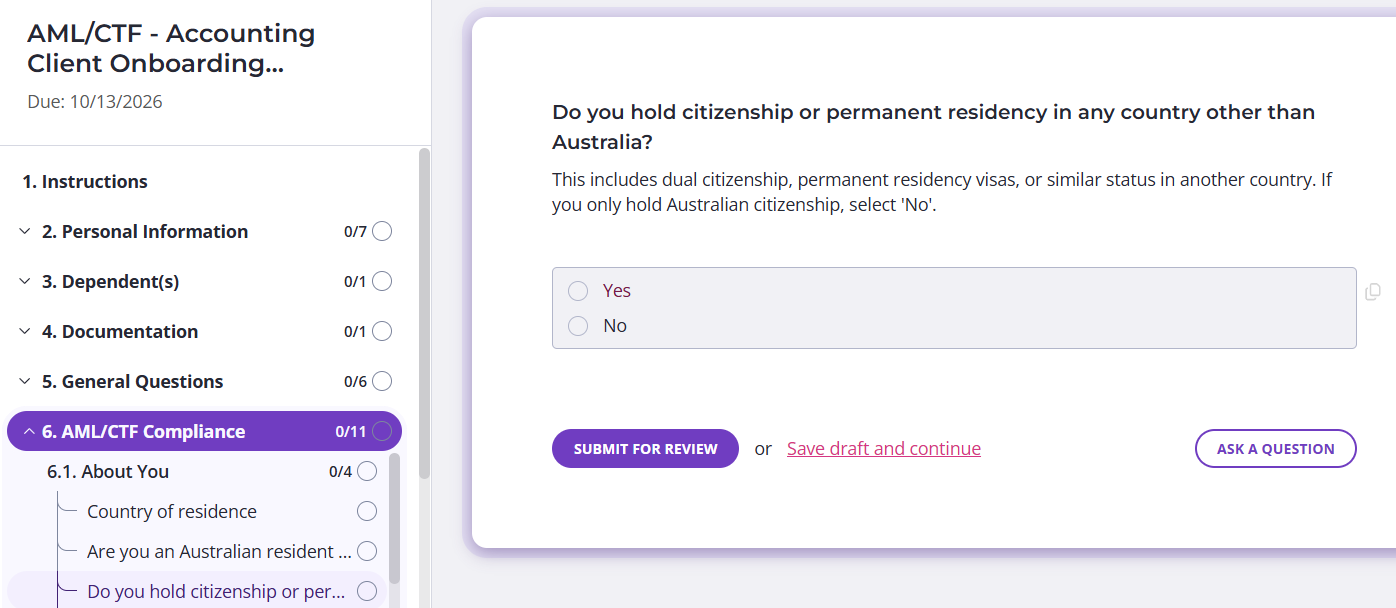
Content Snare AML form template example
Breathe had everything planned well before the 1 July AML deadline, which left time to test the form and make small tweaks, so by the time the deadline arrived, it was smooth sailing. Breanna’s view is that the alternative would have been a lot more manual work, or changing the firm’s whole setup in a very short time.
Breathe built the AML questions straight into its new client form. For a new client, it goes like this:
That’s where the navigator comes in. Content Snare built it to answer the questions firms have about AML and KYC, such as whether a service counts as a designated service. It pulls from AML/KYC governance guidance and turns it into easy-to-follow answers in a chat. Breathe’s team turns to it whenever they’re unsure, and Breanna says it takes the guesswork out of those calls:
Using that navigator has definitely helped to find whether or not we need to act in the AML process or not.
On the client’s side, the AML questions only show up when they apply, so clients only see what’s relevant to them. Breathe also explains what AML is in the form instructions, and each section starts with a short note on what its questions are asking for. Clients know why they’re being asked, not just what to fill in.
On paper, adding AML to onboarding should slow things down. Clients have more questions to answer and an ID check to complete, and someone at the firm has to review it all. At Breathe, that didn’t happen. Here’s roughly where the time goes for each new client:
Breanna hasn’t noticed any change in onboarding time since AML went in. The form still takes clients about the same time to fill in, and her review only adds 10 to 15 minutes on the firm’s side. From the moment a client starts, she puts the whole process at an hour or two, AML included.
Breathe recently started checking in with every new client after onboarding to ask how it went. So far the feedback has been really good, with clients calling the process simple. The admin team, who handle most of the AML work, say it’s been smooth and hasn’t made their workload any heavier.
Breanna sees that as more than a nice bonus. A simple process shows new clients the firm is on the ball, which gives them more reason to rely on Breathe Accounting down the line.
Breanna says what sets Content Snare apart is that it works for both sides. Plenty of tools are a breeze for the client but a headache for the firm to run, whereas this one is enjoyable to use whether you’re the client or on staff. And when the team has a question, support replies regularly and comes back with a solution.
Asked whether she’d recommend it, her answer was short:
I would recommend 100%, just being that it is so simple and easy to use.
For a firm that puts client experience first, that’s the part that counts. AML went into a tool the team and its clients already knew, and onboarding stayed quick.
AML made simple
Start from a ready-made AML template, tweak it to fit the form you already use, and send your first request in minutes.


Ready to start saving time and turn content collection chaos into organized bliss?
Give Content Snare a try today with your free trial.


