
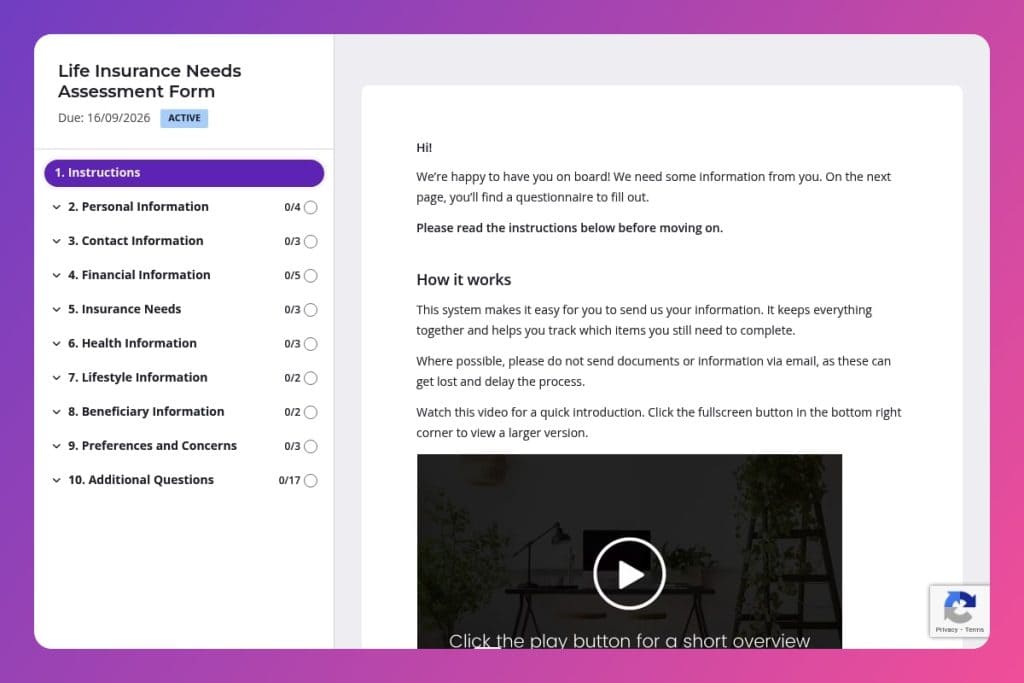


A structured intake form that captures a client's complete financial picture, health status, dependents, debts, and coverage goals to determine appropriate life insurance coverage amounts.

Insurance brokers who need to gather comprehensive client data upfront to calculate accurate coverage needs, generate compliant quotes, and avoid underwriting delays caused by incomplete information.

Send this immediately after an initial consultation or inquiry - before running quotes - so you have all financial details, health history, and beneficiary preferences needed to recommend the right policy and coverage level.
Your clients don't know how much coverage they actually need - and vague conversations lead to underinsured families and compliance headaches. Most brokers waste hours gathering scattered financial details, chasing down missing health history, and recalculating coverage needs because the initial discovery was incomplete. A life insurance needs assessment form fixes this by capturing everything upfront: income, debts, dependents, health conditions, and coverage goals in one structured workflow.
This post walks you through what makes an effective assessment form, shares practical tips for maximizing client engagement, and includes a free template you can customize and deploy immediately. Let's break it down.
Personal Information
Collect core identifiers used for matching records and aligning underwriting assumptions.
Contact Information
Capture preferred channels to ensure timely follow-up and disclosures.
Financial Information
Gather the financial baseline that drives coverage sizing and suitability.
Insurance Needs
Surface the client's stated objectives and self-assessed need to align with product structure and term length.
Health Information
Flag potential underwriting considerations and carrier fit.
Lifestyle Information
Identify avocations and travel patterns that may trigger underwriting surcharges or exclusions.
Beneficiary Information
Record payout directions to avoid delays and disputes at claim time.
Preferences and Concerns
Clarify optional features, affordability parameters, and issues to address in recommendations.
Send context with the form link: Include a brief note explaining why you're asking for financial details and health history upfront. Clients are more likely to complete sensitive sections about debts, medical conditions, and tobacco use when they understand it leads to accurate quotes and avoids surprises during underwriting.
Pre-fill what you already know: If you've spoken with a client before sending the form, populate their name, contact details, and any basics like marital status or number of dependents. It shows you were listening and cuts down their workload, making them more likely to tackle the heavier financial and health sections.
Frame coverage amount as a conversation starter, not a final answer: When clients reach the "How much coverage do you believe you need?" question, many lowball or guess wildly. Position this form as discovery - you'll review their income, debts, monthly expenses, and coverage goals together to calculate the real number. It takes pressure off and sets you up as the expert.
Follow up on incomplete health and lifestyle responses: Vague answers like "some health conditions" or skipped questions about high-risk hobbies can derail underwriting. Within 24 hours of submission, review the form and send a quick message asking for specifics - medication names, frequency of travel, or details on that skydiving hobby. Faster clarification means faster quotes.
Use beneficiary details to uncover estate planning gaps: If a client lists only one primary beneficiary with no contingents, or names minors without mentioning a trust, flag it during your follow-up call. It's a natural bridge to discuss riders, estate considerations, and why their life insurance strategy needs more than just a coverage amount.
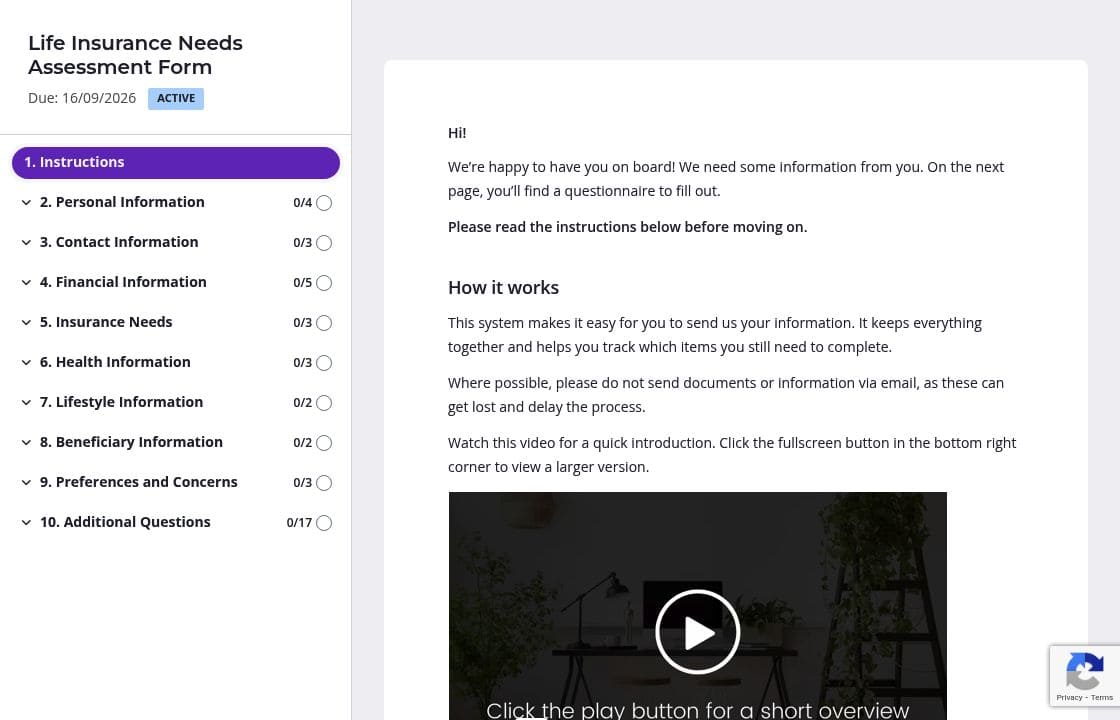
Financial and health information can feel overwhelming in one long scroll. Divide your life insurance needs assessment form into clear sections - Personal Information, Financial Snapshot, Health & Lifestyle, Beneficiaries. Clients are less likely to abandon halfway through when they see progress markers, and grouping related questions (like debts, income, and assets together) makes the form feel logical rather than intrusive.
Clients often start the form but stall at the financial or health sections when they need to dig up details about existing policies or medication names. Set up automatic follow-ups to nudge them without you having to track who's finished and who hasn't. You stay helpful, not pushy - and forms get completed faster without manual chasing.
The "How much coverage do you believe you need?" question almost always gets lowballed. Drop in a brief instruction box explaining they should think about income replacement, outstanding debts, education funding, and final expenses. Same for the beneficiary section - a quick note reminding them to consider contingent beneficiaries if the primary is unavailable saves confusion later. Clear guidance upfront means fewer back-and-forth emails asking for clarification.
Not every client has dependents, existing policies, or high-risk hobbies. Use conditional logic to hide irrelevant follow-ups - if they answer "No" to existing life insurance, skip the details request. If they don't have dependents, bypass questions about education funding. You get cleaner data, and clients appreciate not wading through questions that don't apply to them.
Email threads and PDFs turn life insurance assessments into chaos. Clients forget attachments, you chase missing financial details, and sensitive health information sits in unsecured inboxes. Content Snare gives you a structured, secure way to collect everything upfront - with automatic reminders, progress tracking, and a client experience that actually gets forms completed.
Content Snare is ISO 27001 certified and trusted by thousands of businesses worldwide, so you can confidently handle sensitive financial and health data. It integrates with your CRM and existing workflows, meaning client information flows directly where you need it without manual data entry.
This form is just one way brokers use Content Snare. You can also streamline:
Content Snare has hundreds of 5-star reviews across G2, Capterra, and Trustpilot. Brokers love it because it turns information gathering from a bottleneck into a smooth, professional process that makes you look organized from day one.


