
content snare

Templates

Nutritional consulting questionnaire template (36 questions)

|
Country
Global
|
Reviewed by
James Rose
|
Last Updated
November 25, 2026

At a glance

WHAT this is

A pre-consultation form that collects comprehensive client information including medical history, dietary habits, lifestyle factors, supplement use, and nutritional goals before the first session.


WHO this is for

Nutritional consultants, dietitians, and wellness coaches who need complete client health profiles to deliver personalized recommendations and make the most of consultation time.


WHEN to use this

Send it 48 hours before initial consultations so clients can thoughtfully document their eating patterns, health conditions, and motivations, allowing you to arrive fully prepared with a strategic plan.


Template preview

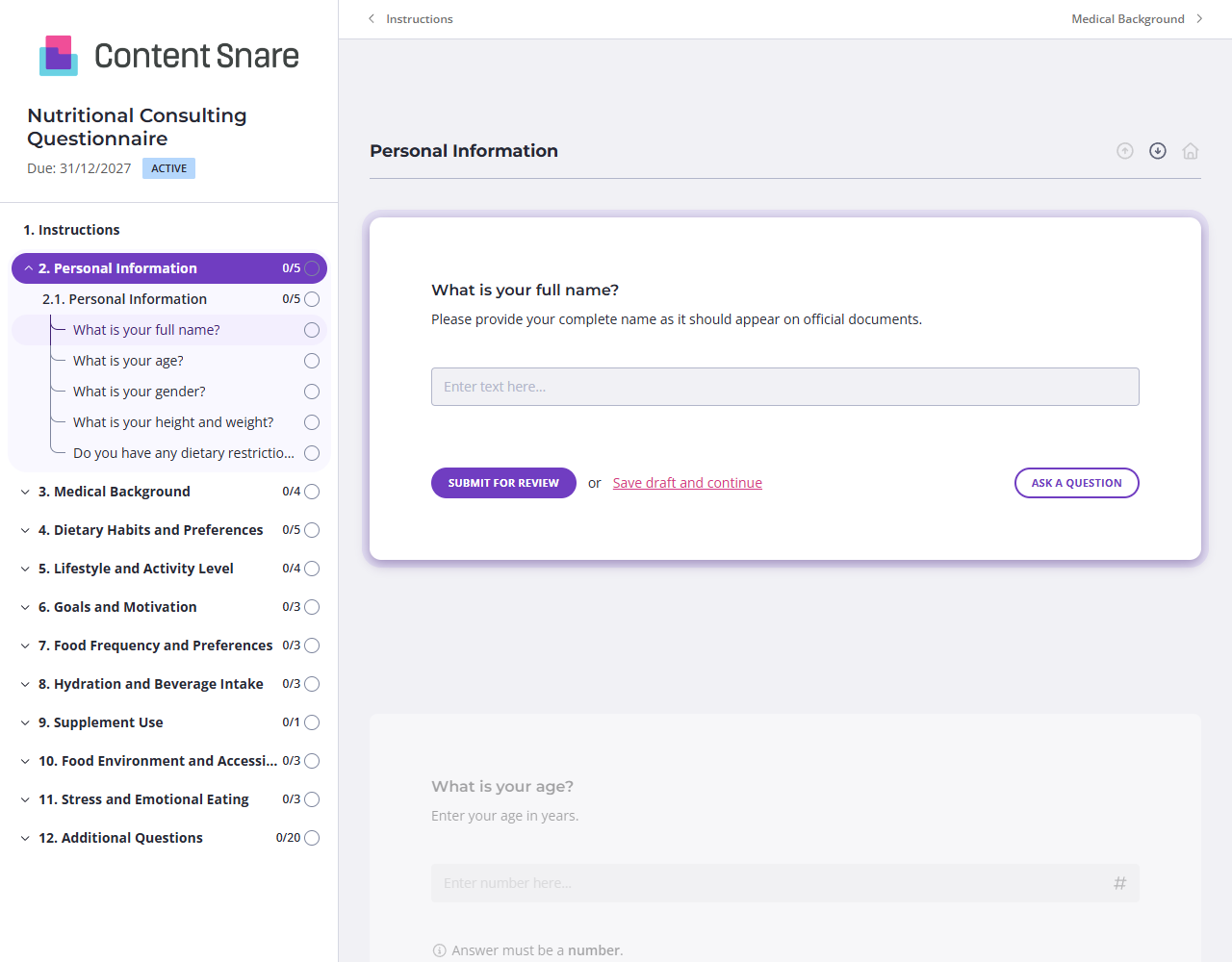
Here's what this template looks like in Content Snare.
Start your free trial to send this template in minutes.

Your first client consultation shouldn't feel like an interrogation. Yet most nutritional consultants waste 30+ minutes gathering basic health history, dietary patterns, and lifestyle details - information you need before you can offer real value. Clients forget crucial details. You miss red flags. Sessions run over.

A nutritional consulting questionnaire changes the game. Send it before your first meeting, and you'll arrive prepared with a complete picture: medical history, eating habits, activity levels, stress triggers, and specific goals. This post covers what to include in an effective form, how to use client responses strategically, and a free template you can customize. Let's break it down.

Tired of chasing people to fill out your forms? Try Content Snare

Content Snare is like a forms tool on steroids. Autosaving forms mean no progress is lost. Automatic reminders mean you can relax knowing your forms will get finished without you having to chase people down. 
Start My Free Trial

Questions to include on your nutritional consulting questionnaire

Personal Information
Collect identifiers and immediate dietary constraints to personalize follow-up and flag safety issues.

  • What is your full name?
  • What is your age?
  • What is your gender?
  • What is your height and weight?
  • Do you have any dietary restrictions or allergies?

Medical Background
Screen for contraindications, comorbidities, and coordination needs with healthcare providers.

  • Do you have any chronic health conditions (e.g., diabetes, hypertension)?
  • Are you currently taking any medications or supplements?
  • Have you had any recent surgeries or hospitalizations?
  • Do you have a family history of any significant health issues?
    These items define risk, inform monitoring priorities, and indicate when to adjust protocols or liaise with the care team.

Dietary Habits and Preferences
Map baseline eating patterns and non-negotiables to anchor realistic changes.

  • Describe a typical day's meals and snacks.
  • How often do you eat out or order takeout?
  • Are there any foods you particularly dislike or avoid?
  • Do you follow a specific diet (e.g., vegetarian, vegan, keto)?
  • How many meals and snacks do you typically have per day?
    Open-ended meal patterning reveals timing, portion trends, and environmental drivers you will target first.

Lifestyle and Activity Level
Establish energy demands, timing windows, and recovery capacity.

  • What is your occupation and typical work schedule?
  • How would you describe your daily activity level (e.g., sedentary, moderately active, highly active)?
  • Do you regularly participate in any exercise or physical activities?
  • How many hours of sleep do you typically get per night?
    These variables shape TDEE estimates, nutrient timing, and sleep/stress adjustments.

Goals and Motivation
Align the plan to stated outcomes and change drivers while learning from prior care.

  • What are your primary goals for seeking nutritional consultation (e.g., weight loss, improved energy, management of a health condition)?
  • What motivates you to achieve these goals?
  • Have you previously worked with a nutritionist or dietitian? If so, what was your experience?
    Goal clarity and history prevent repeating ineffective tactics and guide adherence strategies.

Food Frequency and Preferences
Quantify food group exposure to spot gaps, excesses, and preference anchors.

  • How often do you consume the following: fruits, vegetables, dairy, whole grains, protein sources (e.g., meat, fish, plant-based)?
  • Do you have a favorite meal or cuisine?
  • How do you typically prepare your meals (e.g., cooked, raw, grilled, baked)?
    Frequency data supports micronutrient gap analysis and prioritizes substitutions clients are likely to accept.

Hydration and Beverage Intake
Assess hydration status, liquid calories, and caffeine/alcohol patterns.

  • How much water do you consume on a daily basis?
  • What other beverages do you frequently drink (e.g., coffee, tea, soda, alcohol)?
  • Do you use any water consumption aids (e.g., infusers, hydration apps)?
    These answers inform appetite regulation, sleep hygiene, and cardiovascular/metabolic considerations.

Supplement Use
Document products, doses, and perceived effects to evaluate safety and necessity.

  • Are you currently taking any nutritional supplements?
  • If yes, which ones and for what purpose?
  • Have you experienced any side effects or benefits from these supplements?
    Supplement details help prevent interactions, eliminate redundancies, and target evidence-based options.

Food Environment and Accessibility
Gauge practical constraints that determine feasibility and adherence.

  • Who typically prepares meals in your household?
  • What resources or challenges do you have in accessing healthy food options?
  • Do you have any restrictions on cooking (e.g., limited appliances, time constraints)?
    Environment mapping ensures recommendations fit budget, time, skills, and equipment.

Stress and Emotional Eating
Surface behavior cues and coping skills that shape intake.

  • How often do you eat in response to emotions (e.g., stress, boredom)?
  • Do you practice any stress management techniques?
  • Are there any triggers that lead to food cravings or overeating?
    Identifying triggers enables targeted behavioral interventions and appropriate referrals when needed.

Other question ideas

When you are creating your nutritional consulting questionnaire, here are some additional questions you may want to consider. These won't apply in every case, but should give you some ideas as you build out your form.
  1. Have you ever had any eating disorders or disordered eating patterns?
  2. How does your energy level fluctuate throughout the day?
  3. Do you have any cultural or religious dietary practices or restrictions?
  4. How often do you experience digestive issues (e.g., bloating, constipation, diarrhoea)?
  5. Do you experience any adverse effects after eating certain foods (such as bloating, gas, heartburn)?
  6. What is your relationship with food (e.g., comfort, fuel, source of pleasure)?
  7. Can you describe any food rituals or habits you have (e.g., eating at certain times, eating certain foods together)?
  8. Are there any foods you crave regularly?
  9. Are you open to trying new foods or cooking methods?
  10. How often do you consume processed foods or fast foods?
  11. Do you feel satisfied after meals or do you often feel hungry?
  12. Do you eat while distracted (e.g., watching TV, working)?
  13. How do you interpret food labels and nutritional information?
  14. Are you interested in learning to cook or improve your cooking skills?
  15. How does your diet change on weekends or during vacations compared to weekdays?
  16. How frequently do you consume alcoholic beverages?
  17. Have you ever used any diet or calorie counting apps? If so, which ones and what was your experience with them?
  18. Are there any foods you find addictive or hard to limit?
  19. What is your self-perception of your diet quality?
  20. How confident are you in your ability to make healthy food choices?

Tips to get the best results

  • Send it 48 hours before the consultation: Clients need time to think through their answers, especially for questions about typical meals, emotional eating triggers, and supplement use. Rushed responses miss the nuances that make your recommendations effective.

  • Flag inconsistencies during your review: If someone reports high activity levels but also sedentary work and poor sleep, that's your opening conversation. Look for mismatches between stated goals and current habits - like weight loss goals paired with frequent takeout. These gaps reveal where clients need the most support.

  • Use the food frequency section as a visual aid: During your session, pull up their responses about fruits, vegetables, and protein sources. Walk through each category together and ask follow-up questions. This turns abstract dietary advice into concrete, personalized adjustments based on what they're actually eating now.

  • Create a pre-consultation summary sheet: Extract key details - chronic conditions, medications, allergies, primary goals - into a one-page reference. You'll spend less time scrolling through responses during the call and more time making eye contact and building rapport.
How to use Content Snare for your nutritional consulting questionnaire

Nutritional consulting questionnaire template in Content Snare

Use conditional logic to keep it relevant

Not every question applies to every client. Someone without chronic health conditions doesn't need to see follow-up questions about medication management. A vegan client shouldn't wade through queries about meat consumption preferences. Content Snare's conditional logic shows or hides questions based on previous answers, creating a streamlined experience that feels personalized from the start.

Pre-fill what you already know

You likely have basic details - name, age, contact information - before sending the form. Pre-fill those fields so clients can focus on the meaningful questions: their dietary habits, health goals, and lifestyle patterns. It saves them time and signals you're organized and attentive.

Break complex sections into pages

A single scrolling page with 40+ questions feels overwhelming. Split your nutritional consulting questionnaire into logical sections: Personal Information, Medical Background, Dietary Habits, Lifestyle & Activity, and Goals. Clients see progress as they move through pages, making completion feel manageable rather than daunting.

Set up automatic reminders

Clients get busy and forget to complete forms. Content Snare sends gentle reminders automatically, so you don't chase people down or delay consultations. You stay the helpful consultant, not the nagging administrator, and your calendar stays full with prepared, ready-to-go sessions.


Why use Content Snare

Google Forms and email chains weren't built for professional consulting, but Content Snare was. It automates follow-ups, tracks completion in real-time, and presents a polished, branded experience that matches the quality of your services. Thousands of consultants worldwide trust it to collect client information without the back-and-forth chaos.

Content Snare is also ISO 27001 certified, meaning your clients' sensitive health data, medical history, and personal details stay secure. That matters when you're handling information about chronic conditions, medications, and dietary restrictions.

The platform integrates with tools you already use - your CRM, project management software, and communication apps - so client responses flow directly into your workflow. No manual data entry. No switching between tabs.

Nutritional consulting questionnaires are just the starting point. Consultants across industries use Content Snare for:

  • Client onboarding forms to gather business background and project requirements
  • Progress check-ins to track milestones between sessions
  • Assessment questionnaires for strategy, financial, or operational consulting
  • Document collection for contracts, certifications, and compliance materials

With hundreds of 5-star reviews across G2, Capterra, and Trustpilot, Content Snare consistently earns praise for transforming how consultants work with clients. It's built for professionals who want efficiency without sacrificing the client experience.


Get the information you need without chasing people

Content Snare is the stress-free way to get information from anyone. Break free of your inbox and reclaim your time. Let Content Snare chase your clients for you.
Start My Free Trial

Related templates

lockcrossmenuchevron-uparrow-right