
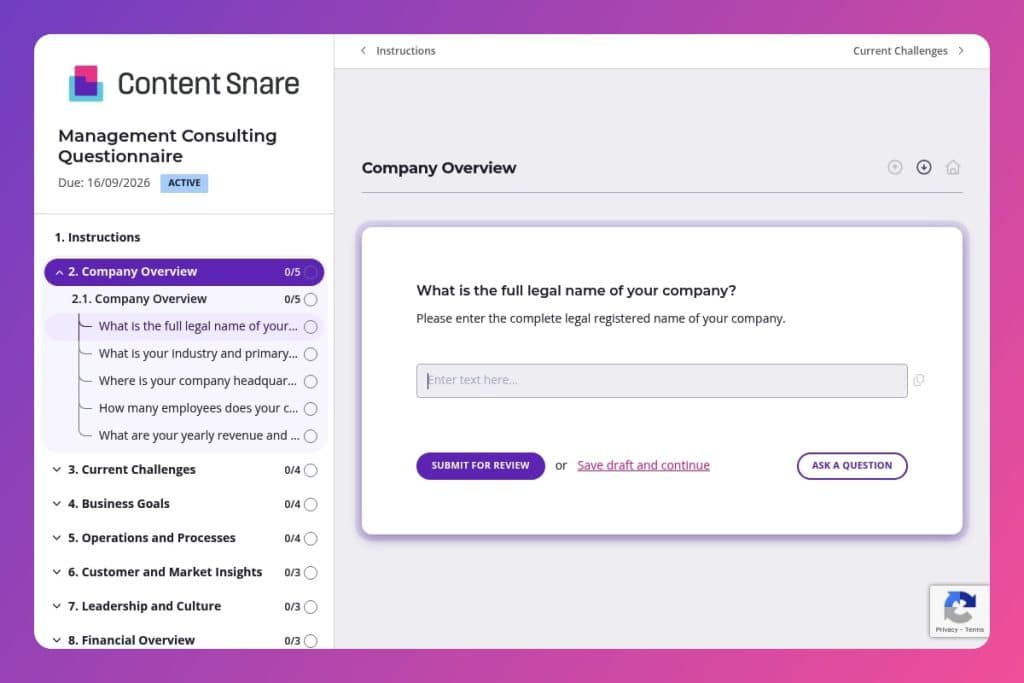


A pre-engagement questionnaire that collects essential client information including company background, current challenges, business goals, operations, financials, and specific consulting needs before scoping a project.

Management consultants, strategy advisors, and consulting firms who need to gather comprehensive client context to create accurate proposals and avoid lengthy discovery phases.

Send this immediately after a prospect expresses interest and before your first consultation meeting, so you can skip basic discovery and focus on strategic solutions during initial discussions.
You've just received an inquiry from a potential client. They need strategic guidance, but you're missing half the context you need to scope the engagement properly. Back-and-forth emails drag on for weeks, delaying proposals and frustrating everyone involved. A management consulting questionnaire solves this problem by gathering critical information upfront - company challenges, business goals, operational gaps, and expected outcomes - so you can craft targeted proposals faster.
This post covers what a management consulting questionnaire should include, how to use it effectively with new clients, and where to access a free template. Let's break it down.
Company Overview
Capture baseline entity details that anchor scope, context, and constraints.
Current Challenges
Surface core pain points, impacts, and contributing factors to focus discovery.
Business Goals
Clarify target outcomes and the metrics that prove progress.
Operations and Processes
Map the operating model, tech stack, pain points, and control environment.
Customer and Market Insights
Establish who you serve, where you compete, and how feedback flows.
Leadership and Culture
Gauge decision velocity, sponsorship strength, and change readiness.
Financial Overview
Understand unit economics, capital allocation, and planning cadence.
Consulting Needs
Align scope, outcomes, and timing to lock expectations early.
Communication and Reporting
Set the governance model and operating rhythm for delivery.
Additional Information
Capture context that can shortcut discovery or flag constraints.
Send it before the first meeting: Use this questionnaire as a discovery tool that works ahead of your initial consultation. You'll arrive already knowing their revenue trajectory, operational pain points, and whether they've worked with consultants before - which means you can skip the basics and dive straight into strategic discussion.
Flag gaps in their responses: Pay attention to sections where clients provide vague answers or skip questions entirely, especially around KPIs, profit margins, or how they've tried to solve challenges previously. These gaps often reveal blind spots in their business that become prime opportunities for your consulting services. Follow up on these areas directly to uncover deeper needs.
Use their answers to customize your proposal: Don't let those responses sit unused after the kickoff call. Reference specific details they shared - their growth projections, market position concerns, or communication preferences - throughout your proposal and project plan. It shows you listened and builds immediate credibility that you understand their unique situation.
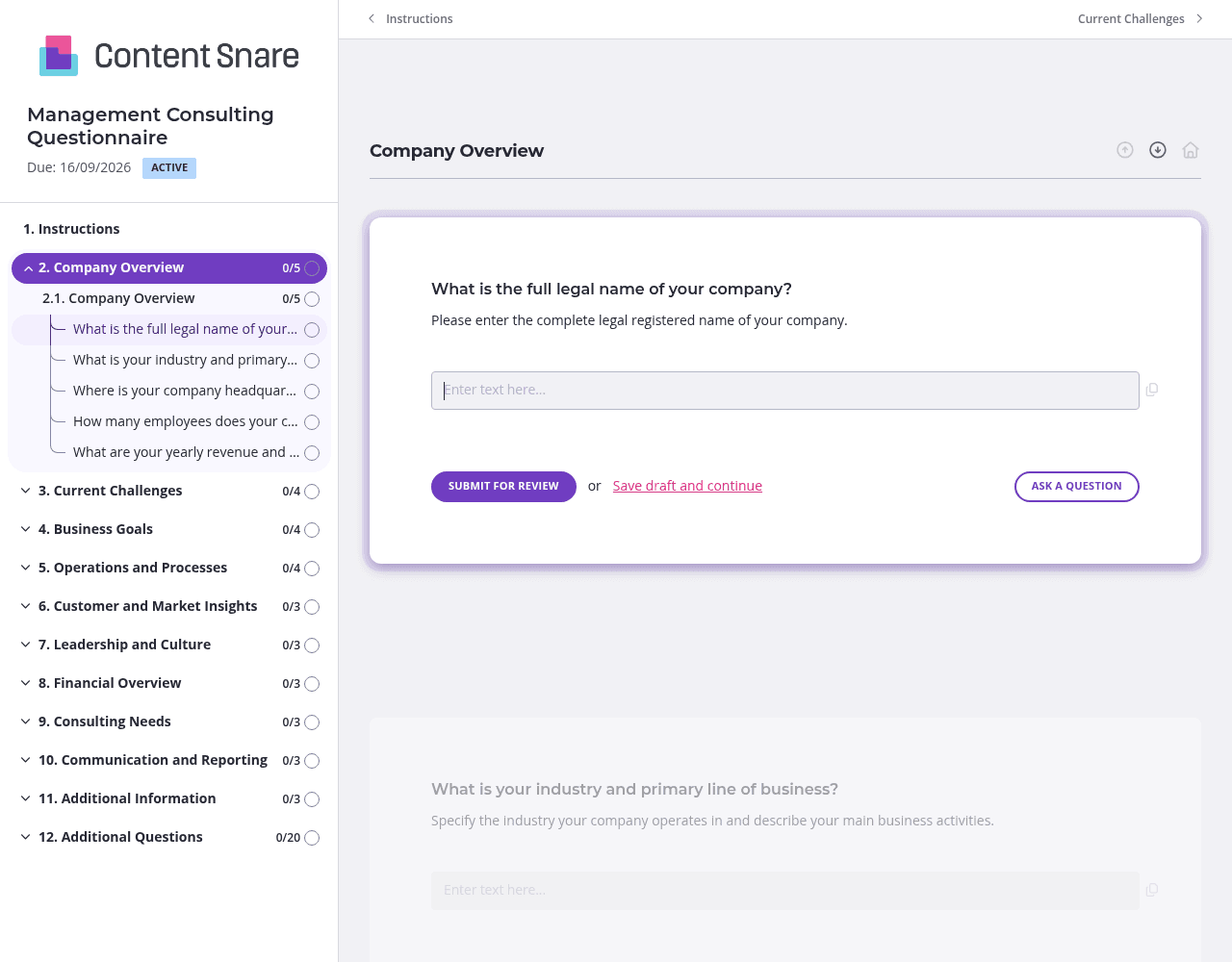
This questionnaire covers a lot of ground - from financials to company culture to operational processes. Group related questions into clear pages like "Current Challenges," "Business Goals," and "Financial Overview." Clients can tackle one topic at a time rather than feeling overwhelmed by a wall of questions. They'll provide more thoughtful answers when they can focus on strategy in one section, then shift to operations in the next.
Questions about KPIs, risk management, or market position can mean different things to different clients. Use instruction areas to clarify what you're looking for. For the KPIs question, you might add: "Examples: customer acquisition cost, employee retention rate, monthly recurring revenue." A quick note under "core business processes" could prompt them to walk through their workflow from lead to delivery. Clear guidance upfront means fewer incomplete answers and follow-up calls.
You've likely gathered basic details during initial outreach - company name, industry, headquarters location, employee count. Prefill these fields before sending the questionnaire. Your client saves time, you avoid redundant questions, and the form feels personalized rather than generic. They can jump straight to the strategic questions that actually require their input.
Busy executives mean to complete your questionnaire, then it slips down their priority list. Automatic reminders keep the process moving without awkward "just following up" emails from you. Schedule a gentle nudge after a few days, then another a week later. Your clients get the prompt they need, and you maintain momentum on the engagement without playing the role of taskmaster.
You could send this questionnaire as a Word document or Google Form. But then you're chasing clients for incomplete sections, reformatting messy responses, and wondering if they even opened your email. Content Snare eliminates the back-and-forth with automatic reminders, clear progress tracking, and a professional client experience that reflects well on your firm.
Trusted by thousands of businesses worldwide, Content Snare is ISO 27001 certified and built for consultants who need to collect sensitive business information securely. It integrates with the tools you already use and has earned hundreds of 5-star reviews on G2, Capterra, and Trustpilot.
This management consulting questionnaire is just one application. Consulting firms use Content Snare to gather information for due diligence reviews, collect assets for change management projects, request documentation during organizational assessments, and onboard new clients with tailored intake forms - all while keeping every engagement organized and on schedule.


