
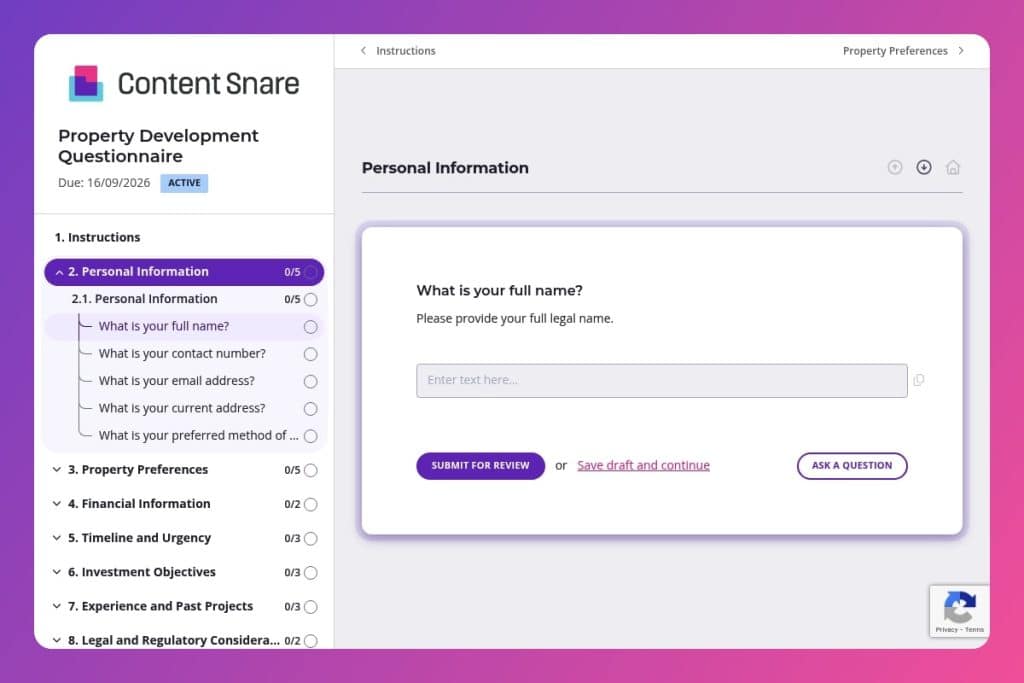


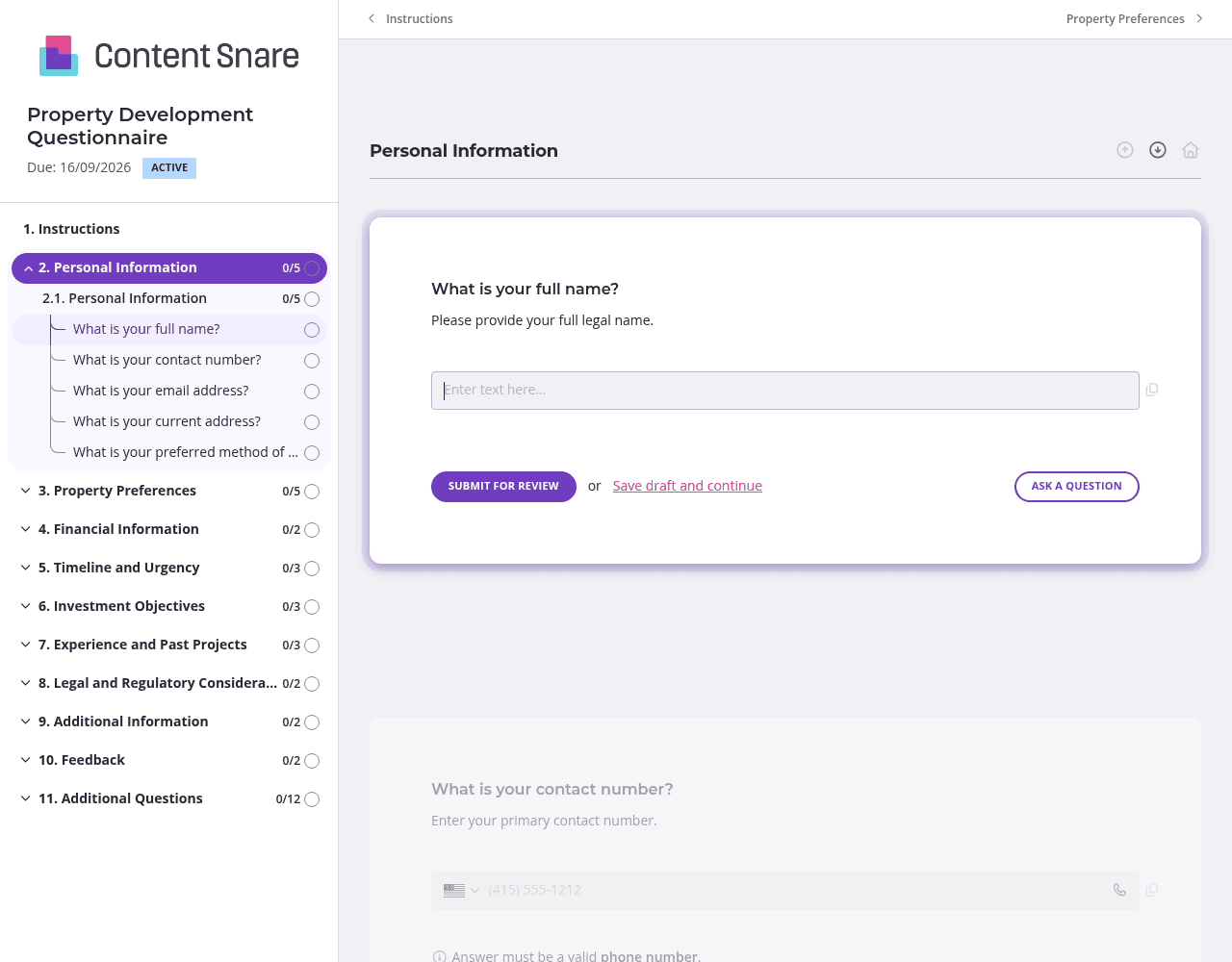
A structured intake form that captures client details, property preferences, budget, timeline, investment goals, and legal considerations before starting a development project.

Real estate developers, agents, and development firms working with clients on property acquisitions, land development, or investment projects.

Send this questionnaire immediately after initial client contact and before the first consultation meeting to gather essential project information upfront.
How many deals have stalled because you're chasing clients for basic details - budget, timeline, zoning concerns - across endless email threads? Misaligned expectations and missing information don't just slow projects down. They derail them entirely, costing you time, money, and credibility.
A property development questionnaire solves this. It captures everything upfront - property preferences, financial readiness, investment goals, and legal considerations - in one organized place. This post walks you through what the form includes, how to use it effectively with clients, and where to grab a free template. Let's break it down.
Personal Information
Use these to anchor the record and confirm primary contact channels.
Property Preferences
Capture fit, narrow search parameters, and set an initial design direction before feasibility.
Financial Information
Gauge purchasing power and financing path to frame scope, phasing, and vendor selection.
Timeline and Urgency
Align resourcing, acquisition strategy, and approvals with client timing.
Investment Objectives
Tie specification, risk tolerance, and exit strategy to the client’s intent.
Experience and Past Projects
Calibrate process, communication, and handoffs to the client’s experience level.
Legal and Regulatory Considerations
Surface entitlement, zoning, and covenant constraints early to protect feasibility.
Additional Information
Give room for edge cases, stakeholder needs, and constraints not covered above.
Feedback
Track lead source and immediate support needs for fast follow-up.
Send it before the first meeting: Get the property development questionnaire to prospects as soon as they express interest. You'll walk into that initial consultation already knowing their budget range, timeline, and whether they're first-time developers or seasoned investors. This transforms your first conversation from information gathering into strategic planning - and makes you look prepared and professional from the start.
Use the investment objectives section to uncover deal structure early: Pay close attention to whether clients are buying for personal use or investment, and their plans for leasing or renting. These answers tell you whether to position properties differently, involve property management contacts, or structure financing to maximize ROI. If someone's flipping versus building their dream home, your entire approach changes - catch that distinction upfront.
Follow up on incomplete financial information immediately: If a client skips the pre-approval question or leaves budget range vague, don't wait. A quick call to clarify financing readiness saves weeks of touring properties they can't actually purchase. It also signals you're serious about moving efficiently, which clients respect.
Developers are juggling contractors, permits, and site visits. They forget to fill out forms. Content Snare sends automatic reminders so you don't have to chase them down via text or email. You stay top-of-mind without being pushy, and clients appreciate the gentle nudge. Set reminders at intervals that match your typical sales cycle - maybe 3 days, then 7 days - and let the system handle it.
Not every question applies to every client. Someone buying land for personal use doesn't need to answer questions about rental income projections or property management plans. Content Snare's conditional logic shows or hides questions based on previous answers. Ask if they're buying for personal use or investment, then only display the relevant follow-up questions. The form feels shorter and more tailored, so completion rates go up.
Budget and financing questions often get skipped or answered vaguely because clients aren't sure what you need. Add brief instructions above the Financial Information section explaining what "budget range" means (total project cost vs. land-only cost) or why pre-approval matters. A single line of guidance prevents back-and-forth clarification emails and gets you usable information the first time.
You've probably collected names, emails, and phone numbers before sending this questionnaire. Don't make clients re-enter that information. Prefill the Personal Information section with details from your CRM or initial inquiry form. It shows you're organized, saves them time, and gets them straight to the questions that actually matter - property preferences, timelines, and investment goals.
Email threads lose attachments. Spreadsheets get outdated. Phone calls miss critical details. Content Snare centralizes everything - client responses, financial documents, zoning info - in one secure place. You get complete information faster, clients have a professional experience, and nothing falls through the cracks.
Content Snare is trusted by real estate professionals and thousands of businesses worldwide. It's also ISO 27001 certified, so sensitive financial and legal information stays protected. It integrates with your CRM, project management tools, and other systems you already use. With hundreds of 5-star reviews across G2, Capterra, and Trustpilot, it's proven to work.
Property development questionnaires are just the start. Real estate teams use Content Snare for tenant onboarding forms, property listing intake from sellers, due diligence checklists for acquisitions, and contractor qualification forms. Anywhere you're collecting information, Content Snare makes it faster and more professional.


