
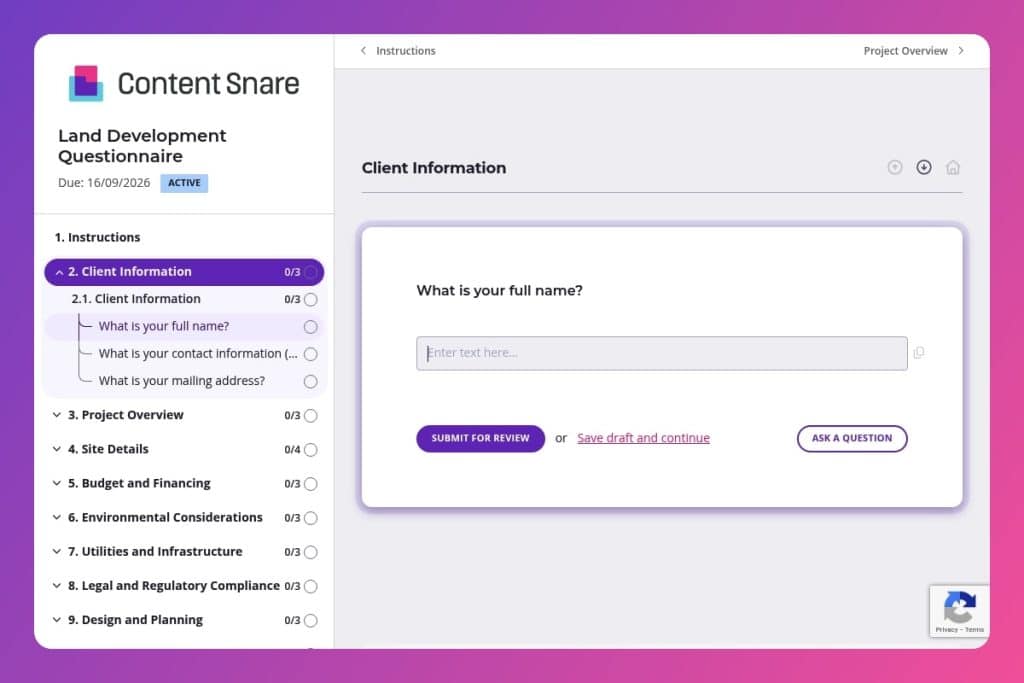


A comprehensive intake form that gathers essential project details including site specifications, zoning requirements, environmental conditions, budget parameters, utilities, permits, and stakeholder considerations before land development begins.

Real estate developers, land planners, civil engineers, and development consultants who need to assess feasibility, identify regulatory obstacles, and align project scope with client expectations before committing resources.

Send this questionnaire before initial consultations or feasibility assessments to capture critical information that reveals potential deal-breakers, establishes realistic timelines, and ensures all parties understand site constraints and regulatory requirements upfront.
Miscommunication during land development kills deals before they break ground. A single missed detail about zoning restrictions, environmental assessments, or utility access can derail timelines, inflate budgets, and fracture stakeholder relationships. When developers, planners, and clients aren't aligned from day one, projects stall - and opportunities vanish.
A land development questionnaire eliminates the guesswork. It captures every critical detail upfront: site specifications, regulatory requirements, budget constraints, community concerns, and infrastructure needs. This post covers what the form includes, how to use it effectively with clients and partners, and a free template you can customize. Let's break it down.
Client Information
Capture core identification and contact details for records, invoicing, and communication.
Project Overview
Define purpose, timing, and key program elements to scope services and constraints.
Site Details
Pin down location, size, existing conditions, and zoning context to inform feasibility and due diligence.
Budget and Financing
Establish budget, funding status, and constraints to align scope, phasing, and risk.
Environmental Considerations
Identify environmental conditions, required assessments, and prior studies to plan approvals and mitigation.
Utilities and Infrastructure
Confirm current services, required extensions, and nearby works that may affect capacity, access, and schedule.
Legal and Regulatory Compliance
Validate permit status, special restrictions, and legal support to map the compliance pathway.
Design and Planning
Align on design team, concept, and site-specific planning constraints to guide entitlements and documentation.
Stakeholder and Community Engagement
Assess outreach status, known concerns, and mitigation approach to manage approvals and reputation risk.
Project Management
Clarify governance, points of contact, and preferred vendors to streamline coordination and procurement.
Additional Information and Requirements
Capture any remaining requirements, documents, and critical context that could alter scope or risk.
Send it before the first meeting: Get clients to complete the land development questionnaire at least 48 hours before your initial consultation. You'll arrive prepared to discuss zoning challenges, environmental constraints, and budget realities - not waste time gathering basic information.
Flag the environmental and regulatory sections early: These areas (environmental impact assessments, permits, compliance issues) often reveal project blockers. If a client answers "I don't know" to questions about environmental studies or existing permits, prioritize those conversations immediately. Delays here cascade through everything else.
Use incomplete answers as your follow-up roadmap: When clients skip questions about utility connections or community engagement plans, don't chase generic reminders. Schedule targeted calls: "I noticed you're unsure about existing infrastructure - let's walk the site together next Tuesday." Specificity gets responses.
Cross-reference budget against scope and timeline: Compare their estimated budget with the features they want, the site challenges they've identified, and their deadline. Misalignments surface quickly when you see luxury amenities paired with constrained financing or aggressive timelines on sites requiring extensive environmental work.
Share responses with your full project team: Once submitted, distribute relevant sections to specialists - architects get design preferences and site constraints, legal teams get regulatory and compliance answers, engineers get utility and infrastructure details. Everyone starts from the same foundation, and you avoid contradictory conversations with the client.
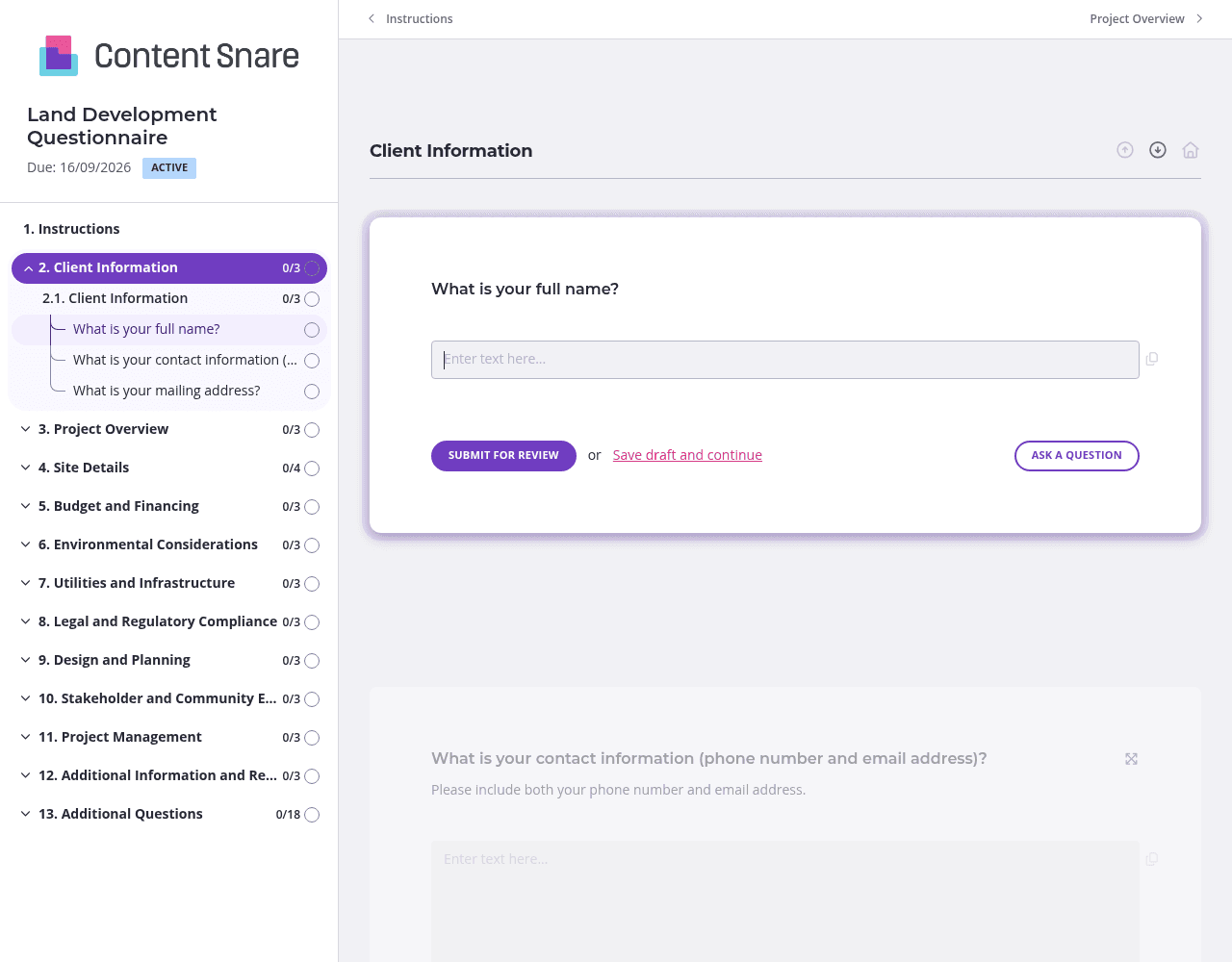
Not every land development project needs the same information. A client developing raw land faces different challenges than someone with existing structures on-site. Set up conditional logic so questions about demolition or existing utilities only appear when clients indicate structures are present. Ask about financing options only when they haven't secured funding yet. Clients see a streamlined questionnaire tailored to their situation, and you get cleaner, more focused responses.
Environmental assessments, zoning regulations, and permit requirements confuse clients who aren't familiar with development processes. Add brief instructions above those sections explaining what you need and why. For the environmental questions, include a note like: "If you're unsure whether studies have been conducted, check with your title company or previous land surveyor." For regulatory compliance, clarify which permits typically apply to their project type. Clients answer accurately the first time instead of guessing or leaving blanks.
You likely know basic details before sending the questionnaire - client name, contact information, property address, maybe even parcel size from preliminary conversations. Pre-fill those fields so clients skip straight to substantive questions about project goals, budget constraints, and site challenges. It saves them time, shows you've done your homework, and signals that you're organized and attentive to their project from day one.
Land development moves fast, and incomplete questionnaires stall progress. Enable automatic reminders that nudge clients without making you the villain. Target reminders strategically: if timeline and budget sections remain incomplete three days after sending, trigger a gentle follow-up. You stay on schedule, clients appreciate the prompt, and you avoid awkward "just checking in" emails that clutter both your inboxes.
Generic forms and email chains create chaos in land development projects. Critical details get buried in threads, clients forget what you asked for, and you waste hours chasing information that should have been collected once. Content Snare replaces that mess with a structured system that keeps projects moving - automatically reminding clients, tracking what's complete, and storing everything securely in one place.
Real estate professionals trust Content Snare because it's ISO 27001 certified and handles sensitive information like financial details, legal documents, and proprietary site plans with enterprise-grade security. Thousands of businesses worldwide rely on it to collect information efficiently while maintaining a polished, professional client experience. The platform integrates seamlessly with tools you already use, and it's earned hundreds of 5-star reviews across G2, Capterra, and Trustpilot for its ease of use and reliability.
Land development questionnaires are just the beginning. Real estate teams use Content Snare for:
One tool handles every information-gathering scenario across your real estate business.


