
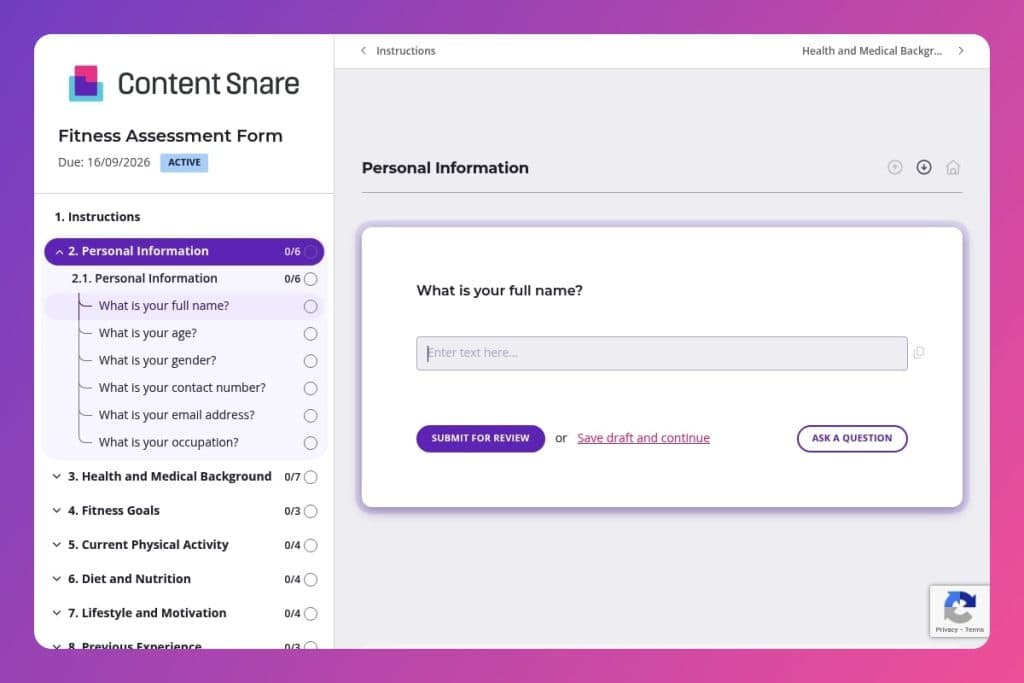


A comprehensive intake questionnaire that collects a client's health history, current fitness levels, nutrition habits, lifestyle factors, and training goals before their first session.

Personal trainers and fitness coaches who need detailed client information to design safe, personalized training programs and identify medical considerations or lifestyle barriers upfront.

Send this form 24-48 hours before initial consultations with new clients, and revisit periodically when progress stalls or goals change throughout the coaching relationship.
You can't design an effective training program without knowing your client's injury history, sleep patterns, stress levels, and what they actually eat for breakfast. Yet most trainers rely on memory, scattered notes, or rushed verbal intake sessions that miss critical details. The result? Programs that don't account for medication interactions, unrealistic goals without target dates, or workouts that clash with someone's 12-hour work schedule.
A fitness assessment form solves this. It captures everything you need - health background, current activity levels, nutrition habits, and motivation factors - before your first session even starts. This post covers what makes a great fitness assessment form, how to use it effectively with new clients, and includes a free template you can customize. Let's break it down.
Personal Information
Collect baseline identifiers and contact details for onboarding, follow-up, and record linkage.
Health and Medical Background
Screen for contraindications, risk stratification, and variables that impact programming and session readiness.
Fitness Goals
Clarify targets, timelines, and success metrics to align programming and reporting.
Current Physical Activity
Establish current training load, modality exposure, and environment preferences to set the starting point.
Diet and Nutrition
Capture nutritional patterns and constraints that affect recovery, energy availability, and compliance.
Lifestyle and Motivation
Gauge psychosocial factors that influence adherence and recovery.
Previous Experience
Leverage prior successes and avoid known friction points.
Additional Information
Leave space for nuance, edge cases, and concerns that standard items miss.
Send it before your first meeting: Give new clients the fitness assessment form at least 24-48 hours before your initial consultation. They need time to gather medical details, think through their nutrition habits, and articulate goals without feeling rushed. You'll walk into that first session already knowing their injury history and stress levels.
Use the health section to spot red flags early: Pay close attention to responses about chronic conditions, medications, and physician restrictions. If someone mentions high blood pressure or recent surgery, you can prepare modified exercises in advance or request medical clearance before they show up. This protects both of you.
Turn vague goals into measurable targets: Clients often write "lose weight" or "get stronger" in the fitness goals section. Follow up during your consultation to define specific metrics and realistic target dates. Ask how they'll measure success - pounds lost, clothing size, race completion time? This transforms wishful thinking into trackable progress.
Cross-reference lifestyle factors with their program design: Don't just read the answers - connect the dots. A client who sleeps 5 hours, rates stress as high, and works 60-hour weeks needs a different approach than someone with supportive routines. Use the lifestyle and motivation section to identify barriers before they derail training.
Keep the completed form accessible throughout your relationship: Review it periodically, especially when progress stalls or goals shift. Their dietary restrictions don't change, but motivation factors might. Reference what they said was most beneficial in past programs or what they wanted to avoid - it shows you're listening and helps you adjust your coaching style.
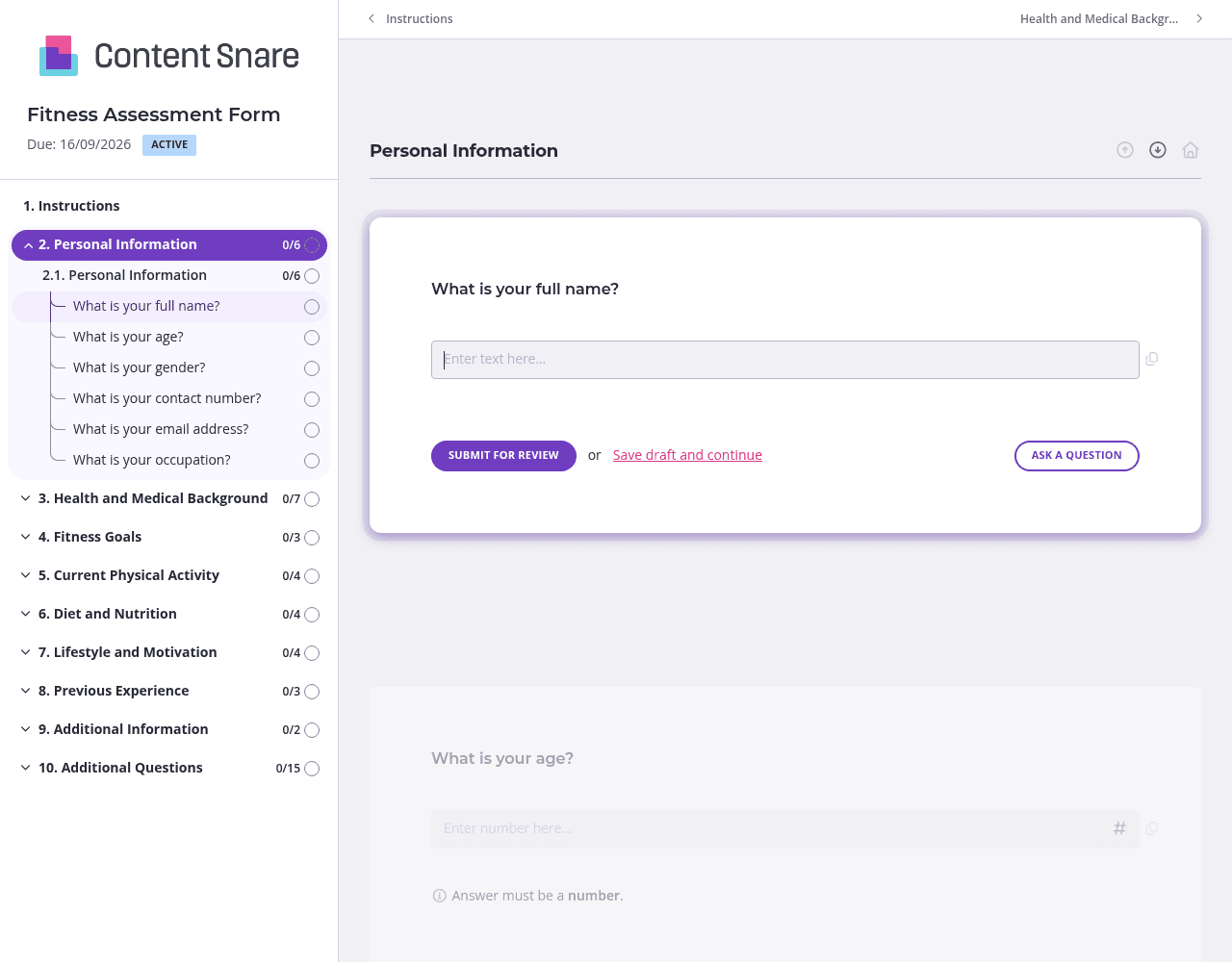
A fitness assessment form covers a lot of ground - medical history, nutrition habits, lifestyle factors, and past training experience. Content Snare lets you organize questions into separate pages and sections so clients aren't overwhelmed by a wall of text. Group the health and medical background questions on one page, fitness goals and current activity on another, and diet information on a third. Clients can save progress and return later, which matters when they need to check medication names or think through their typical eating patterns.
Not every question applies to every client. Use conditional logic to display follow-up questions only when relevant. If someone answers "yes" to chronic health conditions, show a field asking for specifics. If they've worked with a trainer before, reveal questions about what worked and what didn't. Clients skip irrelevant questions, and you get cleaner, more focused responses without the clutter.
Some clients will fill out your fitness assessment form immediately. Others won't, even though they're genuinely interested in training with you. Content Snare sends automatic reminders at intervals you choose, so you don't have to send awkward "just checking in" emails. The system handles follow-up while you focus on actual coaching. You'll get completed forms faster without feeling like you're nagging prospects.
Google Forms and shared documents feel clunky and unprofessional when you're trying to build a coaching business. Email chains get messy, clients forget to answer half the questions, and you waste time chasing people down. Content Snare handles the entire process - automatic reminders, progress tracking, and a polished experience that makes you look like the professional you are.
Content Snare is trusted by thousands of businesses worldwide and has hundreds of 5-star reviews across G2, Capterra, and Trustpilot. It's ISO 27001 certified, which matters when you're collecting sensitive health information and medical history. The platform integrates with tools you already use, so client data flows directly into your CRM or training software without manual data entry.
Fitness assessment forms are just the starting point. Personal trainers and coaches use Content Snare to collect:
The system is highly customizable - you control the branding, question flow, and client experience. No generic templates that scream "mass market form builder." Your forms look and feel like they're coming directly from you, which builds trust before clients ever step into a gym.


