
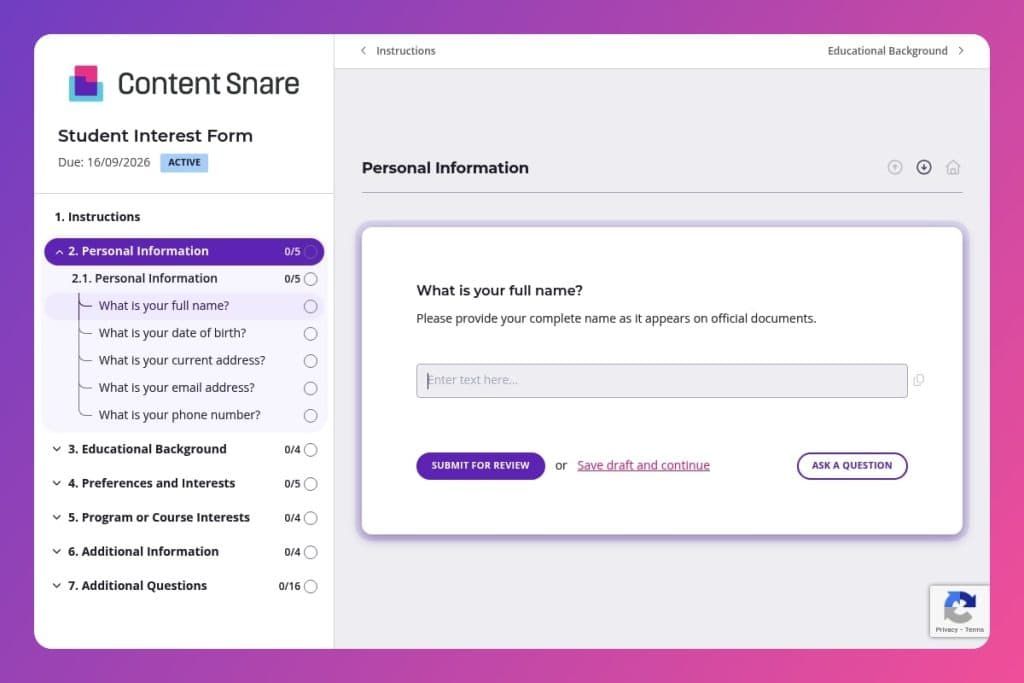


A comprehensive intake form that captures prospective students' personal details, educational background, academic interests, program preferences, and career goals to qualify leads and personalize recruitment.

Admissions teams, enrollment coordinators, and recruitment staff at schools, colleges, and universities who need to gather detailed information from prospective students during the initial inquiry stage.

Deploy immediately after first contact - following campus visits, website inquiries, open house events, or college fairs - while prospective students are actively exploring their options and your institution is fresh in their minds.
How many promising students slip through the cracks simply because you don't know what they're looking for? Student interest forms are your first real conversation with prospective learners - and they need to capture everything from academic goals to preferred learning formats before that interest goes cold.
A well-designed student interest form helps you collect contact details, educational background, program preferences, and career aspirations in one streamlined process. The result? Better recruitment targeting, faster follow-ups, and higher enrollment rates. This post covers what makes an effective student interest form, practical tips for implementation, and a free template you can customize for your institution. Let's dive in.
Personal Information
Capture core identifiers and reliable contact channels to verify records and coordinate outreach.
Educational Background
Establish academic context to inform program fit and advising.
Preferences and Interests
Map interests, funding needs, and long-term goals to tailor recommendations and communications.
Program or Course Interests
Clarify study load and delivery preferences to streamline program matching and scheduling.
Additional Information
Track source attribution and communication preferences to optimize follow-up and reporting.
Time it right: Send your student interest form immediately after initial contact - whether that's from a campus visit, inquiry call, or website download. Strike while their enthusiasm is high and your institution is top of mind.
Pre-fill what you already know: If a student has already given you their name and email through a website inquiry or event registration, don't make them enter it again. Pre-populate those fields to reduce friction and show you're paying attention.
Use the "favorite subjects" question as your segmentation goldmine: When students tell you they love STEM, arts, or business, you can route their information to the right department immediately. This single question helps admissions counselors personalize every follow-up conversation and recommend relevant programs they'll actually care about.
Don't ignore the "how did you hear about us" field: Track which marketing channels bring in the most qualified leads. If half your respondents found you through college fairs but none came from social media, you know exactly where to focus your recruitment budget next semester.
Follow up within 24 hours with specific next steps: Reference what they shared in the form - their interest in part-time study, their career goals in healthcare, or their questions about financial aid. Generic "thanks for your interest" emails waste the detailed information you just collected.
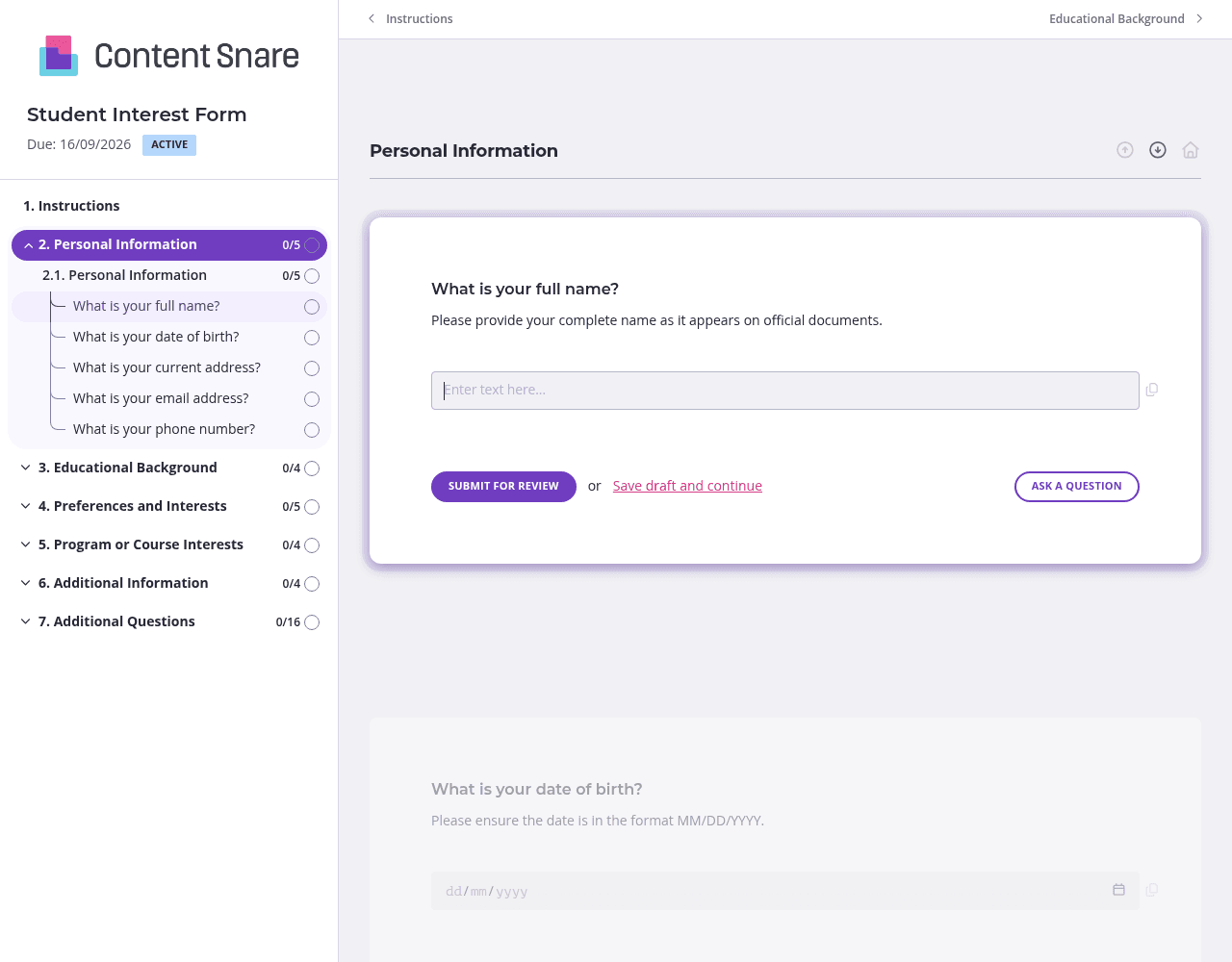
Student interest forms cover a lot of ground - personal details, academic history, program preferences, career goals. That's overwhelming in one long scroll. Split your form into logical pages: one for contact information, another for educational background, a third for interests and preferences. Students complete each section before moving to the next, which keeps them focused and dramatically reduces abandonment rates.
Not every question applies to every student. Use conditional logic to adapt the form as they fill it out. If a student selects "part-time study," show questions about evening class availability or work schedules. If they indicate interest in graduate programs, skip the high school GPA question entirely. You'll collect cleaner data and respect their time - both of which matter when you're competing for their attention.
Prospective students are deciding whether your institution feels right for them, often before they ever visit campus. Record a brief welcome video from an admissions counselor or current student and place it at the top of your form. Explain why you're asking these questions and what happens next. A friendly face transforms a sterile form into a genuine conversation and sets the tone for a warmer relationship from day one.
Students get busy. They start your form during lunch, get distracted, and forget to finish. Content Snare sends automatic reminder emails so partially completed forms don't become lost opportunities. You're not chasing people down or feeling pushy - the system handles follow-up professionally while you focus on the students who are ready to move forward.
You could use email, Google Forms, or paper applications - but none of them follow up automatically, track completion rates, or create a professional experience that matches your institution's standards. Content Snare is purpose-built for collecting information efficiently while keeping prospects engaged. It's trusted by thousands of businesses worldwide and rated 5 stars across G2, Capterra, and Trustpilot for good reason.
Student interest forms are just the beginning. Schools and colleges use Content Snare for enrollment applications, faculty onboarding documents, alumni information updates, internship program registrations, and collecting parent consent forms - all with the same automated follow-ups and professional presentation.
The platform integrates seamlessly with your existing CRM, student information systems, and communication tools. You're not adding another disconnected piece of software - you're upgrading how information flows into the systems you already use.
Security matters when handling student data. Content Snare is ISO 27001 certified, giving you and your students confidence that personal information, academic records, and contact details are protected at every step.
The interface is clean and intuitive. Students complete forms without confusion. Your admissions team manages submissions without training. Everyone saves time, and you look more organized than institutions still chasing paper forms or messy email threads.


