
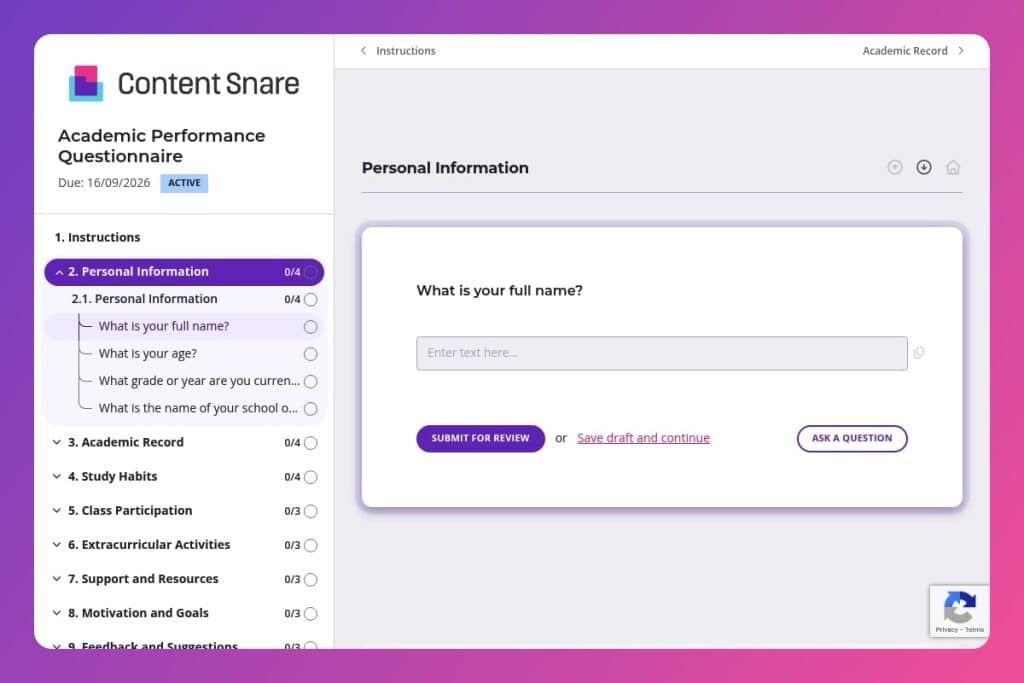


A structured questionnaire that collects comprehensive data about student academic performance, study habits, resource access, and support needs directly from learners.

School administrators, academic advisors, teachers, and counselors who need systematic insights into student learning patterns, challenges, and motivations across their institution.

Deploy after report cards, at mid-semester checkpoints, or before parent-teacher conferences when students have recent performance data and can provide accurate reflections on their academic experience.
You're trying to understand what drives student success - or what's holding learners back. Attendance patterns, study habits, resource gaps, motivation levels, and the balance between academics and extracurriculars all play a role. But gathering this information consistently across hundreds of students? That's where most schools struggle.
An academic performance questionnaire solves this. It's a structured, repeatable way to collect critical insights directly from students - without the manual chaos of paper forms or scattered emails. This post covers what makes an effective questionnaire, how to use it to improve student outcomes, and a free template to get you started.
Here's what you need to know.
Personal Information
Collect identifiers to link responses with student records and segment analyses.
Academic Record
Capture current coursework, performance metrics, and distinctions to contextualize results.
Study Habits
Probe time-on-task, planning, and strategies to understand effort and approach.
Class Participation
Gauge attendance and engagement behaviors that correlate with achievement.
Extracurricular Activities
Map non-academic commitments and their academic interplay.
Support and Resources
Assess access to supports and gaps that may affect attainment.
Motivation and Goals
Surface drivers and targets that shape persistence and planning.
Feedback and Suggestions
Invite actionable input on institutional supports and improvements.
Time it strategically: Send the questionnaire during natural reflection points - after report cards, mid-semester, or before parent-teacher conferences. Students will have recent grades and feedback fresh in mind, giving you more accurate responses about study habits and challenges.
Frame it as a conversation, not an evaluation: Make it clear this isn't about judgment or tracking compliance. Position it as a tool to understand individual learning styles and identify support needs. When students feel safe being honest about struggles - like not understanding material or lacking access to resources - you get data that actually drives change.
Review responses before individual meetings: Use completed questionnaires to prepare for one-on-one check-ins with students. If someone reports low class participation but strong grades, or mentions balancing multiple extracurriculars with declining performance, you can tailor your conversation and support recommendations immediately.
Look for patterns across cohorts: Don't just review forms individually. Compare responses by grade level, subject area, or student group to spot systemic issues. If multiple students mention the same resource barriers or motivation challenges, you've identified an institutional problem worth addressing.
Close the loop with follow-up: After analyzing responses, share back what you learned and what actions you're taking. Whether it's new tutoring hours, study skills workshops, or extended library access, showing students their feedback led to real changes builds trust and increases participation next time.
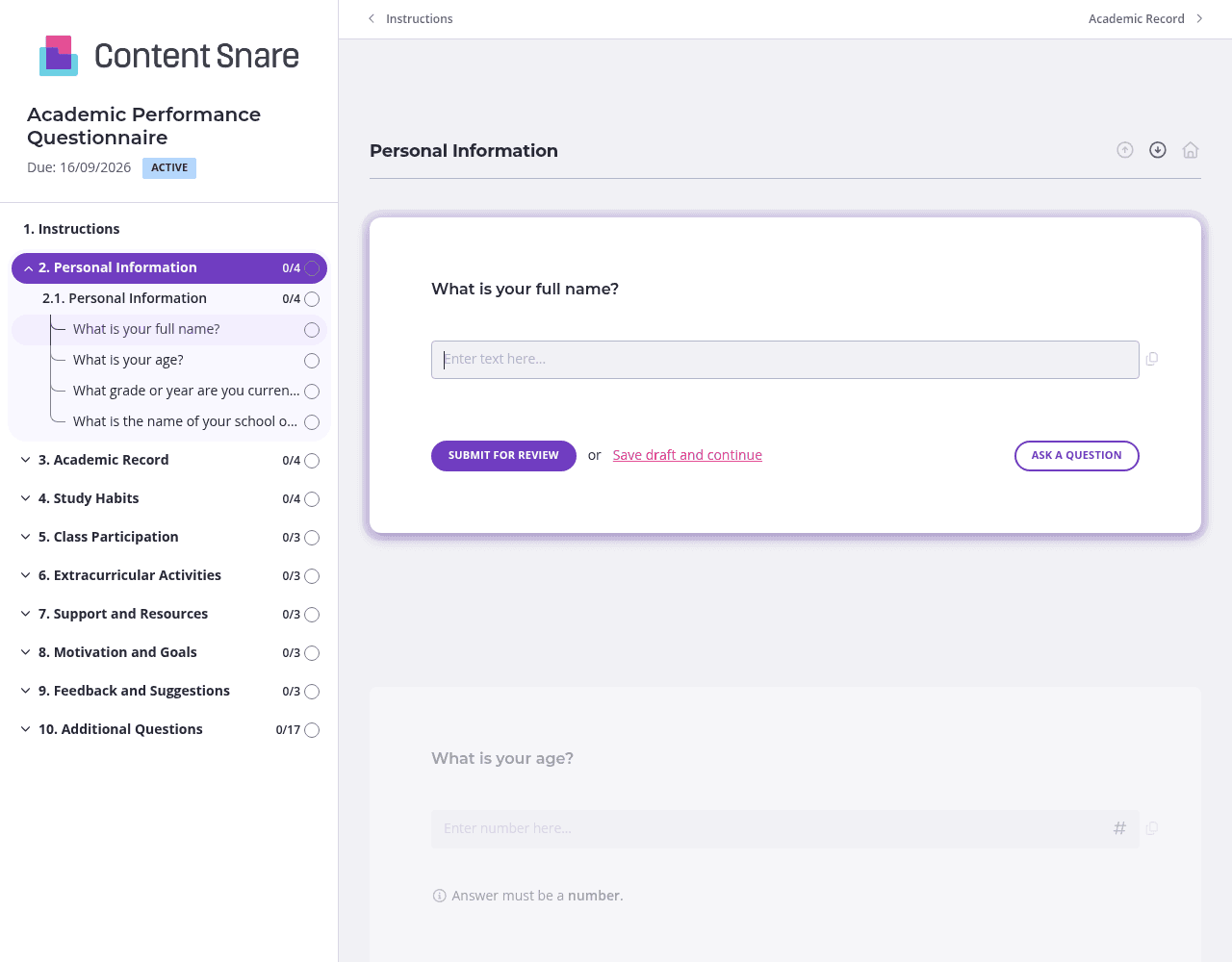
Students can feel overwhelmed when faced with a long list of questions about their academic life. Use pages to separate major themes - Personal Information, Study Habits, Class Participation, and Support Resources each get their own space. This makes the form feel manageable and helps students focus on one area at a time without losing their place.
You likely have basic student information on file - names, grade levels, current subjects. Pre-fill these fields or delete them entirely before sending. Students appreciate not rehashing details you already have, and you get straight to the insights that matter: their study methods, resource needs, and academic goals.
The difference between useful and vague responses often comes down to how well students understand what you're asking. Use instruction areas to clarify expectations - explain that "study methods" might include flashcards, group study, or practice tests. For the question about balancing extracurriculars, give examples so students know whether to mention sports, part-time jobs, or volunteer work. Better questions up front mean fewer follow-ups later.
Students are busy and easily distracted. Automatic reminders ensure questionnaires don't get buried under homework and notifications. You stay on their radar without manually tracking who hasn't responded or sending awkward follow-up emails yourself. The form does the nudging while you focus on supporting students who've already shared their feedback.
Paper forms get lost. Emails with attachments create version control chaos. Google Forms work, but they lack the follow-up tools and professional polish schools need. Content Snare eliminates the back-and-forth while keeping student data secure and organized in one place.
You get automatic reminders, progress tracking, and a branded experience that builds trust with students and parents. Content Snare is ISO 27001 certified and trusted by thousands of businesses worldwide - critical when you're handling sensitive academic information. It integrates with the tools you already use, so data flows directly into your student information systems without manual data entry.
This academic performance questionnaire is just one way to use Content Snare. Schools and colleges also use it to streamline enrollment applications, collect internship placement information, gather alumni feedback, manage scholarship applications, and coordinate parent-teacher conference scheduling. Anything that requires collecting information from students, parents, or staff becomes simpler and more professional.
With hundreds of 5-star reviews across G2, Capterra, and Trustpilot, Content Snare has proven itself as the reliable choice for organizations that need to collect information efficiently without sacrificing quality or security.


