
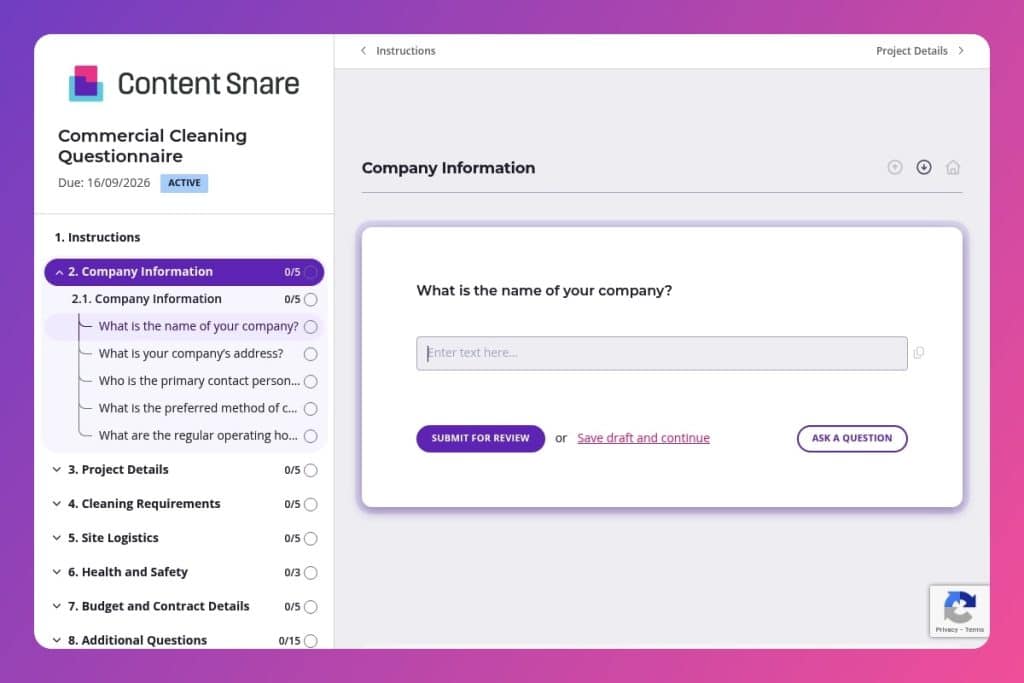


A structured intake form that captures all essential details for coordinating commercial cleaning services on construction sites or office spaces, from square footage and cleaning frequency to site access protocols and safety requirements.

General contractors, project managers, and construction supervisors who need to gather accurate information from clients or communicate scope requirements to cleaning subcontractors for new builds, renovations, or post-construction cleanup.

Send this before soliciting cleaning quotes or finalizing subcontracts to establish clear scope expectations, prevent miscommunication about site logistics and hazards, and create a documented baseline that protects against scope creep as the project progresses.
Did you know that 73% of construction project delays stem from miscommunication with subcontractors? When you're coordinating commercial cleaning for a job site or office, vague expectations lead to missed details, budget overruns, and frustrated clients. A commercial cleaning questionnaire solves this problem by capturing every critical detail upfront - from square footage and access protocols to hazardous materials and storage requirements.
This post walks you through what makes an effective commercial cleaning questionnaire, how to use it to get accurate quotes and avoid scope creep, and where to grab a free template you can customize. You'll learn which questions prevent the most headaches and how to streamline communication with cleaning vendors from day one. Let's break it down.
Company Information
Confirm who you’ll work with and how to reach them, then lock basic operating context.
Project Details
Use these to size the job and set the service cadence and timing.
Frequency and schedule drive staffing windows; special-attention areas may require specialized labor or sequencing.
Cleaning Requirements
Capture product standards, surface sensitivities, and add-on services to avoid rework and misses.
Product preferences and surface-specific methods affect supply lists, SDS, and technician training; waste rules impact disposal workflows and cost.
Site Logistics
Clarify access, storage, and compliance so crews arrive prepared and can move efficiently.
Security procedures, off-limits zones, background checks, parking, and storage determine access planning, time on site, and what gear crews can bring.
Health and Safety
Lock down required protocols and known risks to set training and PPE standards.
Client protocols, site hazards, and PPE mandates shape risk controls and may affect time estimates.
Budget and Contract Details
Set commercial guardrails early to keep scoping, proposals, and onboarding tight.
Budget, term, billing mechanics, and references influence the sales path; open-ended requests surface add-ons before proposal.
Walk the site before sending the form: Spend 15 minutes documenting square footage, special surface materials, and any hazardous areas yourself. When you pre-fill sections like area size and known site concerns, cleaning vendors can quote more accurately and you'll catch discrepancies early - like whether that epoxy floor needs special products or if post-construction dust requires extra attention.
Be specific about scheduling windows and access restrictions: Vague answers to "ideal cleaning time" create chaos on active job sites. Note exact hours when crews won't interfere with trades, which entrances cleaners can use, and whether site managers need advance notice. The clearer you are about security procedures and off-limit areas upfront, the fewer awkward conversations you'll have when a cleaner shows up at the wrong gate at 6 AM.
Use completed forms as your baseline for change orders: Keep the submitted questionnaire as your scope-of-work reference. When a client later asks for daily instead of weekly service, or adds a new breakroom that wasn't in the original square footage, you've got documented proof of what was agreed. It protects both you and your cleaning vendor from scope creep - and makes billing adjustments straightforward.
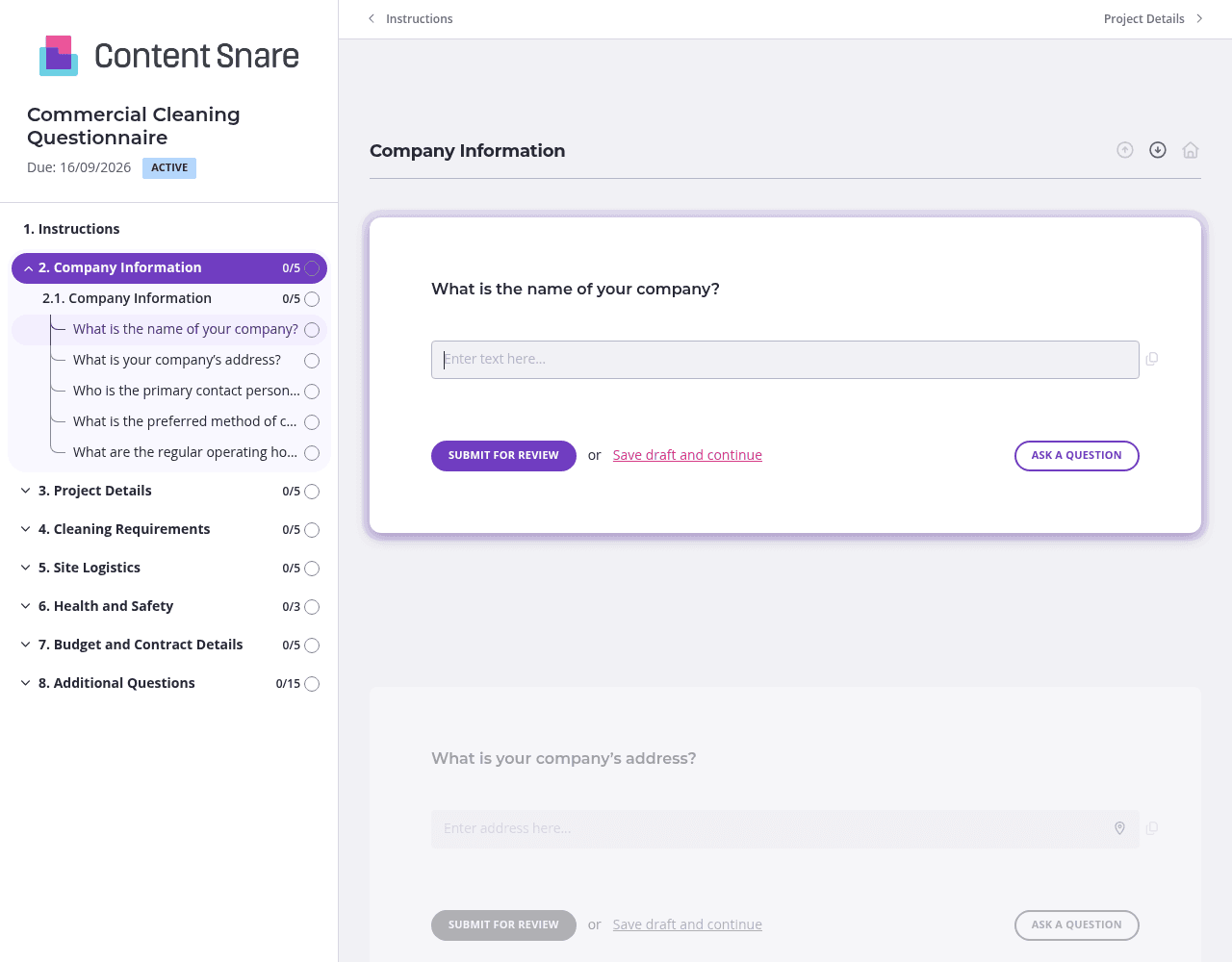
You likely have basic details already - company name, address, square footage from blueprints, operating hours. Pre-fill those fields before sending the form. Your cleaning vendors spend less time on data entry and more time on the questions that actually matter, like site hazards and access protocols. Delete questions entirely if they're not relevant to your project. No sense asking about carpet cleaning if it's a concrete warehouse.
The "specific areas requiring special attention" question is where confusion happens. Add a quick instruction note: "Include details like post-construction debris, chemical storage areas, or surfaces damaged during build-out." Same goes for security procedures - a two-line example of what you need ("Gate code: 1234, check in with foreman Tom") saves three follow-up emails. Clear instructions upfront mean you get usable answers the first time.
Construction moves fast, and busy site managers forget to fill out forms. Automatic reminders handle follow-up for you - no awkward "just checking in" emails from your end. Set reminders to go out every few days until the form is complete. You stay on schedule without being the one constantly chasing people down.
Group related questions together: Company Information on page one, Project Details and Cleaning Requirements on page two, Site Logistics and Safety on page three. It's less overwhelming than a single endless scroll, especially when you're asking about everything from waste disposal guidelines to parking availability. People are more likely to complete a form that feels manageable.
Email threads get messy. Spreadsheets get lost. Phone tag wastes time. Content Snare gives you a single place to collect information from cleaning vendors, subcontractors, and clients - with automatic reminders, progress tracking, and a professional experience that makes you look organized. No more hunting through attachments or wondering if someone actually got your message.
Thousands of businesses trust Content Snare to streamline their information collection, and it's ISO 27001 certified for security - critical when you're handling site access codes, safety protocols, and vendor background check requirements. It integrates with the tools you already use and has earned hundreds of 5-star reviews on platforms like G2, Capterra, and Trustpilot.
This commercial cleaning questionnaire is just one way to use Content Snare in construction. You can also use it to:
Content Snare adapts to however you work - customize forms for any process where you're waiting on information from someone else.


