
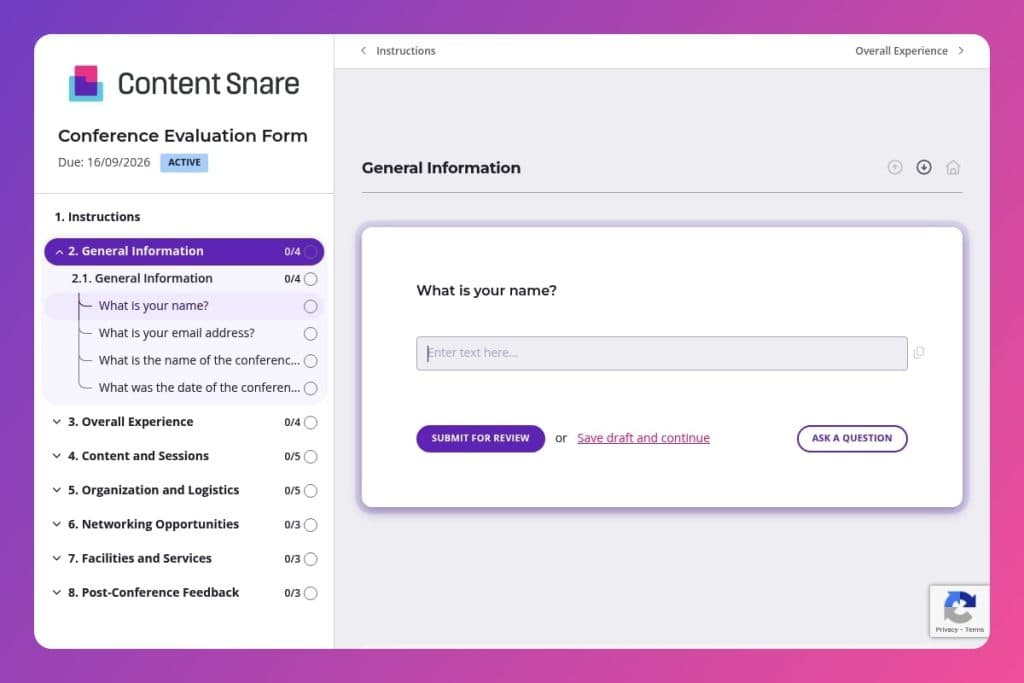


A structured feedback questionnaire that collects attendee opinions on session quality, speakers, logistics, networking opportunities, venue facilities, and overall conference experience.

Conference organizers, event planners, and professional associations who need actionable insights to improve future events and demonstrate value to stakeholders and sponsors.

Immediately after your conference concludes - ideally within 24 hours - while attendee memories are fresh and specific details about sessions, speakers, and logistics are still clear.
You spent months planning your conference - but do you actually know if it delivered? Without structured feedback, you're left guessing which speakers resonated, where logistics fell short, and whether attendees will return next year. That uncertainty costs you registrations, sponsorships, and credibility.
A conference evaluation form gives you the insights you need. It captures honest feedback on everything from session quality and keynote speakers to networking opportunities and venue logistics. This post covers what makes an effective evaluation form, practical tips for maximizing response rates, and a free template you can customize and deploy immediately. Let's dive in.
General Information
These confirm respondent identity and anchor feedback to a specific event.
Overall Experience
These capture global satisfaction and priorities to frame deeper analysis.
Content and Sessions
These assess topic-market fit, speaker quality, and expectation alignment.
Organization and Logistics
These evaluate operational touchpoints that shape perceived professionalism and ease.
Networking Opportunities
These measure the quality and accessibility of relationship-building moments.
Facilities and Services
These gauge comfort and basic services that influence dwell time and satisfaction.
Post-Conference Feedback
These reveal intended application, future interest, and unstructured insights.
Send the form while impressions are fresh: Distribute your conference evaluation form within 24 hours of your event closing. Attendees remember specific details - like which keynote speaker missed the mark or how the registration process felt clunky - much better when the experience is still top of mind. Wait a week and you'll get vague, less actionable feedback.
Frame the networking and facilities questions based on your event format: If your conference was hybrid or virtual, adjust questions about venue comfort, food quality, and in-person networking opportunities accordingly. You'll waste goodwill asking remote attendees to rate catering they never experienced. Tailor the facilities section to match what you actually provided, and you'll get relevant data instead of confused responses or skipped questions.
Close the loop with respondents who share critical insights: When someone takes time to explain what they'd change or suggests topics for future conferences, acknowledge it. A quick personal email thanking them for specific feedback - especially constructive criticism - builds loyalty and shows you're listening. These engaged attendees often become your most valuable repeat registrants and word-of-mouth advocates.
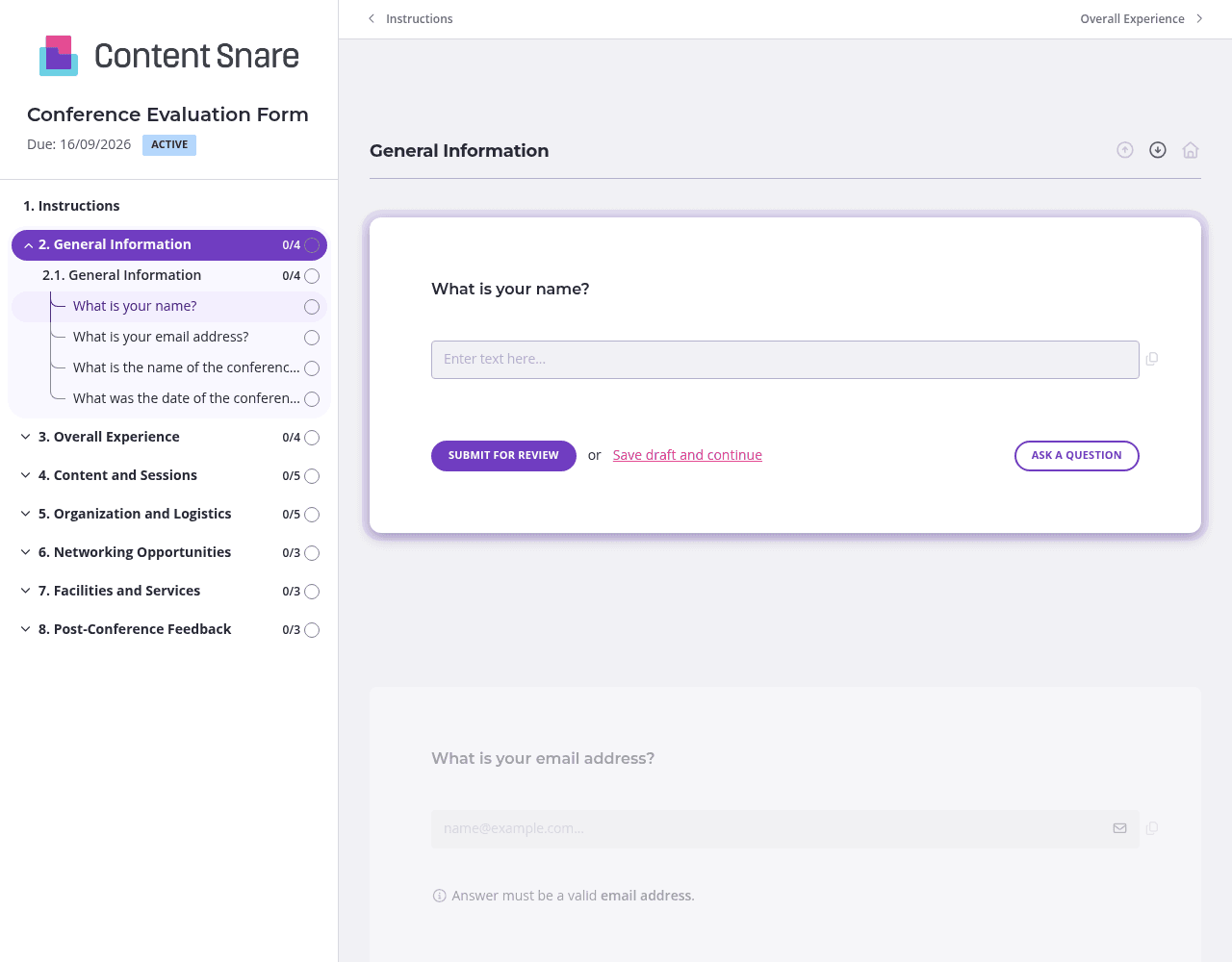
Conference evaluations cover a lot of ground - from session quality to catering to networking. Organize your questions into clear pages or sections that mirror the attendee journey: General Information, Content and Sessions, Logistics, Networking, and Facilities. Respondents can focus on one area at a time instead of facing an overwhelming wall of questions. They'll complete more thoughtfully, and you'll get better data.
You already know each attendee's name, email, and which conference they attended. Pre-fill those fields before sending your evaluation form. It eliminates redundant typing, shows professionalism, and gets people straight to the questions that matter - their actual experience. This small touch significantly boosts completion rates because it respects how busy your attendees are.
Conference attendees are juggling follow-ups, travel expenses, and getting back to work. They genuinely want to help but forget. Automatic reminders handle the follow-up for you - no need to manually track who responded or send "just checking in" emails that feel pushy. Schedule a gentle nudge for three days after sending, and you'll double your response rate without lifting a finger or damaging relationships.
Drop in a quick photo or video message at the start thanking attendees for their participation. For questions about the venue or facilities, include a banner image of the space to jog their memory. Visual elements make the form feel less transactional and more like a genuine conversation. Attendees engage more when they feel personally addressed, not just surveyed.
Email chains and generic survey tools create friction. Attendees abandon half-completed forms, responses disappear into spam folders, and you're left manually chasing feedback. Content Snare eliminates that chaos with automatic reminders, progress tracking, and a professional experience that actually gets completed. It's trusted by thousands of businesses worldwide and has hundreds of 5-star reviews across G2, Capterra, and Trustpilot.
Conference evaluation forms are just the beginning. Use Content Snare to collect speaker bios and session abstracts before your event, gather sponsor assets and requirements without the back-and-forth, or onboard exhibitors with venue guidelines and booth specifications. Content Snare integrates with the tools you already use - your CRM, project management software, and email platforms - so everything flows seamlessly into your existing workflow. It's highly customizable, meaning you can adapt it to any conference format, attendee type, or data collection need throughout your event lifecycle.


