
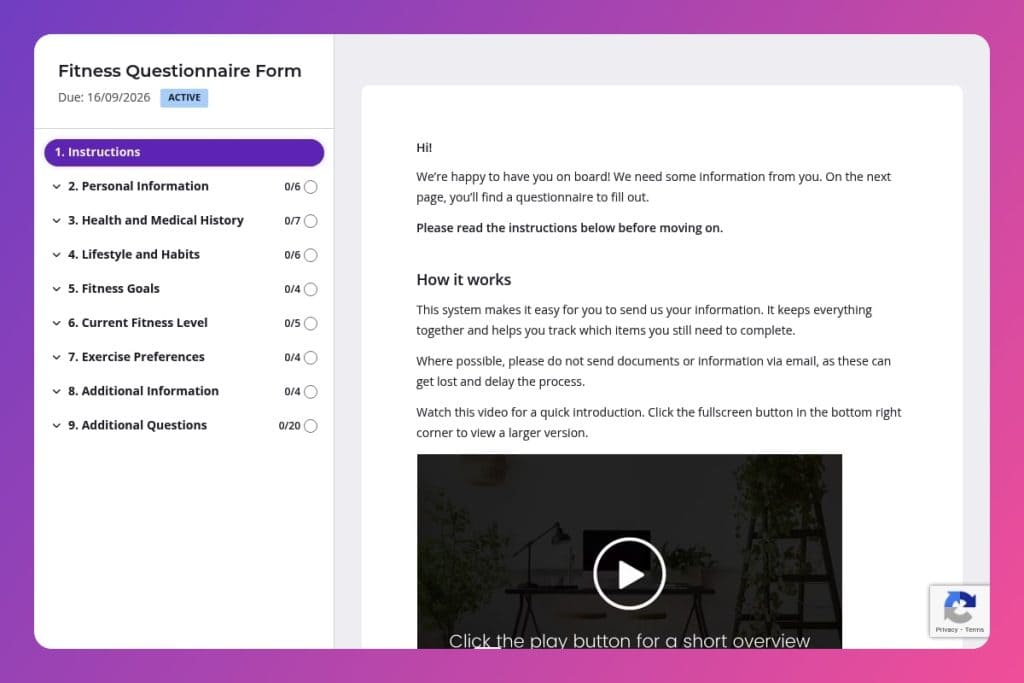


A comprehensive intake form that collects client health history, medical conditions, lifestyle habits, current fitness level, and specific training goals before you start working together.

Health coaches and personal trainers who need complete client information upfront to design safe, personalized programs and avoid injury risks or mismatched expectations.

Send this form 24-48 hours before discovery calls or first training sessions so you can review medical red flags, identify lifestyle barriers, and show up prepared with a focused strategy.
You're losing clients before their first session even starts. Without a clear picture of their health history, fitness level, and goals, you risk designing programs that miss the mark - or worse, cause injury. The result? Frustrated clients, wasted time, and a shaky foundation for success.
A fitness questionnaire form solves this. It captures everything you need upfront: medical conditions, lifestyle habits, exercise preferences, and specific goals. You'll spend less time guessing and more time coaching. This post covers what to include in your form, how to use it effectively with new clients, and a free template to get started. Let's break it down.
Personal Information
Use this block to capture core identifiers and contact channels. Occupation can flag schedule constraints and occupational demands.
Health and Medical History
Screen for contraindications and red flags before programming. Capture details that may require medical clearance or modifications.
Lifestyle and Habits
Map baseline behaviors that affect recovery, energy availability, and adherence. Quantify intake patterns and non-exercise load.
Fitness Goals
Define outcomes, timelines, and checkpoints to scope the plan and structure periodization.
Current Fitness Level
Gauge capacity and training age to set starting loads, volume, and progression rates.
Exercise Preferences
Use preferences to drive adherence and plan around environment, equipment, and schedule.
Additional Information
Invite context that standard fields miss, including prior coaching experiences, barriers, and resource needs.
Send it before your discovery call: Get the form filled out 24-48 hours before you first speak with a client. You'll show up prepared, ask better questions, and turn a generic intro call into a focused strategy session. No more wasting half the conversation gathering basic info.
Flag medical red flags immediately: Review the health and medical history section as soon as it's submitted. If a client lists heart disease, recent surgery, or serious injuries, reach out before designing their program. A quick clarification call protects both of you and shows you're paying attention to what matters.
Use their answers to personalize your pitch: Notice they hate gyms but love hiking? Reference that when proposing outdoor training sessions. Spot a gap between their ambitious goals and current fitness level? Address it upfront with realistic milestones. The fitness goals and exercise preferences sections give you everything you need to speak their language.
Create a baseline document: Save their initial responses as a "day one" snapshot. When clients feel stuck three months in, pull it up and show them how far they've come - improved sleep, increased activity level, or milestones they've crushed. It's powerful motivation hiding in plain sight.
Look for lifestyle patterns that sabotage progress: Don't just skim the lifestyle and habits section. Five hours of sleep, high stress from their occupation, and minimal water intake? Those are bigger barriers than their workout routine. Address them in your coaching plan, or fitness progress will stall no matter how perfect the programming is.
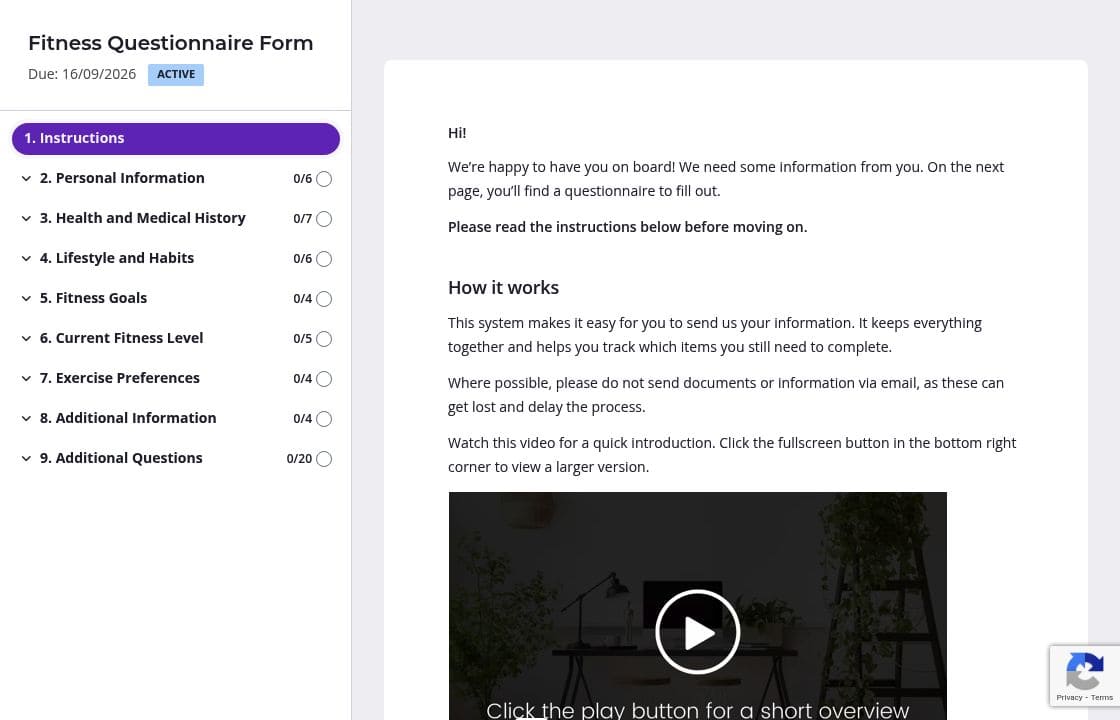
Your fitness questionnaire form covers a lot of ground - from medical history to exercise preferences to lifestyle habits. Dump it all on one page and clients feel overwhelmed before they start.
Use pages and sections to organize the flow. Group health and medical history together, then move to lifestyle questions, then fitness goals. Clients can tackle one topic at a time without feeling like they're filling out hospital paperwork. They're more likely to finish, and you'll get more thoughtful answers.
Not every client has musculoskeletal issues or medical conditions, but you need to ask everyone just in case.
Set up conditional logic so follow-up questions only appear when needed. Someone answers "yes" to existing medical conditions? The form expands to ask for details. They answer "no"? It moves on. You get the critical health information without making healthy clients wade through irrelevant questions. The form feels personal, not generic.
You send the form. Crickets. Now you're stuck deciding when to nudge them without seeming pushy.
Turn on automatic reminders and let the system handle it. Clients get gentle prompts if they haven't completed the form, and you stay focused on actual coaching. No awkward "just checking in" emails. No clients slipping through the cracks because you forgot to follow up during a busy week.
Questions about medications, surgeries, and heart disease can make clients nervous - or confused about how much detail you need.
Drop in brief instructions or video explanations for the health and medical history section. A 30-second clip explaining why you ask about blood pressure or how their answers shape their program builds trust. Clients understand you're being thorough, not intrusive, and they'll give you better information.
Google Forms and email threads weren't built for collecting sensitive client information. You need something that feels professional, keeps health data secure, and actually gets completed. Content Snare does all three. It's ISO 27001 certified and trusted by thousands of businesses worldwide who need a better way to gather information from clients.
You're not just collecting answers - you're building trust with new clients from day one. Content Snare makes the experience seamless with customizable branding, automatic reminders that don't feel pushy, and a clean interface that works on any device. Your clients see your logo and your colors, not a generic form template.
Health coaches and personal trainers handle sensitive information daily. Content Snare is highly secure and designed for professionals who can't risk data breaches or sloppy client experiences. It integrates with the tools you already use, so client information flows directly into your CRM or scheduling system without manual data entry.
This form is just one way to use Content Snare. Health coaches and personal trainers also use it to:
Content Snare has hundreds of 5-star reviews across G2, Capterra, and Trustpilot because it solves the messy parts of client communication. You focus on coaching. The platform handles the rest.


