
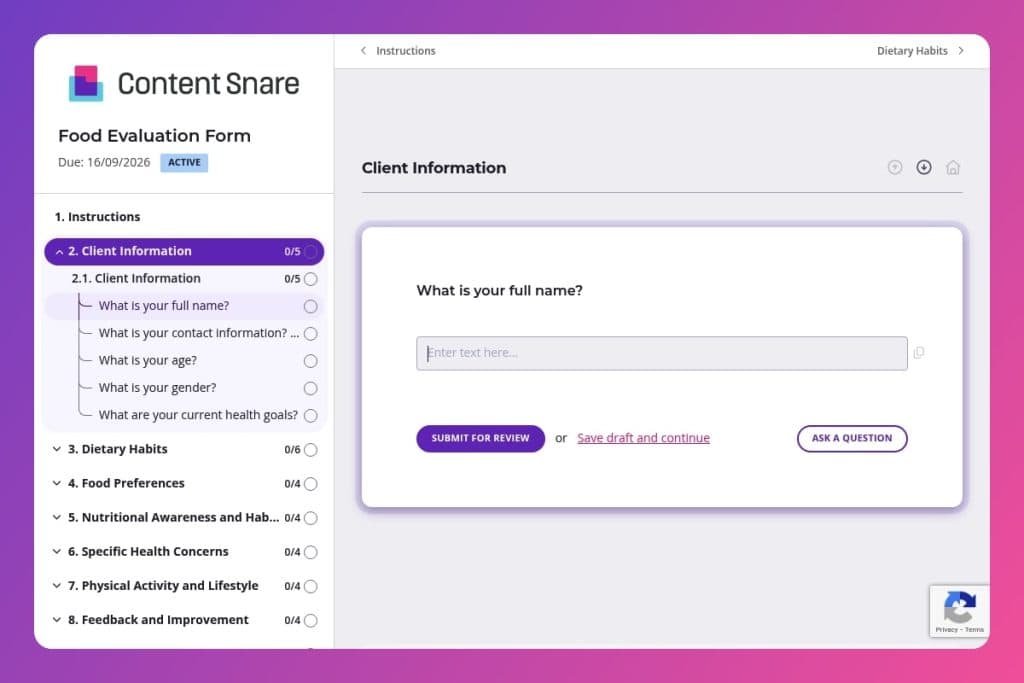


A comprehensive intake questionnaire that captures your client's complete dietary habits, meal patterns, food preferences, restrictions, and lifestyle factors before coaching sessions begin.

Health coaches and personal trainers who need detailed nutritional insights to create personalized meal plans and identify why clients aren't seeing progress despite claimed healthy eating.

Send during onboarding 24-48 hours before initial consultations, then redistribute quarterly to track evolving habits and catch dietary changes that impact client results.
Your client says they're eating healthy, but their progress stalled three weeks ago. You suspect hidden calories or missed nutrients, but digging through vague food logs during sessions wastes precious time - and frustrates both of you.
A food evaluation form solves this. It captures complete dietary habits, preferences, restrictions, and lifestyle factors upfront - before your first session or check-in. You'll spot patterns faster, personalize plans with confidence, and spend client time on coaching, not data collection. This post walks you through what makes an effective food evaluation form, shares practical tips for getting clients to complete it honestly, and includes a free template you can customize today. Let's dive in.
Client Information
Capture identifiers and goal context for personalization and longitudinal tracking.
Dietary Habits
Establish baseline intake patterns, environments, and constraints that drive choices. Restrictions and supplement use influence feasibility and safety.
Food Preferences
Map palatal preferences and aversions to guide compliant menu design.
Nutritional Awareness and Habits
Gauge nutrition literacy and current practices to calibrate guidance depth.
Specific Health Concerns
Screen for safety, contraindications, and medical influences on diet.
Physical Activity and Lifestyle
Contextualize intake within energy expenditure, circadian patterns, and stress load.
Feedback and Improvement
Elicit barriers, knowledge gaps, and change priorities to shape next steps and messaging.
Send it before your first session: Have new clients complete the food evaluation form during onboarding, at least 24-48 hours before you meet. This gives you time to review their dietary habits, spot red flags like food allergies or digestive issues, and prepare targeted questions. You'll walk into that first conversation already knowing whether they're skipping breakfast, relying on takeout, or dealing with stress-related cravings.
Cross-reference meal schedules with energy levels: Pay close attention to how clients answer both the "usual meal schedule" and "energy levels throughout the day" questions. A client who eats lunch at 2 PM and crashes at 3 PM isn't a coincidence - it's a coaching opportunity. Use these connections to demonstrate how timing impacts performance, making your recommendations feel personalized and evidence-based.
Use the "challenges" question as your roadmap: The feedback section asks what clients find challenging about maintaining a healthy diet. Their answer here often reveals the real barrier - time constraints, picky family members, budget concerns, or lack of cooking skills. Address this challenge directly in your action plan rather than prescribing generic meal prep advice they won't follow.
Update it quarterly, not just once: Food habits shift with seasons, stress levels, and life changes. Re-send a shortened version of the form every three months to track how beverage choices, snack patterns, and physical activity evolve. You'll catch backsliding early and celebrate wins like increased fruit and vegetable consumption that clients might not mention otherwise.
Flag contradictions for honest conversations: If a client claims calorie awareness but lists frequent cravings and low energy, there's likely a gap between perception and reality. Use these inconsistencies gently during sessions - "I noticed you mentioned tracking calories but also experience afternoon crashes. Let's look at what you're actually eating around lunch" - to dig deeper without sounding accusatory.
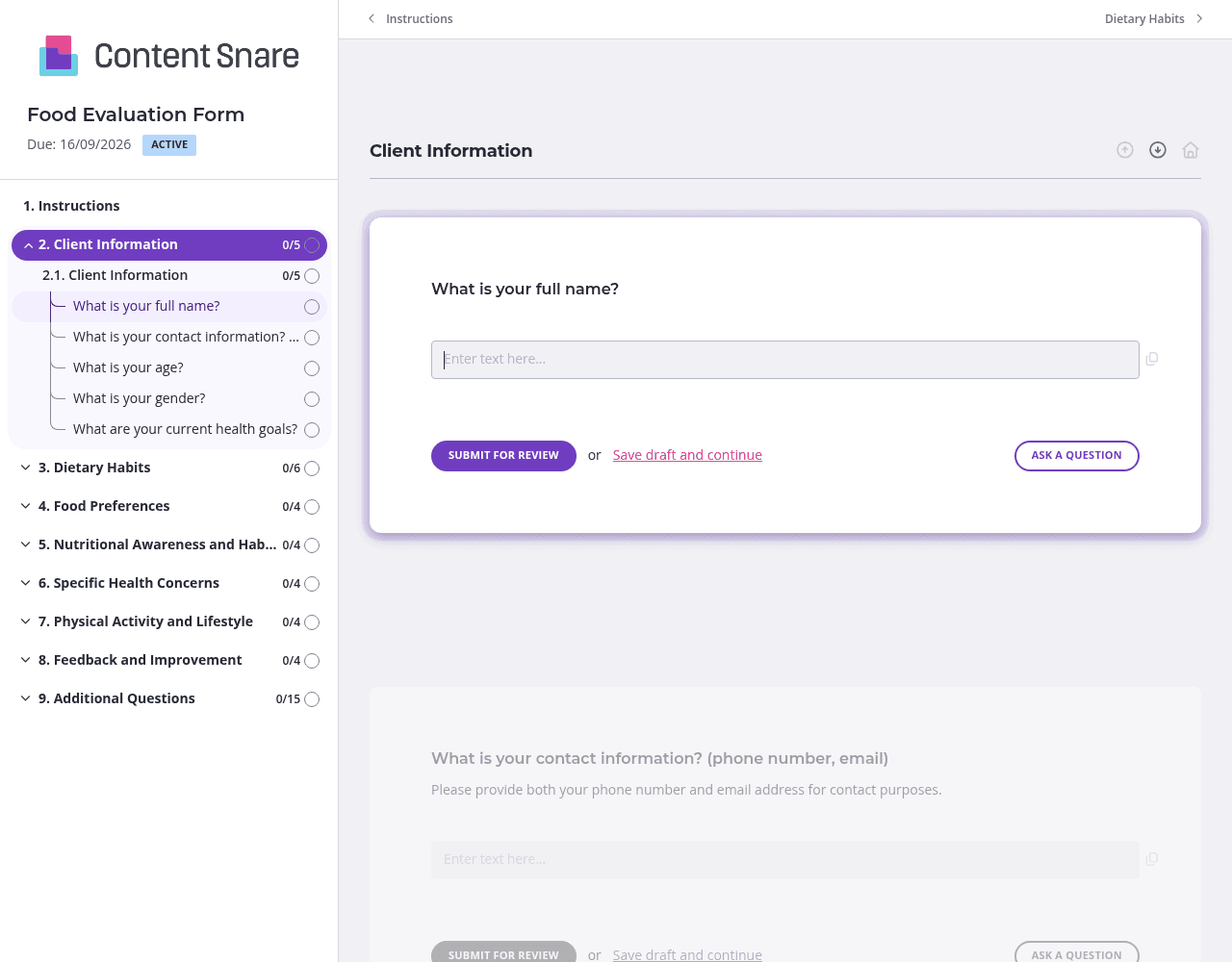
A food evaluation form covering dietary habits, health concerns, and lifestyle factors can overwhelm clients if dumped into one endless scroll. Split it into logical sections - Client Information, Dietary Habits, Food Preferences, Health Concerns, and Lifestyle. Each page feels manageable. Clients are more likely to give thoughtful answers about their meal schedules and cravings when they're not staring down 30 questions at once.
Not every client needs to answer every question. Someone who marks "no alcohol consumption" doesn't need follow-ups about drinking frequency. A client without dietary restrictions can skip the detailed allergy questions. Conditional logic hides irrelevant fields based on previous answers, creating a streamlined experience. Your clients spend less time on the form, and you get cleaner data without unnecessary "N/A" responses cluttering their submissions.
Questions about calorie tracking, supplement use, or specific dietary plans can mean different things to different people. Drop brief instructions or examples directly above tricky questions. For "Are you aware of your daily calorie intake?" add a line like "This means actively tracking or estimating calories, not just having a general sense." For the supplements question, mention "Include protein powders, multivitamins, and any herbal supplements." Clear guidance upfront means fewer incomplete answers and follow-up messages asking for clarification.
You likely have basic client information - name, email, age, current health goals - from your initial inquiry or consultation call. Prefill those fields before sending the form. Clients appreciate not re-entering details they've already shared, and it shows you're paying attention. They can jump straight to the questions that matter: their eating patterns, food preferences, and the challenges they're facing with nutrition.
You could use Google Forms or email questionnaires to collect client food data. But chasing incomplete responses, deciphering confusing answers, and manually organizing submissions wastes hours every week. Content Snare automates the follow-up, guides clients through complex nutrition questions, and delivers organized information you can actually use - without the back-and-forth chaos.
Health coaches and personal trainers trust Content Snare because it handles sensitive health information securely (ISO 27001 certified) and integrates with the tools you already use for scheduling, CRM, and client management. Thousands of businesses worldwide rely on it to make client onboarding feel professional and effortless, with hundreds of 5-star reviews across G2, Capterra, and Trustpilot backing that up.
This form is just one way to streamline your practice. Health coaches and personal trainers also use Content Snare for:
Each form saves you hours of administrative work and keeps client information organized in one secure place.


