
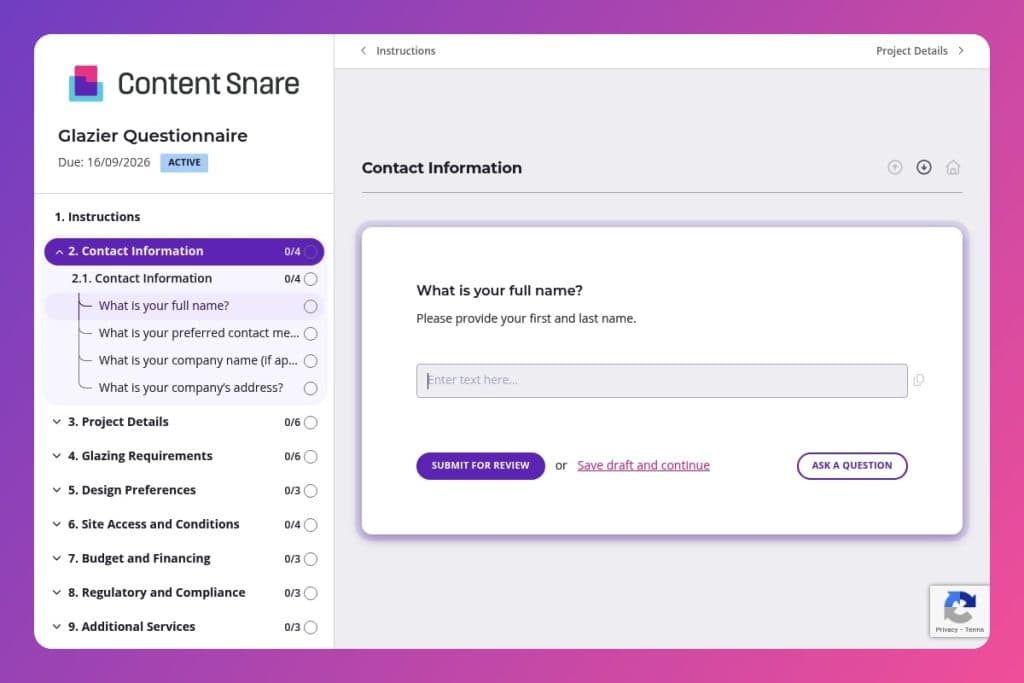


A pre-project intake form that captures all technical specifications, site conditions, budget parameters, and regulatory requirements before glazing work begins.

General contractors, construction project managers, and glazing subcontractors who need complete project details from clients before quoting or starting glass installation work.

Send this form 24-48 hours before initial client consultations or immediately after a project inquiry to gather specifications and avoid costly miscommunication during quoting and installation phases.
Miscommunication between contractors and glaziers costs construction projects thousands in delays and rework. Missing dimensions, unclear safety specs, or forgotten site access details can derail timelines and budgets fast. The glazier questionnaire solves this by capturing every critical detail upfront - from glass types and energy standards to site conditions and regulatory requirements.
This post covers everything you need to use a glazier questionnaire effectively. You'll get an overview of what questions to ask, practical tips for customizing the form for your projects, and a free template to start using today. Let's break it down.
Contact Information
This block captures primary contact and company details for routing approvals and communications.
Project Details
Lock down site, building type, scope, and timeline to size the engagement and schedule resources.
Glazing Requirements
Define technical requirements for glass type, performance, dimensions, and safety to drive specification and pricing accuracy.
Design Preferences
Record aesthetic direction and branding constraints to align samples, finishes, and shop drawings.
Site Access and Conditions
Surface access limits, removals, hazards, and equipment responsibilities to plan logistics and risk controls.
Budget and Financing
Set commercial guardrails and payment structure to shape options and terms.
Regulatory and Compliance
Confirm jurisdictional constraints, required credentials, and inspection responsibilities to avoid rework and delays.
Additional Services
Clarify scope boundaries and post-install expectations for support and recurring services.
Feedback and Additional Information
Leave room for edge cases and next steps to streamline follow-up.
Send the form before the first meeting: Get responses 24-48 hours ahead of your initial consultation. You'll show up knowing project scope, budget range, and site constraints - which means you can skip basic fact-finding and focus on solutions. Clients appreciate when you've already reviewed their glazing requirements and design preferences.
Flag incomplete answers on dimensions and site access early: These two sections cause the most back-and-forth later. If a client submits vague measurements or skips questions about scaffolding needs and access restrictions, follow up immediately. A quick clarifying call now prevents costly assumptions during the quoting or installation phase.
Use responses to build your proposal sections: Copy details directly from the form into your quote or scope of work document. Their answers about energy efficiency standards, safety requirements, and regulatory compliance become the foundation of your proposal - saving you hours of rewriting and reducing the chance you'll miss a critical spec.
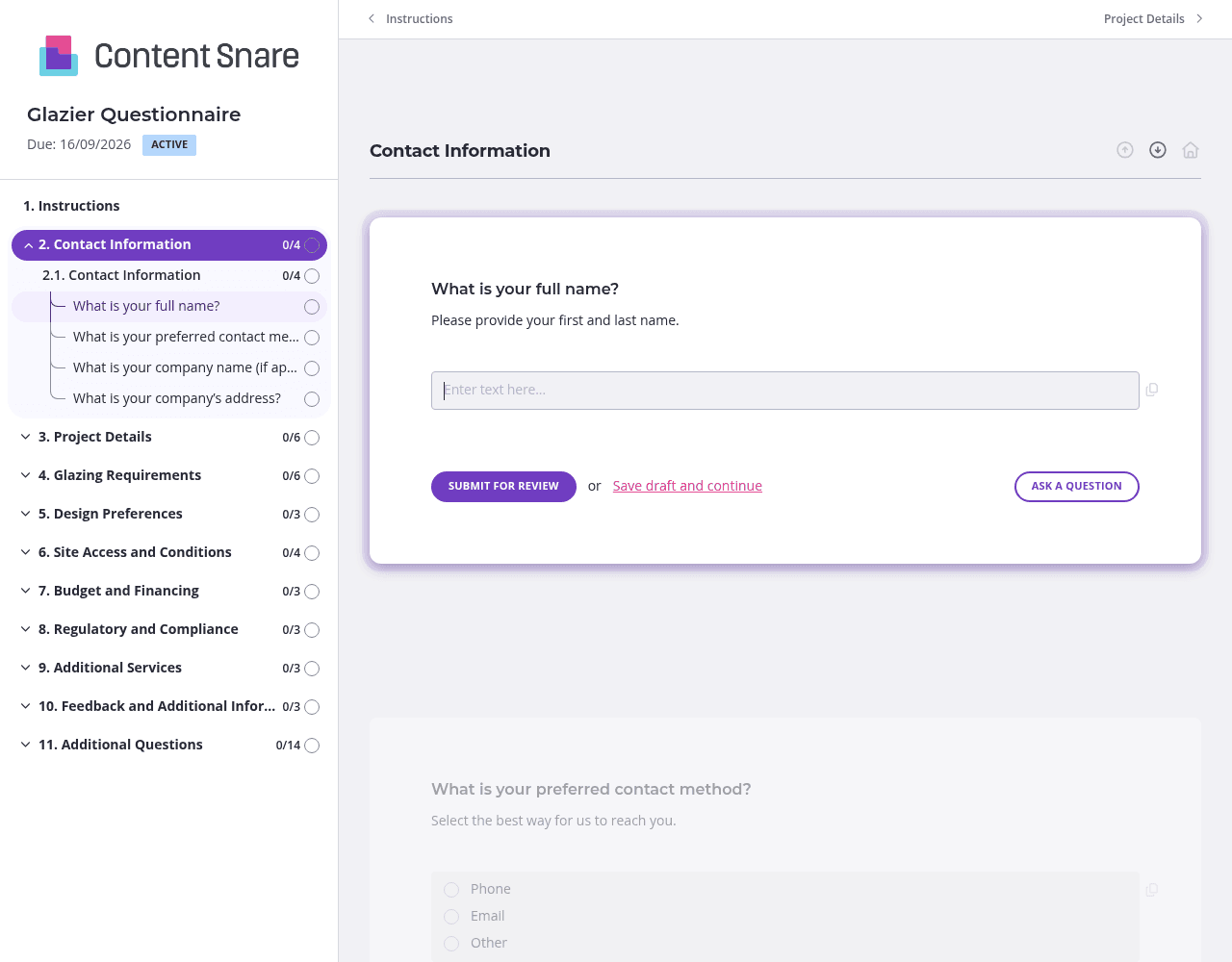
The glazier questionnaire covers a lot of ground - from technical specs to site logistics to budget discussions. Split it into separate pages: one for project details, another for glazing requirements and design, and a third for site conditions and regulatory items. Clients won't feel overwhelmed by a wall of questions, and they can save progress between sections. You'll get more complete responses because people actually finish what they start.
Glazing dimensions, energy efficiency standards, and safety requirements trip up clients who aren't familiar with construction terminology. Drop a quick instruction or example under questions like "What are the dimensions of the glazing needed?" Something as simple as "Include height, width, and thickness - or attach architectural drawings if available" prevents guesswork. Same goes for questions about building codes or certifications. A one-line explainer saves you from playing phone tag later.
Use conditional logic to keep the form relevant. If someone selects "supply only" for installation services, hide follow-up questions about scaffolding and site access equipment. If they're working on new construction rather than a retrofit, skip the question about removing existing glazing. Clients answer faster, and you avoid collecting irrelevant information that clutters your project file.
Construction professionals juggle multiple projects and deadlines. Automatic reminders ensure your glazier questionnaire doesn't get buried in their inbox. Content Snare follows up for you - no awkward nudging required. You'll get responses faster without spending time tracking down who hasn't submitted yet.
Email threads and PDF forms create chaos on construction projects. You're chasing down missing specs, wondering which version is current, and manually copying responses into your systems. Content Snare eliminates that friction. Clients get a professional form that's easy to complete. You get organized responses, automatic follow-ups, and integrations with the tools you already use. Content Snare is trusted by thousands of businesses worldwide and has hundreds of 5-star reviews across platforms like G2, Capterra, and Trustpilot.
The platform is ISO 27001 certified, so sensitive project details and budget information stay secure. It integrates seamlessly with your CRM, project management software, and other business tools - no manual data entry required.
This form is just one way to streamline your construction business. Use Content Snare for:
The more you centralize information collection, the less time you spend chasing paperwork and the faster projects move forward.


