
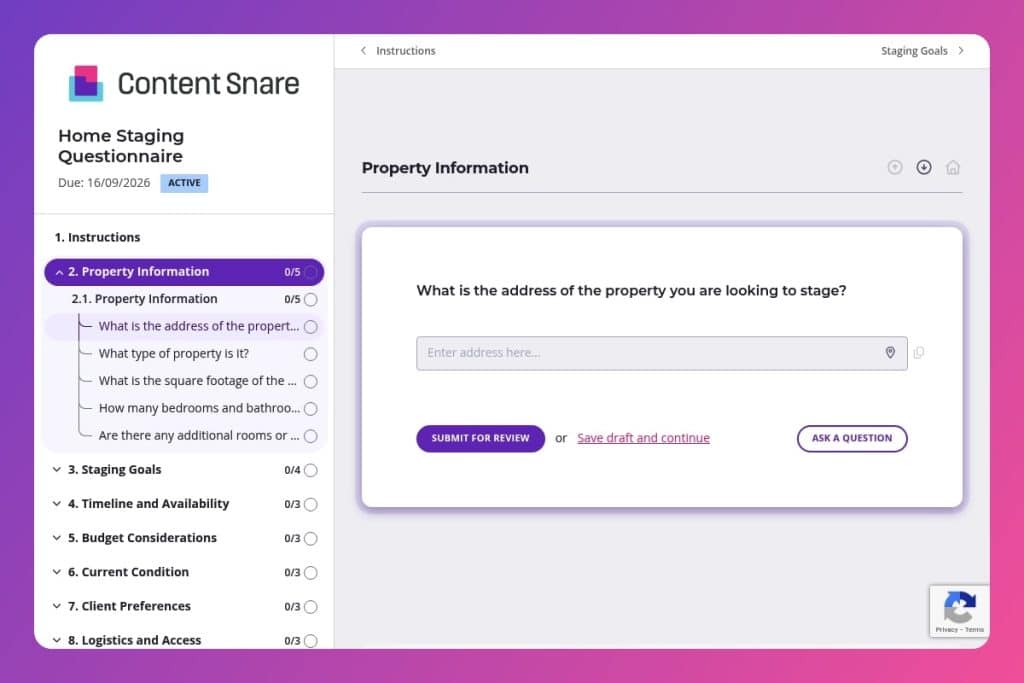


A structured questionnaire that collects property details, staging preferences, budget parameters, timeline requirements, and logistical information needed to coordinate home staging services.

Real estate agents working with sellers who need professional staging to prepare properties for listing, and agents coordinating between homeowners and staging companies.

Send this before your initial staging consultation so you arrive with complete property specs, budget constraints, and client preferences already documented for the stager.
You've got a promising listing, but coordinating with a home stager shouldn't mean endless back-and-forth emails about room dimensions, budget constraints, and whether the seller's vintage couch stays or goes. Every missed detail - from access restrictions to timeline conflicts - can delay your listing date and cost your client money.
A home staging questionnaire solves this problem by capturing every critical detail upfront. You'll gather property specs, staging goals, budget parameters, and logistics in one organized place. This post covers what makes an effective home staging questionnaire, how to use it with clients and staging partners, and includes a free template you can customize. Let's break it down.
Property Information
Collect baseline property data to scope inventory, labor, and layout planning.
Staging Goals
Define success criteria and positioning to direct design choices and merchandising.
Timeline and Availability
Lock timelines and blackout windows to sequence walkthrough, install, styling, and pickup.
Budget Considerations
Set budget and sourcing preferences to anchor scope and control margins.
Current Condition
Assess occupancy and readiness to plan prep, protection, and lead time.
Client Preferences
Capture aesthetic guardrails and sensitivities to avoid rework and client friction.
Logistics and Access
Confirm physical access and contacts to plan crew size, truck route, and install windows.
Additional Services
Identify marketing add-ons and service level to align deliverables, pricing, and schedule.
Send it before your initial staging consultation: You'll walk into the first meeting with the stager already knowing the property type, square footage, occupancy status, and budget range. This turns a discovery call into a strategy session and shows your client you're organized from day one.
Use photos to clarify the current condition section: Ask clients to upload images of each room when answering questions about existing furnishings and repairs needed. Stagers can assess what stays, what goes, and what needs fixing without an extra site visit - saving everyone time.
Be specific about timeline questions: Don't just ask "when do you want staging completed?" Include the listing date, photographer schedule, and open house plans. Staging companies need at least 48-72 hours for setup, and you'll avoid the nightmare of furniture arriving the same day as your photographer.
Guide clients on budget expectations upfront: Many sellers underestimate staging costs or don't know rental vs. purchase options exist. Add context to the budget section - mention typical price ranges for their property type or link to your stager's pricing guide. You'll get realistic numbers instead of guesses.
Review responses with your staging partner before finalizing the plan: Once submitted, schedule a quick three-way call with the seller and stager to confirm priorities and address any unclear answers. The "areas to highlight or conceal" section often needs discussion - what seems like a feature to the seller might read differently to buyers.

Clients often stumble on questions like square footage, property features, or staging budget ranges. Add helpful context directly under each question. For example, clarify whether square footage should include basements and garages, or provide typical staging budget ranges for their property type. You'll get accurate answers the first time instead of vague guesses that require follow-up.
Not every question applies to every situation. Show budget questions about existing furniture only if the property is occupied. Display questions about repairs and maintenance only if the client indicates the property needs work. Your clients see a streamlined form that feels tailored to their specific situation, and you avoid "N/A" answers cluttering your responses.
You likely have the address, property type, bedroom count, and listing price before sending the questionnaire. Pre-fill those fields so clients focus on details only they can provide - like preferred staging style, items to highlight or conceal, and access restrictions. This cuts completion time in half and shows you've already done your homework.
Staging timelines are tight, especially when photography and listing dates are locked in. Automatic reminders ensure clients complete the questionnaire without you sending awkward follow-up texts. You stay the helpful agent, not the nag, and your stager gets the information they need to meet your deadlines.
Email threads and shared Google Docs create chaos when you're gathering staging details from clients and coordinating with vendors. Questions get buried, answers are incomplete, and you're left chasing people down while your listing date approaches. Content Snare centralizes everything in one organized questionnaire that tracks exactly what's missing and automatically reminds clients to finish - without you lifting a finger.
You maintain complete control over your professional image. The platform is fully customizable with your branding, so every email and form page looks like it came directly from your agency. Clients experience a polished, seamless process from start to finish.
Content Snare is ISO 27001 certified and trusted by thousands of businesses worldwide, giving clients confidence when sharing property details, budget information, and access codes. It integrates with the CRM and project management tools you already use, so staging questionnaire responses flow directly into your existing workflow.
The platform has earned hundreds of 5-star reviews across G2, Capterra, and Trustpilot from professionals who need reliable client information gathering.
Home staging questionnaires are just the beginning. You can use Content Snare for new listing intake forms to gather property details, ownership documents, and seller disclosures. Create buyer qualification questionnaires to understand client needs, budgets, and timelines before showing properties. Build vendor coordination forms for photographers, inspectors, and contractors to streamline scheduling and requirements. Set up closing document checklists to ensure clients provide all necessary paperwork without last-minute scrambling.


