
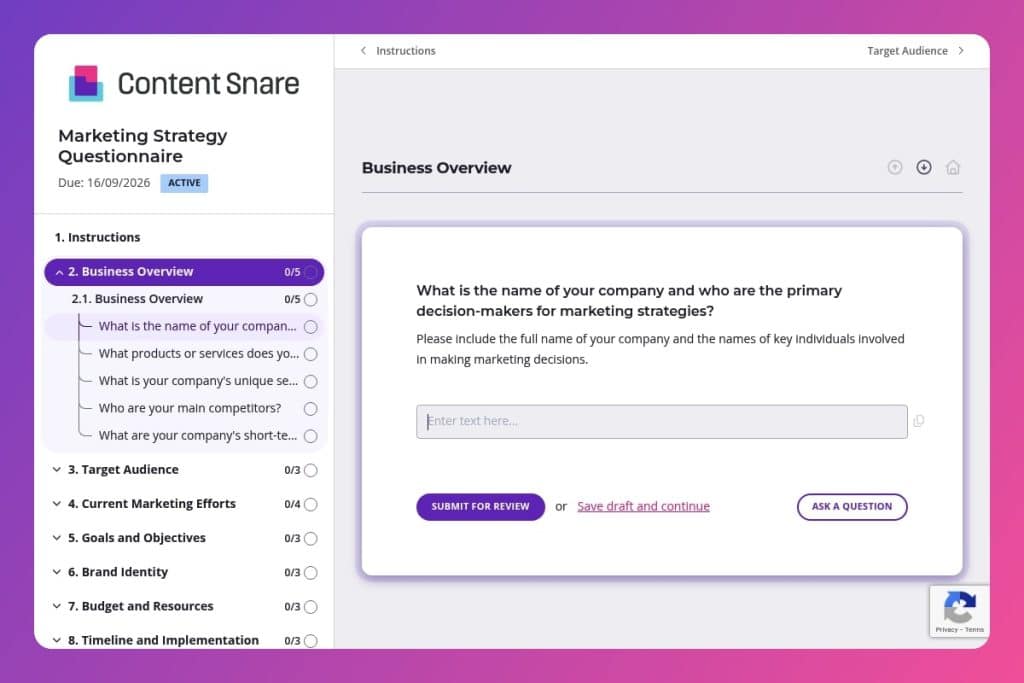


A comprehensive intake form that captures client business goals, target audiences, brand identity, budgets, timelines, and compliance requirements before kicking off marketing work.

Digital agency account managers, strategists, and business development teams who need complete client information to build accurate proposals and avoid misaligned deliverables.

Send it immediately after a prospect expresses serious interest and before your discovery call, so you can review responses in advance and focus the meeting on strategic discussions instead of basic fact-finding.
How many times have you kicked off a new client relationship only to realize - three weeks in - that you're still unclear on their actual goals, budget, or who even approves the final strategy? This disconnect wastes hours in revisions, misaligned deliverables, and frustrated stakeholders on both sides.
A marketing strategy questionnaire solves this. It captures everything you need upfront - from business objectives and target audiences to budget constraints and compliance requirements. This post covers what the form should include, how to use it effectively with clients, and a free template you can customize. Let's dive in.
Business Overview
Capture the business context and who signs off before scoping tactics.
Target Audience
Define who the plan must reach and what shapes their decisions.
Current Marketing Efforts
Map the current mix and lessons to inform channel and creative choices.
Goals and Objectives
Anchor the strategy to measurable outcomes and known constraints.
Brand Identity
Align messaging and creative with the brand’s voice, values, and desired perception.
Budget and Resources
Right-size scope based on funding, tools, and available partners.
Timeline and Implementation
Plan work against hard dates, launches, and decision gates.
Competitor and Market Analysis
Ground recommendations in market dynamics and competitive moves.
Feedback and Reporting
Set expectations for cadence, format, and what leaders care about.
Legal and Compliance
Surface constraints and approvers early to avoid rework and risk.
Send it before your discovery call, not after: Get the questionnaire to prospects as soon as they express serious interest. You'll review their responses ahead of the meeting, which means you can skip surface-level questions and dive straight into strategy discussions. This positions you as prepared and efficient from day one.
Flag incomplete answers on competitor and market analysis: Clients often breeze through sections like competitor analysis or industry trends with vague responses. If they leave these light, follow up directly. Ask for specifics: "Who are the three competitors you're most concerned about?" or "What market shifts have affected your sales in the past six months?" The depth here determines whether your strategy addresses real threats or just assumptions.
Use their answers to build your proposal structure: Don't let responses sit in a document somewhere. Map their goals, KPIs, budget, and timeline directly into your proposal sections. Quote their brand voice description back to them when pitching creative concepts. Reference their past failed campaigns when explaining your different approach. This shows you listened and transforms the questionnaire from a formality into the foundation of a personalized pitch.
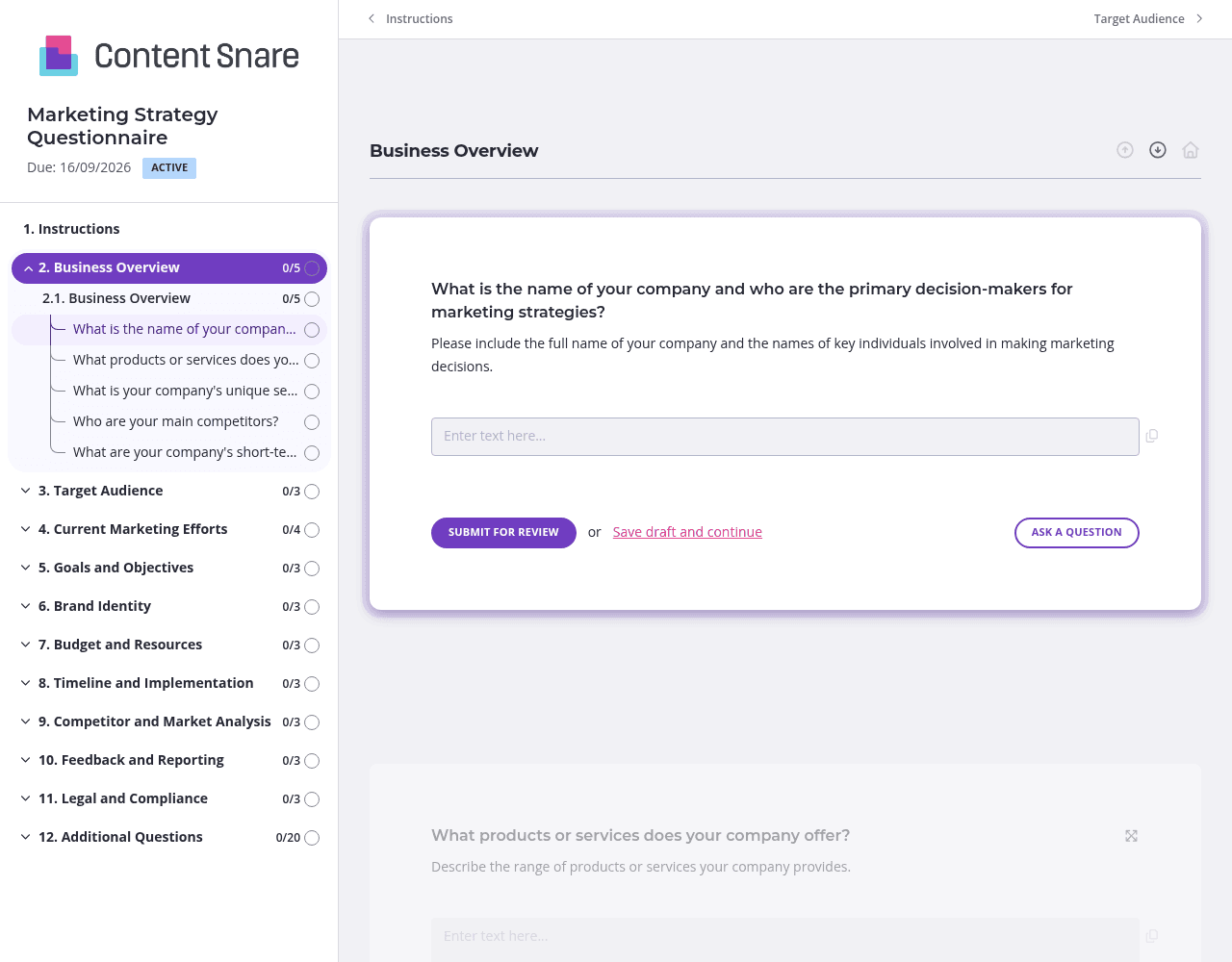
A marketing strategy questionnaire covers a lot of ground - from brand identity to compliance requirements. Dumping 40+ questions on one scrolling page overwhelms clients and leads to half-completed submissions. Split the form into logical pages: Business Overview, Target Audience, Current Marketing Efforts, Goals & Objectives, and so on. Clients can tackle one section at a time, save progress, and return later without losing momentum.
Questions like "What is your unique selling proposition?" or "Describe your brand's voice and personality" sound straightforward to you, but clients often stall on them. Include brief instruction text explaining what you're asking for and why it matters. Even better: add a screenshot or example response showing the level of detail you need. A two-sentence prompt can be the difference between "We're innovative" and an actual, usable answer about what sets them apart from competitors.
Not every client operates in a regulated industry. Use conditional logic to reveal the Legal and Compliance section only when relevant - maybe triggered by their industry type or a simple yes/no question earlier in the form. Same goes for questions about external vendors or past campaign performance. You keep the form lean for startups while still capturing critical details from enterprise clients with complex requirements.
Clients get busy. Even motivated ones let questionnaires sit in their inbox for weeks. Automatic reminders handle the nudging for you - no awkward "just checking in" emails required. You stay on their radar without becoming a nag, and your project timelines don't derail because someone forgot to hit submit.
You could send this questionnaire as a Word doc or Google Form. But then you're chasing clients for incomplete answers, reformatting messy responses, and manually following up when they ghost you. Content Snare handles all of that automatically while making you look polished and organized. It's trusted by digital agencies worldwide and has hundreds of 5-star reviews across G2, Capterra, and Trustpilot.
Automatic reminders keep projects moving without awkward follow-up emails. Conditional logic shows only relevant questions, so enterprise clients with compliance needs see different fields than lean startups. Integrations with tools like Slack, Zapier, and your project management software mean responses flow directly into your workflow. You're ISO 27001 certified, which matters when clients share sensitive business data, budgets, and competitive insights.
This marketing strategy questionnaire is just one way agencies use Content Snare. You can also collect:
Each form follows the same structure: clear questions, automatic follow-ups, and organized responses that don't require cleanup before you can actually use them.


