
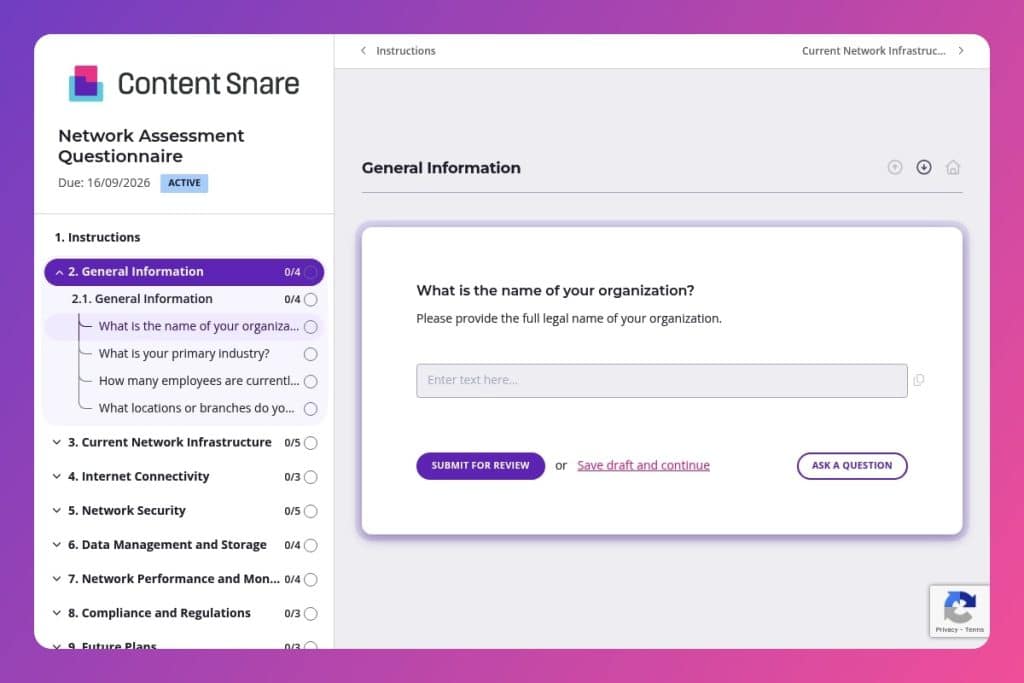


A structured questionnaire that captures complete network infrastructure details including architecture, security measures, connectivity, data management, compliance status, and performance monitoring capabilities.

IT service providers, MSPs, network consultants, and internal IT teams who need to evaluate client networks, conduct infrastructure audits, or assess existing systems before proposing upgrades or security improvements.

Deploy this during initial client onboarding, before network upgrade projects, as part of regular security audits, when troubleshooting performance issues, or when preparing compliance assessments and infrastructure proposals.
Your network infrastructure is either protecting your business or putting it at risk - and most IT leaders can't say for certain which one applies. Without a clear picture of your architecture, security gaps, performance bottlenecks, and compliance status, you're flying blind. That's where a network assessment questionnaire becomes essential. It gives you a structured way to capture everything from device counts and bandwidth to firewall configurations and disaster recovery plans - no guesswork, no missed details.
This post breaks down how to use a network assessment questionnaire to evaluate client networks or audit your own infrastructure. You'll get an overview of what to include, practical tips for deployment, and a free template you can customize and use immediately. Let's dive in.
General Information
These items establish organizational context for scoping, prioritization, and stakeholder mapping.
Current Network Infrastructure
Capture architectural patterns and asset counts to size the assessment and discovery effort.
Internet Connectivity
Clarify upstream dependencies, capacity, and resiliency.
Network Security
Surface control coverage and maturity to target testing and remediation.
Data Management and Storage
Identify data types, locations, and protections to align risk analysis and backup validation.
Network Performance and Monitoring
Understand observability, tooling, and pain points to validate SLAs and tune KPIs.
Compliance and Regulations
Tie scope to mandated standards and evidence requirements.
Future Plans
Anticipate change drivers affecting design, capacity, and security roadmap.
Support and Maintenance
Map operating model, ownership, and incident processes to assess resilience.
Additional Information
Capture context that influences scope, sequencing, or quick wins.
Send a quick pre-fill email to gather basics first: Before you share the full network assessment questionnaire, ask your client for high-level details like organization name, employee count, and locations. This saves them time on the easy stuff and lets them focus on the technical questions that actually require digging - like firewall configurations or backup protocols.
Frame it as a collaboration, not an interrogation: When you send the form, explain why you're asking each section of questions. Let clients know that the network security questions help you identify vulnerabilities, while the performance monitoring section reveals bottlenecks. This context makes them more likely to provide thorough, accurate answers instead of rushing through.
Request documentation alongside responses: For questions about network equipment, internet bandwidth, or compliance standards, ask clients to attach network diagrams, ISP contracts, or recent audit reports. These documents validate their answers and give you a head start on the actual assessment work.
Schedule a follow-up call immediately after submission: Don't wait days to review responses. Book a 30-minute call to walk through anything unclear - especially around security measures, data protection, or performance issues. You'll catch gaps early and show clients you're actively engaged in solving their problems.
Use incomplete answers as discovery opportunities: If a client skips questions about redundant connections or disaster recovery plans, that's not just missing information - it's a red flag. Flag these gaps in your follow-up and position them as areas where you can add immediate value with recommendations or services.
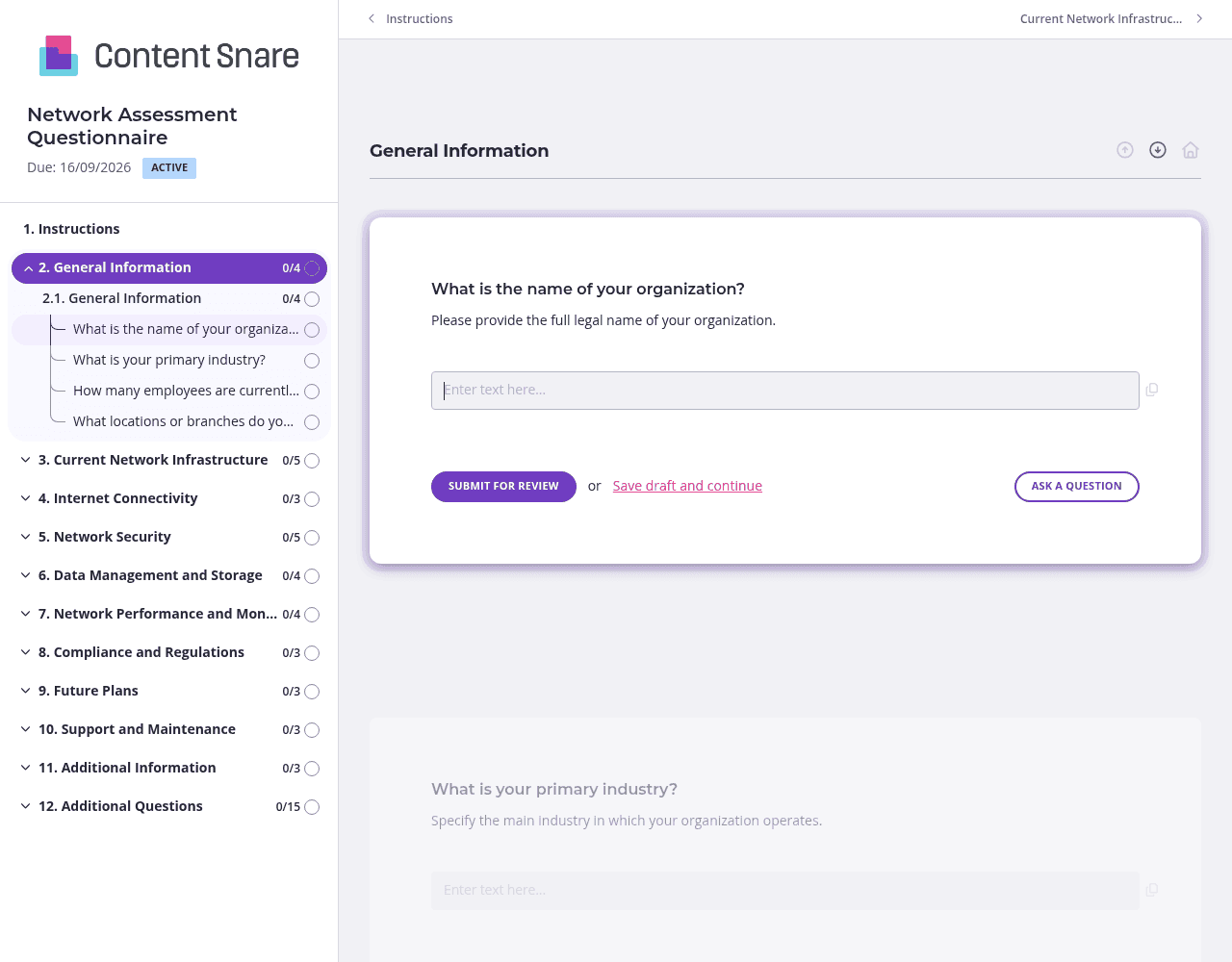
Network assessments cover a lot of ground - from infrastructure and security to compliance and future planning. Split your questionnaire into separate pages for each major topic (Current Network Infrastructure, Network Security, Data Management, etc.). Clients can tackle one area at a time without feeling overwhelmed, and they're more likely to give complete answers when questions feel manageable. You'll also get better quality responses because they can focus on gathering relevant documentation for each section before moving forward.
Technical questions can be confusing, especially for clients who aren't network engineers. Use instruction areas to clarify what you're asking - for example, explain that "network architecture" might mean mesh, star, or hybrid topology, or that "redundant connections" refers to backup ISPs for failover. Attach screenshots of sample network diagrams or brief video explanations for questions about equipment inventories or security configurations. The clearer you are upfront, the fewer back-and-forth emails you'll deal with later.
Network assessment questionnaires often sit in inboxes because clients need to pull information from multiple sources - IT teams, service contracts, compliance documents. Automatic reminders keep the process on track without you having to send awkward follow-up emails. Configure reminders to go out every few days until submission, and customize the message to acknowledge that gathering this information takes time. You stay top of mind, clients appreciate the nudge, and projects don't stall.
You likely have basic information about your clients already - company name, industry, number of employees, current ISP. Pre-fill these fields before sending the form, or delete those questions entirely. This shows you've done your homework and respects their time. They can jump straight into the technical questions that actually require input, making the whole experience feel more personalized and less like busy work.
Email chains and spreadsheets aren't built for gathering complex technical information. Questions get buried, answers arrive in fragments, and you waste hours chasing down missing details. Content Snare turns information collection into a structured, professional process that actually gets completed - without the constant follow-up.
Clients get a clean, guided experience that walks them through each section of your network assessment questionnaire. You get complete responses in one place, with automatic reminders handling the follow-up work. Content Snare is ISO 27001 certified and trusted by IT companies worldwide, so you can confidently collect sensitive network and security information.
The platform integrates with the tools you already use - your CRM, project management software, and documentation systems. Everything syncs automatically, so you're not copying data between platforms or losing track of client submissions.
This questionnaire is just one way to streamline your IT operations with Content Snare. You can also use it to:
Content Snare has hundreds of 5-star reviews across G2, Capterra, and Trustpilot. IT providers use it because it makes collecting client information faster, more professional, and actually reliable.


