
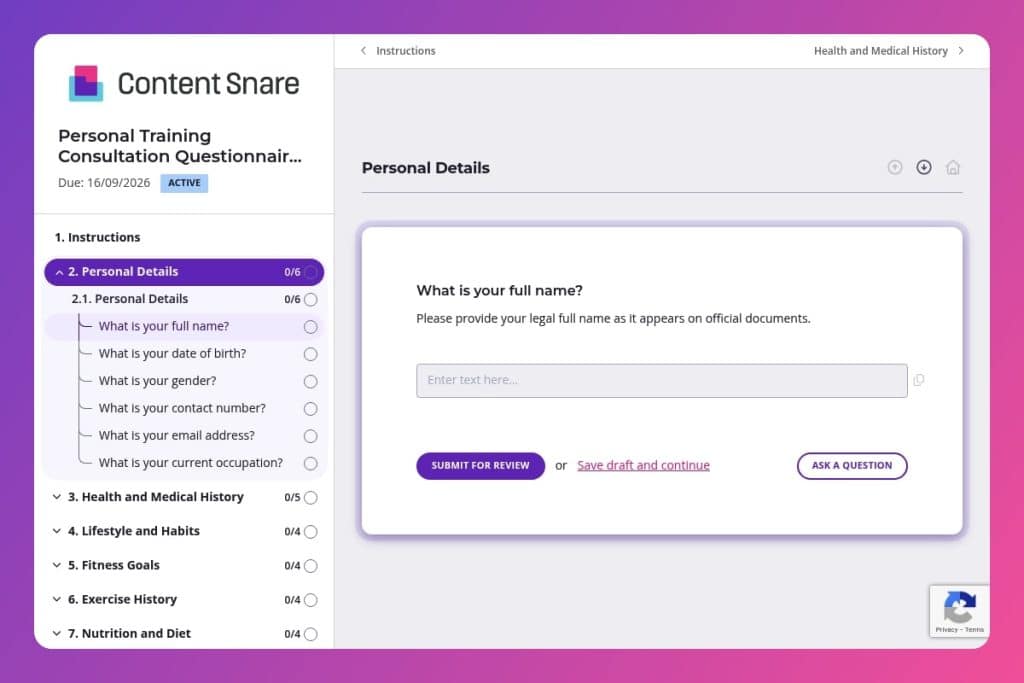


A pre-consultation questionnaire that collects personal details, medical history, lifestyle habits, fitness goals, exercise background, nutrition information, and scheduling preferences before the first training session.

Personal trainers and fitness coaches who want to gather essential client information upfront to avoid spending valuable session time on paperwork and arrive prepared with personalized training recommendations.

Send this form 48 hours before the initial consultation so you can review health concerns, identify red flags requiring medical clearance, and tailor your approach based on the client's specific goals and current habits.
Your first conversation with a new client shouldn't feel like an interrogation. Yet many personal trainers waste 30-45 minutes of their initial session gathering basic health history, fitness goals, and availability - time that could be spent building rapport and demonstrating value. A personal training consultation questionnaire form solves this problem by collecting essential information before you meet, so you can show up prepared with a personalized approach from day one.
This post walks you through what to include in your consultation form, how to use the responses to create better training programs, and where to grab a free template you can customize. You'll learn which questions uncover hidden medical concerns, how to identify realistic goals versus wishful thinking, and why asking about stress levels and alcohol consumption matters as much as exercise history. Let's dive in.
Personal Details
Capture identifiers and primary contact channels. Occupation can hint at daily activity patterns and scheduling constraints.
Health and Medical History
Screen for contraindications and scope modifications. Details inform clearance, programming intensity, and referral decisions.
Lifestyle and Habits
Establish baseline load, recovery capacity, and lifestyle risk factors.
Fitness Goals
Clarify desired outcomes and prioritize focus areas. Targets and timelines drive periodization and check-in cadence.
Exercise History
Assess training age, movement literacy, and adherence patterns. Prior coaching experiences flag preferences and barriers.
Nutrition and Diet
Understand fueling patterns and constraints to support training load and recovery. Restrictions inform alignment with nutrition guidance or referral.
Availability and Preferences
Lock logistics and environment variables that shape compliance. Equipment access and setting determine viable exercise progressions.
Additional Information
Create space for context you may not anticipate. Use it to catch red flags, motivations, or upcoming events.
Send it 48 hours before the consultation: Give clients enough time to thoughtfully answer questions about medical history and fitness goals without rushing. You'll get more detailed responses about past surgeries, medications, and dietary habits when they're not filling it out in your gym's waiting area five minutes before your meeting.
Review responses and flag red flags before you meet: Scan the Health and Medical History section for conditions that require medical clearance or exercise modifications. If someone mentions recent surgery, uncontrolled hypertension, or takes medications that affect heart rate, you can prepare modified exercises or request a doctor's note in advance - not halfway through your first session.
Use their answers to personalize your pitch: When a client writes "weight loss" as their primary goal but also mentions high stress levels and irregular eating habits, you know exactly where to focus the conversation. Reference specific details from their form during the consultation to show you've done your homework and aren't giving a cookie-cutter spiel.
Compare stated goals with current habits: Look for mismatches between the Fitness Goals and Lifestyle sections. Someone aiming for significant muscle gain but exercising once per week and describing themselves as "sedentary" needs realistic expectation-setting, not an aggressive six-day program they'll abandon in two weeks.
Keep the completed form as your baseline: Save their initial responses about stress levels, exercise frequency, and eating habits. Three months later, you can point to concrete progress beyond the scale - like going from "sedentary" to working out four times weekly or reducing stress from an 8 to a 5. These documented wins help with client retention and testimonials.
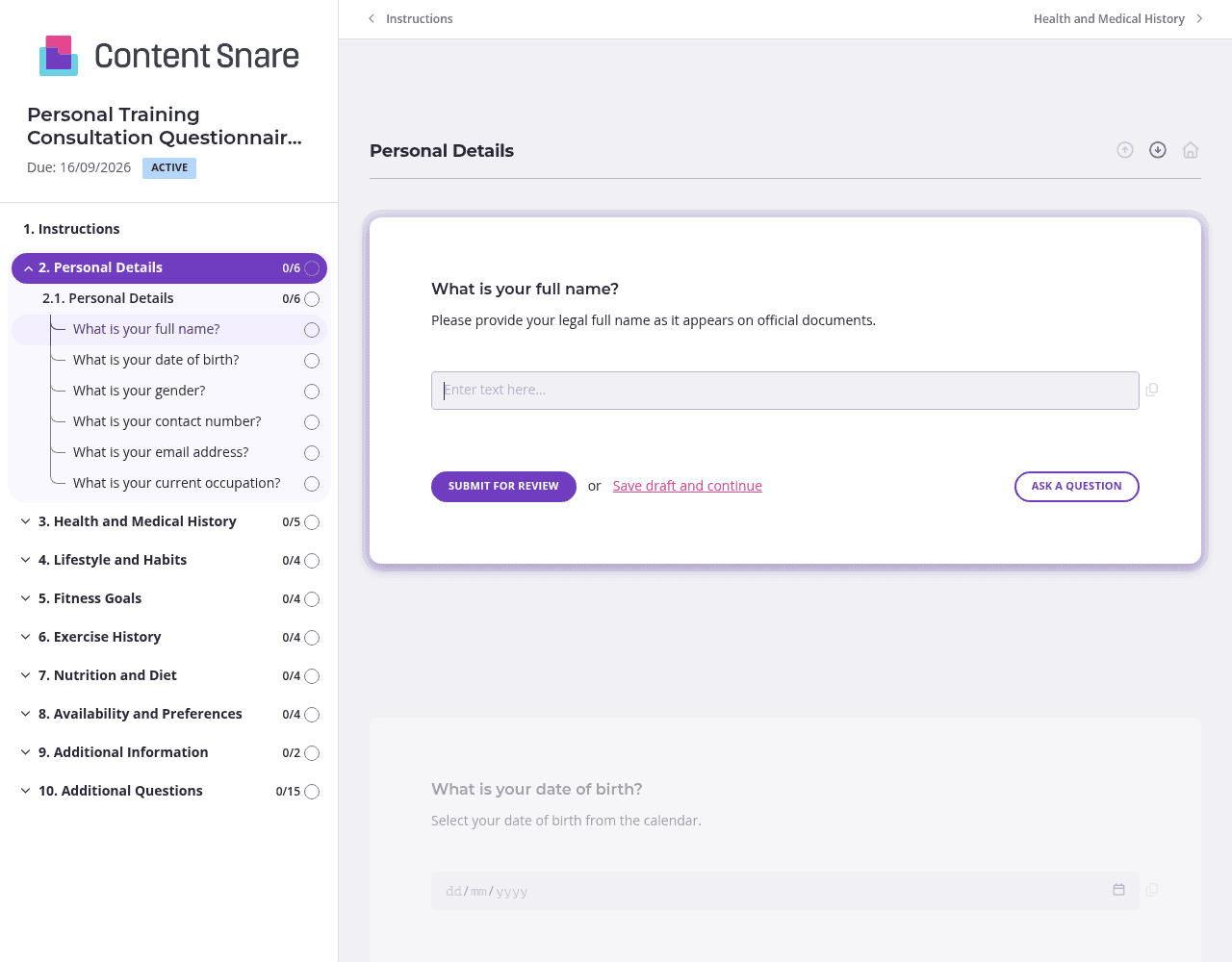
The Health and Medical History section asks about medical conditions, medications, allergies, surgeries, and family history - that's a lot to process on one screen. Use Content Snare's pages feature to separate this into logical chunks: one page for current health status, another for medical history, and a third for lifestyle habits. Clients are more likely to give thorough answers about past surgeries or family conditions when they're not overwhelmed by 40 questions at once.
Someone who answers "no" to having medical conditions doesn't need to see follow-up fields asking for specifics. Set up conditional logic so the form adapts based on their answers. When a client selects "yes" to current injuries, the detailed text field appears. When they choose "virtual sessions" under preferences, you can skip questions about gym comfort levels. This keeps the form lean and respects your client's time.
The Nutrition and Diet section can be tricky - clients might not know how to "describe their eating habits" or what counts as a "specific diet plan." Drop brief instructions above these questions explaining what you're looking for: "No judgment here - just tell us if you typically cook at home, eat out frequently, or rely on convenience foods." A 20-second instructional video before the Health and Medical History section can also clarify why you're asking personal questions and how the information protects their safety.
You've got training sessions to run and programs to design - you don't have time to chase down incomplete consultation forms. Content Snare sends automatic reminders to clients who haven't finished their questionnaire, so you're not stuck playing email tag or starting consultations without critical medical information. The reminders come from your branded account, keeping the experience professional without making you the bad guy who nags.
You could use Google Forms or email to collect client information, but you'll spend hours chasing incomplete responses and deciphering vague answers about medical conditions. Content Snare is purpose-built for collecting detailed information from clients - with automatic reminders, conditional logic, and a professional experience that reflects the quality of your coaching. It's trusted by thousands of businesses worldwide and has hundreds of 5-star reviews across G2, Capterra, and Trustpilot.
The platform handles sensitive health data securely (ISO 27001 certified), which matters when you're collecting medical history, medications, and personal health information. Clients can save progress and return later, so someone rushing between meetings doesn't have to complete 40+ questions in one sitting.
Content Snare integrates with the tools you already use - your CRM, scheduling software, and payment platforms - so client data flows directly into your workflow without manual data entry.
This consultation questionnaire is just one way to use Content Snare. Personal trainers and coaches also use it to:


