
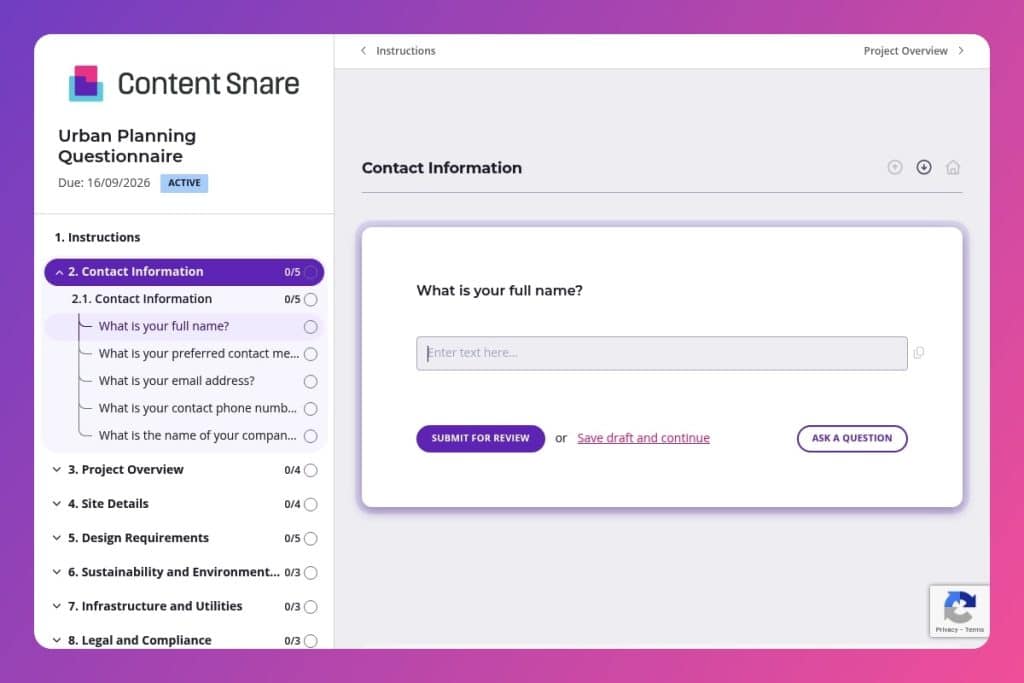


A comprehensive intake form that gathers essential project details including site specifications, zoning requirements, environmental constraints, design goals, and stakeholder considerations before construction begins.

Construction firms, general contractors, and project managers working on urban development projects who need to collect complete planning information from property owners, developers, or municipal clients.

Send this after your initial project discussion to systematically document site conditions, permit requirements, budget parameters, and compliance needs before finalizing proposals or beginning design work.
Missing a single zoning regulation or overlooking a community concern can derail your construction project before it breaks ground. Between site surveys, environmental constraints, permit requirements, and stakeholder engagement, urban planning projects demand precision from day one.
An urban planning questionnaire streamlines this complexity. It captures critical details - from site specifics and sustainability goals to budget parameters and compliance needs - in one organized place. This post covers what makes an effective urban planning questionnaire, practical tips for implementation, and a free template you can customize for your projects. Let's break it down.
Contact Information
Capture core contact details to route follow-ups and formal correspondence.
Project Overview
Set baseline scope, budget, location, and timeline to size the engagement.
Site Details
Identify physical and regulatory conditions that drive feasibility and approvals.
Design Requirements
Align on program, form, and standards to guide early massing and compliance checks.
Sustainability and Environmental Considerations
Clarify sustainability targets and regulatory triggers to plan strategies and documentation.
Infrastructure and Utilities
Map existing and required networks to coordinate servicing and mobility impacts.
Legal and Compliance
Confirm approvals landscape and encumbrances to plan sequencing and risk mitigation.
Community and Stakeholder Engagement
Calibrate engagement scope and messaging to manage risk and build support.
Budget and Financial Considerations
Tie design and phasing decisions to financial objectives and constraints.
Additional Resources or Support
Confirm complementary disciplines and context to streamline coordination.
Pre-populate known information before sending: If you already have basic project details - site address, company name, or preliminary scope - fill those fields in advance. This respects your client's time and shows you've done your homework. They'll focus on the substantive questions about design goals, environmental constraints, and stakeholder concerns rather than rehashing basics you discussed in your first meeting.
Use the form as a conversation starter, not a replacement: Send the urban planning questionnaire after an initial discussion to capture details systematically, but follow up with a call to clarify complex responses. Questions about zoning regulations, environmental certifications, or community engagement often need nuance. A quick conversation about their answers - especially around budget constraints or legal issues - prevents misunderstandings that could surface mid-project.
Review submissions against local requirements immediately: Once you receive responses, cross-reference their answers on permits, environmental considerations, and infrastructure against municipal regulations for that specific location. Flag gaps early - like missing site surveys or unclear easement restrictions - and send a brief follow-up request. Catching these oversights within 24-48 hours keeps your timeline intact and positions you as thorough and proactive.
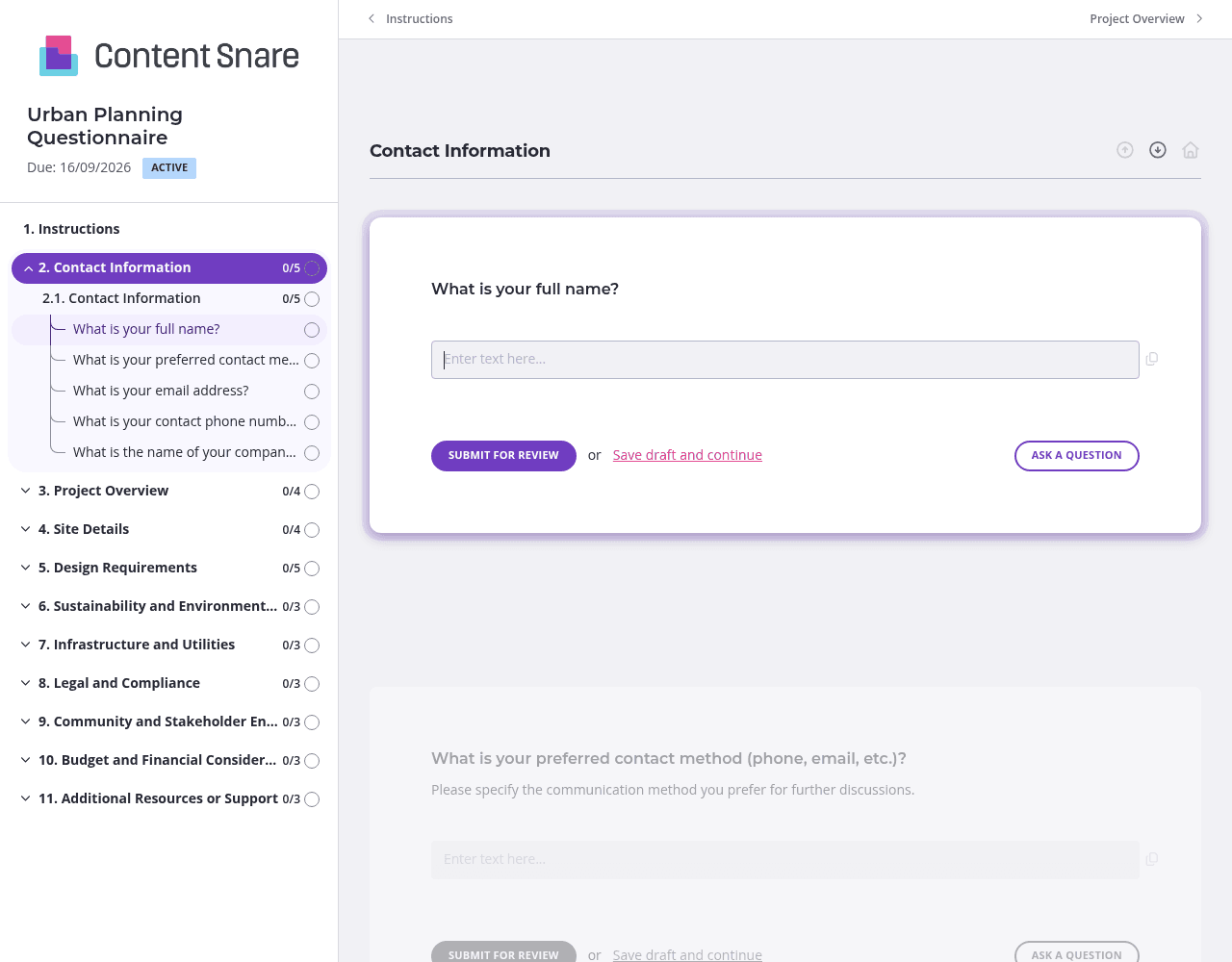
Urban planning questionnaires cover a lot of ground - from site surveys to sustainability goals to community engagement. Use pages and sections to organize questions by theme: one section for project overview, another for site details, a third for legal compliance. Clients can tackle one area at a time rather than facing a wall of 40+ questions. They'll provide more thoughtful answers when they're focused on zoning regulations in one sitting and environmental certifications in another.
Questions about zoning regulations, environmental constraints, or existing easements often confuse clients who aren't familiar with planning terminology. Include brief instruction text above these sections explaining what you need and why. For example, clarify that "site surveys" means topographical or geotechnical reports, or note that you're asking about LEED certification to assess feasibility early. Clear guidance upfront means fewer incomplete responses and follow-up emails asking for clarification.
Not every project needs every question. Use conditional logic to display sections based on earlier answers. If a client selects "residential" development, show residential-specific density questions. If they answer "yes" to existing structures, reveal follow-up questions about demolition or renovation plans. Clients see only what applies to their project, making the form feel tailored rather than generic.
Clients get busy, especially when tracking down site survey documents or permit histories. Set up automatic reminders to nudge them without you having to send awkward "just checking in" emails. You stay on schedule, they get gentle prompts, and you preserve the relationship by letting the system play the role of taskmaster.
Email threads lose attachments. Spreadsheets get outdated. Phone calls miss critical details about zoning or environmental constraints. Content Snare centralizes everything - client responses, document uploads, and project specifics - in one secure place. You get complete information faster, clients experience a professional process, and nothing falls through the cracks.
The platform is trusted by thousands of businesses worldwide and backed by hundreds of 5-star reviews across G2, Capterra, and Trustpilot. It's ISO 27001 certified, so sensitive project data and financial information stay protected. It integrates seamlessly with tools you already use, and it's customizable enough to match your exact workflow.
Urban planning questionnaires are just the start. Construction professionals use Content Snare for:
Each form keeps your projects moving forward while you maintain the professional, organized presence clients expect.


