
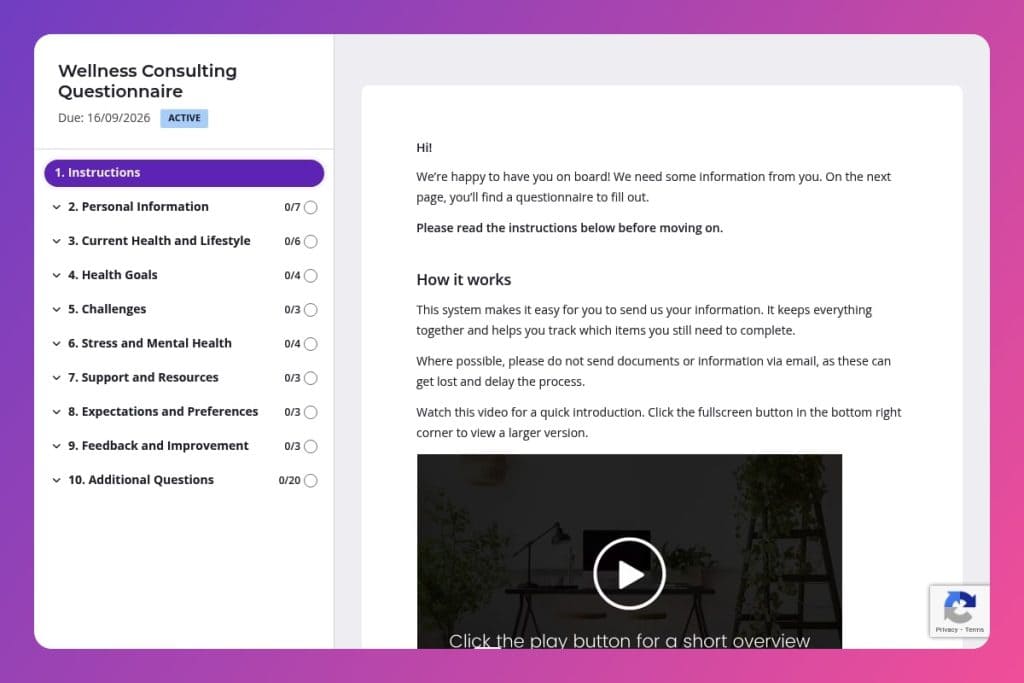


A pre-consultation intake form that collects client health status, lifestyle habits, stress levels, wellness goals, and barriers before your first meeting.

Wellness consultants who need to gather comprehensive physical and mental health information to personalize client plans and avoid wasting session time on basic intake questions.

Send it 48 hours before initial consultations so clients can thoughtfully reflect on their habits, challenges, and motivations, giving you time to prepare tailored recommendations.
Your first consultation can make or break a client relationship, but gathering the right health information upfront shouldn't feel like an interrogation. Most wellness consultants waste 30+ minutes per intake asking scattered questions, missing critical details about stress levels, lifestyle barriers, and realistic goals.
A wellness consulting questionnaire solves this. It collects everything you need - current health status, fitness habits, mental wellness challenges, and client expectations - before you ever meet. This post covers what makes an effective questionnaire, how to use it to personalize your approach, and includes a free template you can customize. Let's dive in.
Personal Information
Capture baseline identifiers for contact, scheduling, and demographic context.
Current Health and Lifestyle
Establish baseline behaviors and constraints to set realistic starting points and safety parameters.
Health Goals
Pin down target outcomes, scope, and urgency to align planning and measurement.
Challenges
Surface barriers and support preferences to tailor adherence strategies.
Stress and Mental Health
Gauge stress load and coping habits to calibrate recovery, load, and referrals as needed.
Support and Resources
Map the client’s care network and accessible tools to avoid duplication and leverage assets.
Expectations and Preferences
Align on cadence, channels, and philosophical fit to reduce friction and improve engagement.
Feedback and Improvement
Clarify success criteria and prior experience to fine-tune delivery and avoid past pitfalls.
Send it 48 hours before the first consultation: Give clients enough time to reflect on their answers, especially for sections like health goals and past challenges. Rushed responses miss the nuance you need to build a personalized plan.
Use the stress and mental health section as your session opener: Most clients expect you to start with diet or exercise. Begin with their stress sources and current management methods instead - it builds trust quickly and often reveals the real barriers to their wellness goals.
Flag contradictions between lifestyle habits and goals: If someone reports 5 hours of sleep, high stress, and wants to lose 20 pounds in a month, that's your cue. Address mismatched expectations early by referencing their specific responses during your consultation.
Create a pre-filled action plan from their answers: Before your first meeting, draft 2-3 initial recommendations based on their exercise preferences, anticipated challenges, and preferred support methods. Walk in prepared - it shows you've done the work.
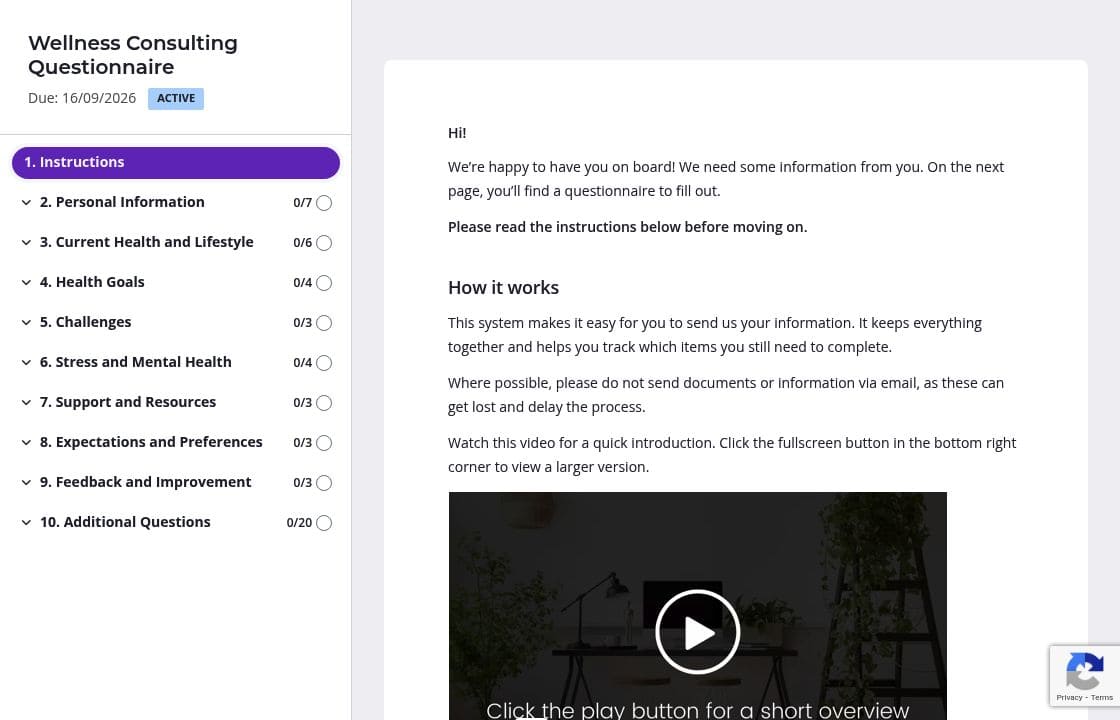
Wellness assessments cover a lot of ground: physical health, mental wellness, goals, and challenges. Split your wellness consulting questionnaire into separate pages. For instance, one for lifestyle habits, another for stress and mental health, a third for goals and expectations. Clients can focus on one topic at a time instead of facing a wall of questions.
Not every question applies to every client. Someone who's never worked with a wellness consultant doesn't need to describe their previous experience. Use conditional logic to show follow-up questions based on earlier answers - if they mention medical conditions, ask for details. If they don't practice meditation, skip the questions about their current mindfulness routine. You get cleaner data, and clients avoid unnecessary fields.
The stress and mental health section asks personal questions. Some clients will wonder how much detail to share or whether their answers stay confidential. Add brief instructions at the top of sensitive sections to set expectations: "Your responses help us personalize your plan - everything shared here remains confidential." A short video explaining how you'll use their health information can also ease concerns and improve response quality.
Clients get busy, especially the ones juggling high-stress jobs and wellness goals. Set up automatic follow-ups so the form resurfaces in their inbox without you manually chasing anyone. You stay top of mind, clients appreciate the nudge, and you don't waste consultation time collecting basic information that should've been submitted days ago.
Email and PDF forms create chaos because clients forget to answer questions, send incomplete information, or lose track of which version you need. You end up chasing answers instead of delivering results. Content Snare fixes this - clients can't skip required fields, you see progress in real time, and reminders go out automatically.
Content Snare is ISO 27001 certified, so your clients' health data stays secure. It's trusted by consulting professionals and has hundreds of 5-star reviews across G2, Capterra, and Trustpilot. You get the efficiency without compromising on professionalism or client trust.
The platform also integrates with tools you already use - CRMs, project management software, and automation platforms. Collect information once, route it where it needs to go, and spend your time consulting instead of copying and pasting.
A wellness consulting questionnaire is just the start. Consultants across industries use Content Snare to streamline their intake and onboarding processes:


