


A structured intake form that collects inventor details, invention specifications, prior art disclosures, development history, ownership rights, and commercialization plans before filing a patent application.

Patent attorneys, IP lawyers, and legal firms who need to gather comprehensive technical and legal information from inventors and clients during the patent application intake process.

Send this questionnaire before initial consultations with new inventor clients to gather all necessary documentation and details upfront, enabling strategic legal work instead of basic information-chasing.
Missing inventor details, murky prior art disclosures, and incomplete invention descriptions can derail a patent application before it even begins. Patent attorneys waste countless hours chasing down basic information through endless email chains and phone calls - time that could be spent on actual legal strategy. A patent questionnaire solves this problem by capturing all essential details upfront in one organized intake process.
This post covers everything you need to know about using a patent questionnaire effectively. You'll get an overview of what to include, practical tips for implementation, and a free template to get started immediately. The right form ensures you collect inventor information, invention details, prior art disclosures, commercialization plans, and ownership rights - all in one efficient sweep.
Ready? Let's get started.
Inventor Information
These fields identify inventors for declarations, assignments, and correspondence. Capture every contributor meeting inventorship standards.
Invention Details
This section anchors the technical disclosure and aligns terminology for searching and drafting. Answers here drive enablement and claim strategy.
Differentiators and materials inform claim scope, drafting emphasis, and sufficiency of disclosure.
Prior Art and Patentability
These prompts surface novelty risks and shape the search plan. They also highlight potential bars from public disclosures.
Responses impact novelty and non‑obviousness analysis, IDS planning, and filing urgency.
Development Background
Timeline and collaboration history establish conception, reduction to practice, and potential obligations.
Dates and collaborators affect inventorship, assignments, confidentiality, and possible government or third‑party rights.
Commercialization Plans
Commercial goals guide claim scope, embodiment priority, and jurisdiction choices.
Market focus and go‑to‑market planning influence specification examples, terminology, and timing.
Patent Filing Information
These decisions drive filing sequence, cost, and rights preservation. Jurisdictions and filing type determine deadlines and procedures.
Choices affect priority strategy, PCT vs. direct national filings, and downstream costs and timelines.
Legal and Ownership Details
Ownership clarity prevents standing issues and conflicts. Existing agreements may control rights and licensing.
Accurate ownership avoids inventorship disputes, ensures proper assignments, and streamlines execution of filings.
Illustrations and Documentation
Drawings and technical artifacts accelerate drafting and support enablement. Quality figures reduce iterations with illustrators.
Documentation underpins enablement, claim support, and defensibility during prosecution and enforcement.
Financial Considerations
Budget and funding shape filing scope, sequencing, and maintenance planning.
Investor involvement and budget constraints can trigger confidentiality, milestone obligations, and staged filing strategies.
Additional Information
Catch‑all to capture edge cases and set communication cadence.
Send the form before the initial consultation: Give inventors at least 48 hours to complete the questionnaire before your first meeting. They'll need time to gather documentation, recall development timelines, and think through prior art. You'll arrive at the consultation with a complete picture instead of spending billable hours on basic intake.
Flag the prior art section upfront: Most inventors underestimate what counts as "public disclosure." When you send the form, include a quick note explaining that prior art includes conference presentations, social media posts, investor pitches, and even casual conversations with potential partners. This prevents costly surprises during the patentability assessment.
Request drawings and documentation as attachments: The form asks whether inventors have diagrams and schematics - make sure they actually upload them with their submission. Visual materials are essential for understanding how the invention works and identifying novel features. Without them, you're working half-blind.
Use responses to spot ownership red flags early: Pay close attention to the collaboration and contract questions in the development background and legal sections. If multiple parties were involved or existing agreements mention IP rights, you'll need to resolve ownership issues before filing. Better to catch these in the questionnaire than during prosecution.
Create a follow-up checklist from incomplete answers: Rarely will you get perfect responses on the first try. As soon as the form comes in, scan for vague invention descriptions, missing prior art details, or unclear commercialization plans. Send a targeted follow-up request for specific sections rather than asking the inventor to "review everything again."
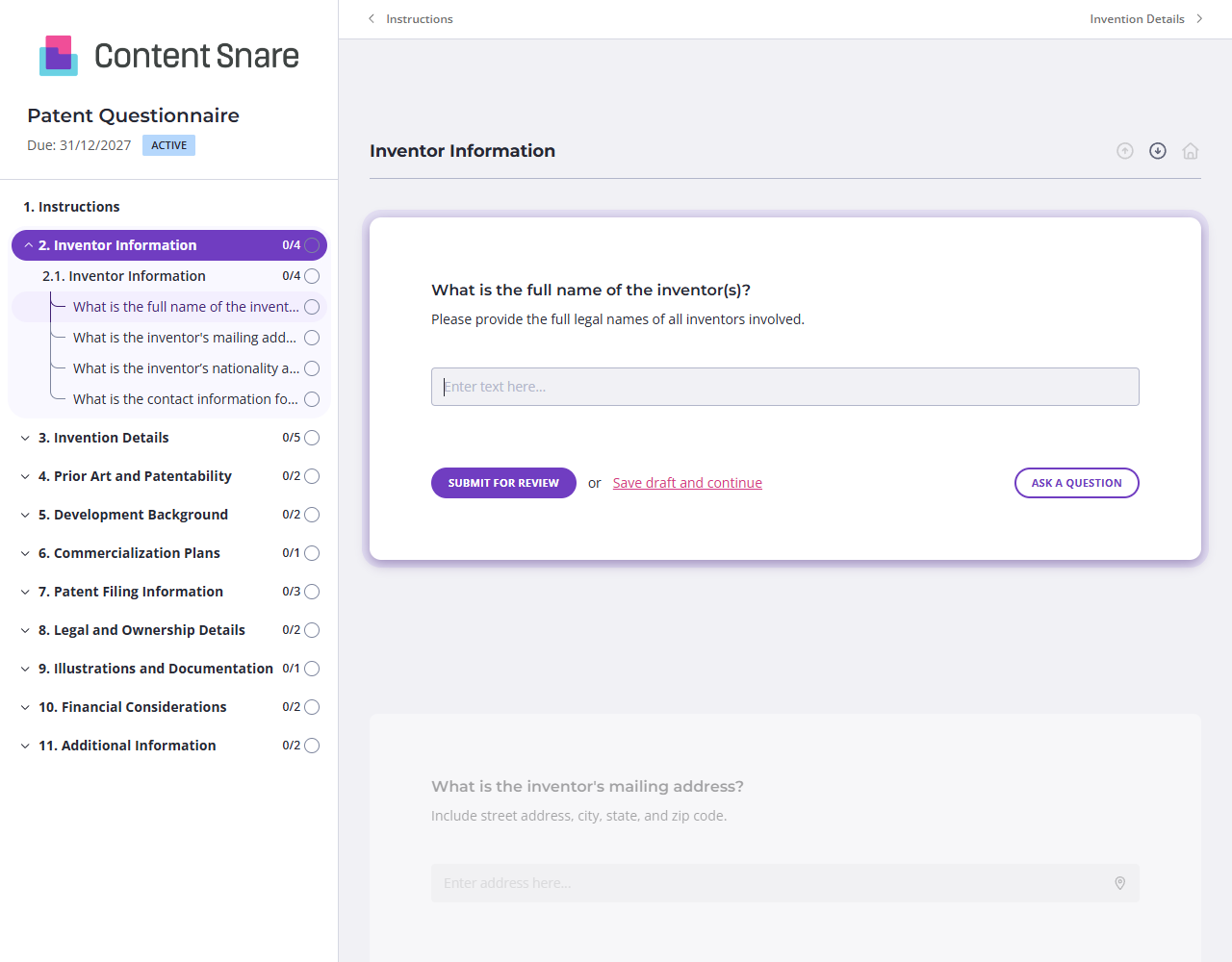
Patent questionnaires can overwhelm inventors with their length and technical detail. Split your form into logical pages: Inventor Information, Invention Details, Prior Art, Development Background, and Legal Ownership. Inventors can focus on one topic at a time without feeling buried. They can also save progress and return later when they need to dig up specific documentation or consult with co-inventors.
The "Describe the invention and how it works" section often produces vague or incomplete responses. Upload a short video or annotated screenshot showing what level of detail you need. Walk through an example (even from a different industry) to demonstrate how to explain materials, functionality, and the problem being solved. Visual guidance gets you better responses upfront and cuts down on revision rounds.
You likely already have basic details from your initial inventor conversation - names, contact information, invention title, or target markets. Prefill those fields before sending the questionnaire. This shows you've been paying attention, reduces the inventor's workload, and ensures they spend time on the complex sections that actually require their input. Delete any questions that don't apply to their specific situation while you're at it.
Inventors get busy. They're juggling product development, funding conversations, and day jobs. Automatic reminders keep your patent questionnaire moving without you having to send awkward follow-up emails. The system does the chasing while you focus on legal work. Inventors appreciate the gentle nudges, and you get completed forms faster.
Email threads and Word documents create chaos when collecting patent information. Attachments get lost, version control becomes a nightmare, and you waste time tracking down missing details. Content Snare centralizes everything in one secure location, with automatic reminders that do the follow-up for you. Inventors get a professional intake experience, and you get complete information without the administrative headache.
The platform is ISO 27001 certified and trusted by law firms handling sensitive IP data. You're not just collecting patent details - you're protecting confidential inventions with enterprise-grade security.
Content Snare integrates with the tools you already use, from practice management systems to cloud storage. Responses flow directly into your workflow without manual data entry.
Thousands of businesses worldwide rely on Content Snare for client intake, with hundreds of 5-star reviews across G2, Capterra, and Trustpilot. Legal professionals consistently highlight the time saved and the reduction in back-and-forth communication.
Patent questionnaires are just the beginning. Legal teams use Content Snare for:
The flexibility means you can streamline virtually any information-gathering process in your practice.


