


A comprehensive intake form that collects client information, case details, legal history, documentation, financial arrangements, and potential conflicts before beginning trial representation.

Attorneys and law firms who need to systematically gather essential information from prospective clients during the initial consultation and case evaluation process.

Send this questionnaire 24-48 hours before the first client meeting to ensure all critical details, supporting documents, and potential conflicts are identified upfront before accepting representation.
Your first client meeting can make or break a case. Miss a crucial detail about prior representation, overlook a conflict of interest, or fail to gather essential documentation - and you're already behind before trial preparation even begins.
A trial representation questionnaire solves this problem by ensuring you capture every critical piece of information upfront. You'll systematically collect client details, case background, documentation, financial arrangements, and potential conflicts - nothing slips through the cracks. This post covers what makes an effective trial representation questionnaire, how to use it to streamline your intake process, and includes a free template you can customize for your practice.
Let's dive in.
Client Information
Collect core identifiers and contact channels to anchor the file and run conflicts.
Case Background
Elicit a concise narrative and fact pattern to frame triage and immediate actions.
Legal Representation History
Surface prior counsel involvement and outcomes to calibrate strategy and manage expectations.
Case Documentation
Request the documents you need for early case assessment and preservation.
Legal Goals and Expectations
Clarify objectives, strategy preferences, participation level, and timing constraints.
Financial Considerations
Confirm funding approach, fee flexibility, and any applicable coverage.
Conflict of Interest and Confidentiality
Pin down conflicts, sensitive information, and consent parameters.
Additional Information
Capture any material not covered above that could affect strategy or logistics.
Send it before the initial consultation: Give clients 24-48 hours to complete the trial representation questionnaire before your first meeting. They'll need time to gather documentation like police reports, court orders, and witness contact information - details they won't have on hand during a phone call. You'll walk into that consultation fully prepared instead of scrambling to collect basics.
Flag the conflict and confidentiality sections upfront: When you send the form, specifically mention the sections on potential conflicts of interest and prior representation history. Clients often don't realize how important these details are - or they hesitate to share them. A quick note like "Please be thorough in sections 3 and 7, even if the details seem uncomfortable" helps you avoid surprises that could derail representation later.
Use incomplete submissions as conversation starters: If a client submits the form but leaves gaps in case background or legal goals, don't just send it back with a "please complete" message. Those blank fields often signal confusion, discomfort, or complexity. Schedule a brief call to walk through those specific sections together - you'll uncover nuances that a written form alone would miss, and build rapport in the process.
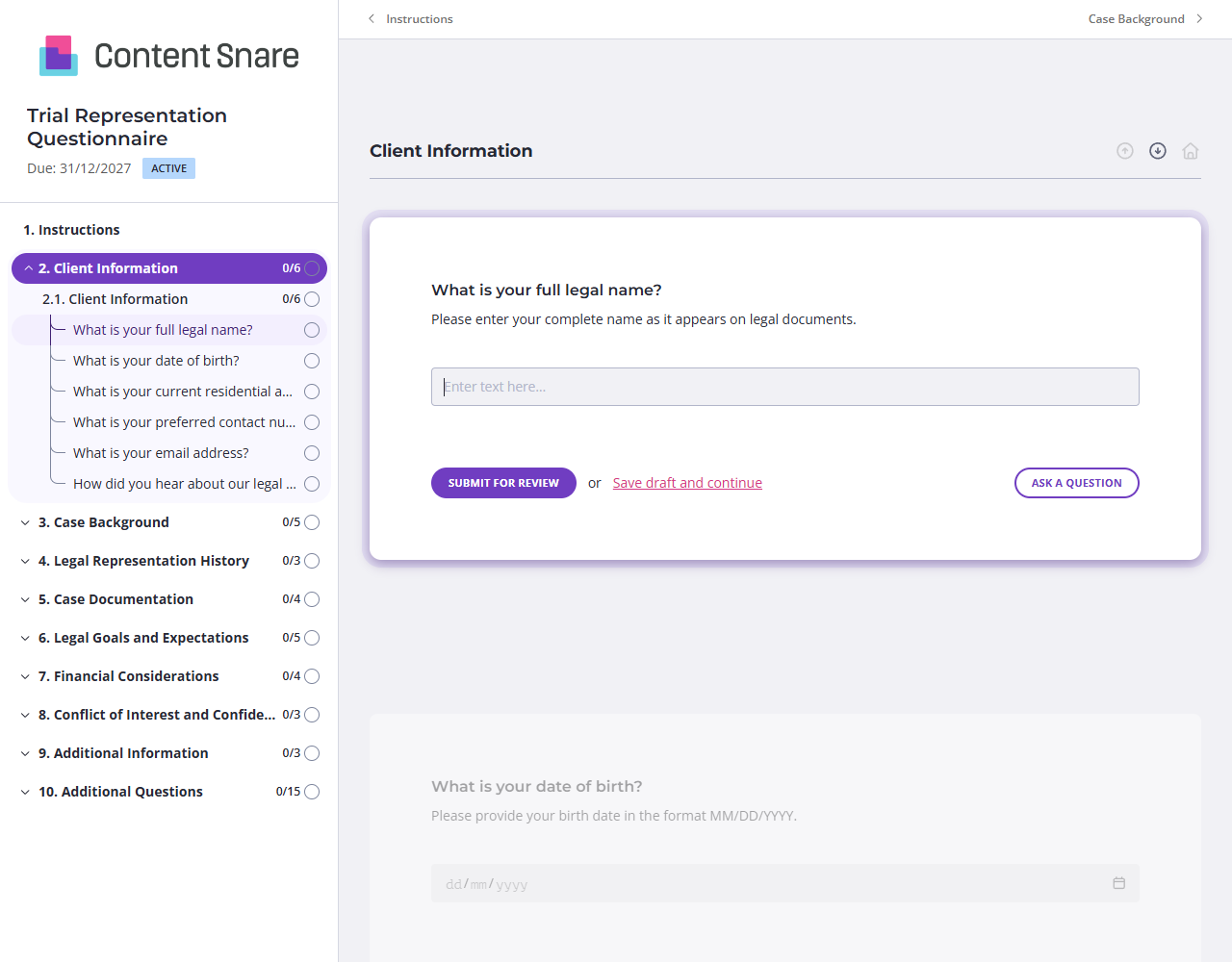
The trial representation questionnaire covers a lot of ground - from case documentation to financial considerations to conflict checks. Group related questions into separate pages: one for client information, another for case background, a third for documentation and evidence. Clients won't feel overwhelmed by a endless scroll of questions, and they can tackle the form in multiple sittings if needed. They save progress automatically and pick up right where they left off.
Questions about conflicts of interest or prior representation often confuse clients - they don't know what qualifies or how much detail you need. Add brief instruction text above those sections explaining what you're looking for and why it matters. For the documentation section, include a quick note about acceptable file formats or photo quality for police reports and court orders. Clear guidance upfront means fewer back-and-forth clarifications later.
You likely collected basic contact information when the client first reached out - name, phone number, email address. Prefill those fields before sending the questionnaire so clients can focus on the complex stuff: case facts, witness details, legal goals, and documentation. Delete the "How did you hear about us?" question entirely if you already know the answer. The shorter the form feels, the faster clients complete it.
The case documentation section asks for police reports, court orders, contracts, and correspondence - materials clients need to track down. Enable automatic reminders that nudge them every few days if they haven't submitted everything. You stay top of mind without sending awkward follow-up emails, and clients appreciate the gentle accountability when life gets busy.
Email attachments get lost. Word documents come back half-completed. Phone tag wastes billable hours. Content Snare gives you a professional, centralized system for collecting client information - with automatic reminders, progress tracking, and secure file uploads that actually work. Your clients get a seamless experience, and you get complete submissions without the follow-up headaches.
Content Snare is ISO 27001 certified and trusted by legal professionals worldwide who can't afford security risks with sensitive client data. It integrates with tools you already use and has earned hundreds of 5-star reviews across G2, Capterra, and Trustpilot for its ease of use.
The trial representation questionnaire is just one application. Law firms use Content Snare for:
Each form is fully customizable to your practice areas and workflows.


