


A structured intake questionnaire that captures a client's case details, assesses their understanding of plea bargaining rights and consequences, and identifies their priorities and concerns before negotiations begin.

Criminal defense attorneys, public defenders, and legal aid organizations who need to evaluate client comprehension and decision-making factors when considering plea agreements.

Send immediately after client retention or when scheduling an initial plea discussion, allowing clients to provide informed responses before the consultation so attorneys can focus on strategy rather than basic intake.
A client walks into your office facing serious charges, overwhelmed by legal jargon, and unsure whether accepting a plea deal is the right move. They haven't considered how a conviction might affect their employment, they're unclear on the difference between reduced charges and reduced sentences, and they definitely haven't thought through the long-term implications. You need a clear picture of their understanding, priorities, and concerns - fast.
A plea bargaining questionnaire streamlines this critical intake process. It ensures you capture essential case details, assess client comprehension of their rights and options, and identify their decision-making factors before negotiations begin. This post covers what to include in an effective plea bargaining questionnaire, how to use it with clients, and a free template you can customize. Let's get started.
Client Information
Collect core identifiers and reliable contact details to match records and coordinate follow-up.
Legal Representation
Confirm counsel details and prior exposure to plea practice to calibrate communications.
Case Details
Anchor the questionnaire to the charged conduct, venue, and procedural posture.
Understanding of Plea Bargaining
Gauge baseline comprehension of rights, process, and consequences to tailor advisement.
Decision Factors
Surface the client’s priorities and risk tolerance to frame negotiation strategy.
Expectations and Concerns
Elicit expectations and apprehensions to align counseling with likely outcomes.
Negotiation and Outcome
Identify desired terms and bargaining flexibility to define the negotiation envelope.
Future Implications
Assess awareness of collateral consequences and long-term impacts that should inform recommendations.
Additional Information
Leave room for case-specific context and outstanding questions you may need to address.
Send it before the initial consultation: Get the questionnaire to clients as soon as they retain your services or schedule their first meeting. This gives them time to gather case details, reflect on their priorities, and come prepared with meaningful questions. You'll spend less time on basic intake and more time on strategy.
Use the "Understanding" section as a teaching tool: Don't assume clients know what plea bargaining actually means or fully grasp their rights. Review their responses to questions about understanding plea deals and potential consequences during your meeting. If they've marked "no" or seem uncertain, that's your cue to slow down and explain concepts in plain language before moving forward with any negotiations.
Flag emotional responses for deeper conversation: Pay close attention to open-ended answers about concerns, expectations, and how a plea might impact their personal or professional life. Clients often reveal fears about family relationships, job loss, or stigma in these sections. These aren't just administrative details - they're negotiation priorities you need to understand and address directly with the prosecution or in your counsel to the client.
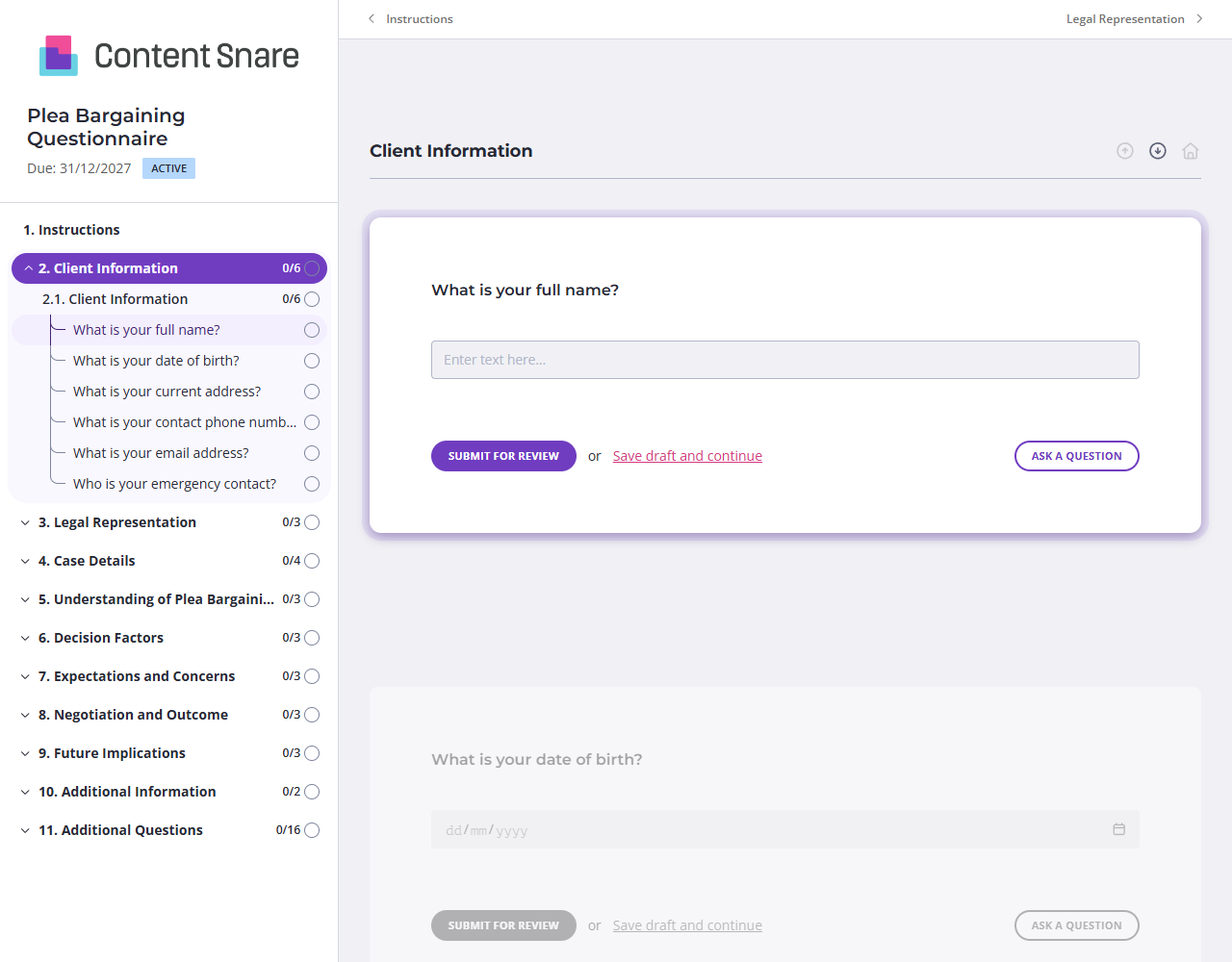
Plea bargaining involves legal concepts most clients don't encounter in daily life. Use pages and sections to separate "Understanding of Plea Bargaining" from "Case Details" and "Decision Factors." This prevents overwhelm and helps clients focus on one topic at a time. They can save progress and return later if they need to look up arrest dates or consult family members about how a plea might affect their lives.
The questions about rights, consequences, and long-term implications aren't just checkboxes - they require genuine comprehension. Use instruction areas above these sections to explain key terms in plain language or link to brief explainer videos. A two-minute video on how plea bargains differ from trial outcomes can prevent confusion and ensure clients give you accurate, thoughtful responses about their understanding and concerns.
You likely have basic client information - name, contact details, attorney assignment - in your case management system already. Delete those questions or pre-fill them before sending the questionnaire. Your client can jump straight to the substance: their understanding of the charges, their priorities in negotiation, and their concerns about outcomes. This respects their time and signals you're prepared.
Plea negotiations often have narrow windows. You can't afford to chase down incomplete questionnaires when a prosecutor is waiting for your client's position. Configure automatic reminders so clients receive gentle follow-ups without you having to track them manually. You stay focused on case strategy while the system handles administrative follow-through.
Email attachments get lost. Shared documents become version-control nightmares. Phone intake means transcribing notes and inevitably missing details. Content Snare gives you a purpose-built system for collecting client information - one that's secure, trackable, and actually gets completed.
You get automatic follow-ups so clients don't fall through the cracks. Clear progress tracking so you know exactly what's outstanding. ISO 27001 certification means your client data meets the security standards your practice demands. Content Snare is trusted by legal professionals and thousands of businesses worldwide, with hundreds of 5-star reviews across G2, Capterra, and Trustpilot.
The platform integrates with tools you already use, so client responses flow directly into your case management system without manual data entry.
This plea bargaining questionnaire is just one application. Legal practices use Content Snare for client intake forms, discovery document requests, witness questionnaires, case closure surveys, and estate planning information gathering. Any time you need structured information from clients or third parties, Content Snare turns a frustrating back-and-forth into a streamlined process.


