


A structured intake questionnaire that captures comprehensive details about an accident, injuries sustained, medical treatment, financial impact, and supporting documentation needed to build a compensation claim.

Personal injury lawyers, legal assistants, and compensation claim specialists who need to collect consistent, complete information from accident victims during the initial case assessment and intake process.

Immediately after an initial consultation when a client decides to pursue a compensation claim, before drafting demand letters or filing formal proceedings, to ensure all necessary evidence and details are documented upfront.
Missing a single detail in an accident compensation case can derail a claim worth thousands. Clients forget dates, lose medical records, and struggle to articulate the full impact of their injuries. Your intake process needs to capture everything - consistently and completely - without overwhelming already-stressed claimants.
An accident compensation questionnaire solves this. It guides clients through every critical detail: accident circumstances, injury documentation, financial impact, and supporting evidence. You get structured, thorough information upfront. They get clarity on what matters. This post covers what makes an effective questionnaire, practical tips for implementation, and a free template you can customize. Let's get started.
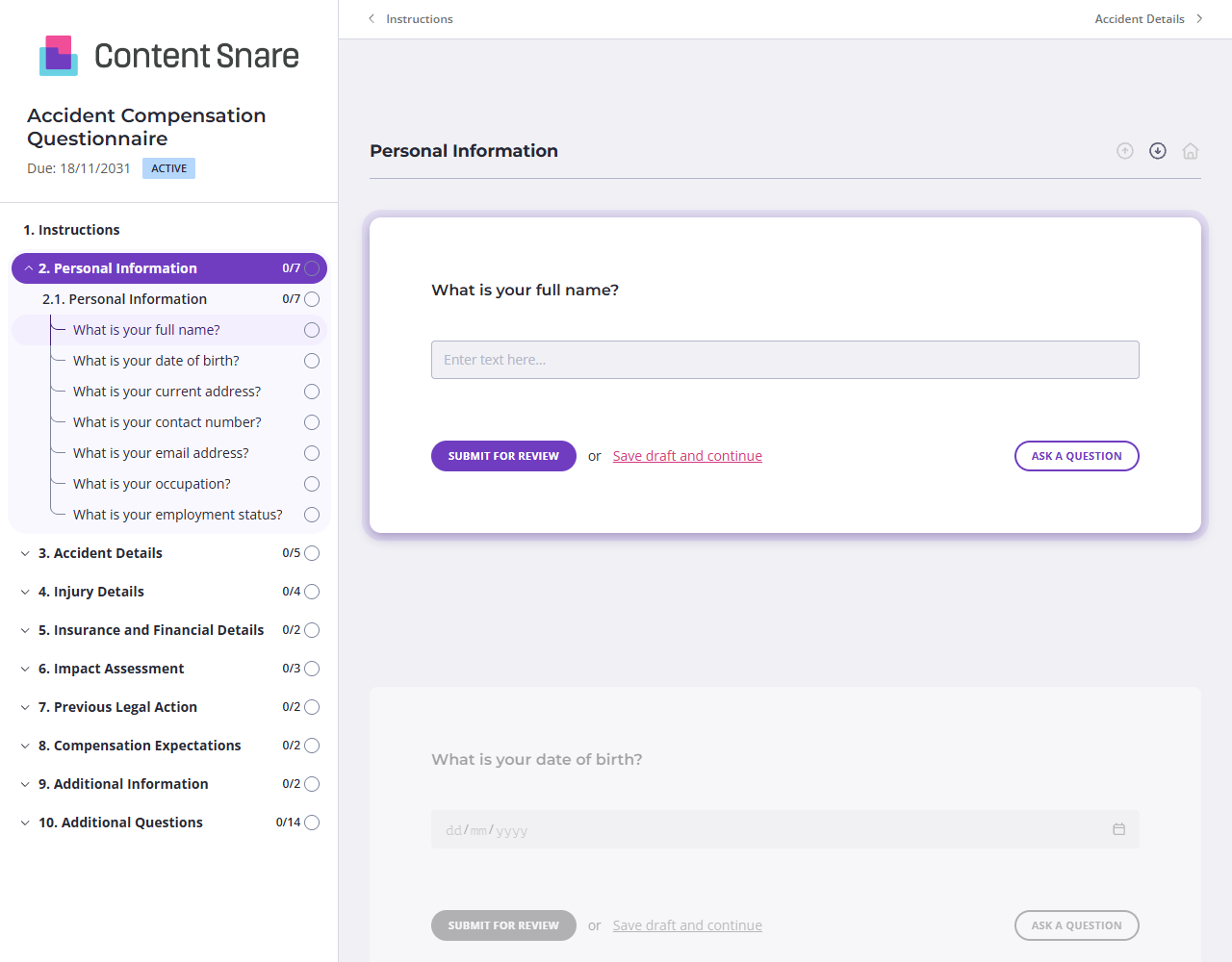
Personal Information
Start with the basics you need to identify the client and reach them about the claim.
Occupation and employment status shape how you assess lost income and work-related liability later.
Accident Details
This group captures the facts of the incident so you can assess the claim and identify who else to contact.
The client's own description and the witness details give you a starting point for evidence. The police report number lets you request the official record without chasing the client.
Injury Details
These questions establish the nature of the injuries and the care the client has received so far.
Treatment providers and time off work tell you which medical records and employer documents to request.
Insurance and Financial Details
This group shows what cover exists and whether any claims are already in motion.
Impact Assessment
These questions capture how the injuries affect the client's day-to-day life and work.
Answers here support the damages side of the claim, particularly ongoing limitations that a medical report alone may not show.
Previous Legal Action
Check for earlier legal involvement before you take on the matter.
Prior advice or proceedings can create conflicts or affect deadlines, so you want to know about them at intake.
Compensation Expectations
This group tells you what the client hopes to recover and what financial pressure they are under.
Compare the client's expectations with a realistic outcome early, and note any hardship that may call for faster action.
Additional Information
Give the client room to add anything the earlier questions missed and to share supporting material.
Send a brief explainer email first: Before you share the accident compensation questionnaire, send clients a quick message explaining why you need this information and how long it'll take (estimate 15-20 minutes). Mention that gathering details like witness contacts, police report numbers, and treatment records beforehand will make the process smoother. Clients feel less overwhelmed when they know what's coming.
Flag time-sensitive questions for immediate follow-up: Pay special attention to responses about medical treatment status, ongoing rehabilitation, and time off work. These details change quickly and directly impact claim value. If a client indicates they're still receiving treatment or missing work, schedule a follow-up call within 48 hours to discuss documentation needs and potential interim support.
Use incomplete submissions as conversation starters: Clients often skip questions about compensation expectations or struggle to describe how injuries affect daily life - these sections feel abstract or uncomfortable. Don't just send a reminder. Call them. Walk through these questions together. You'll uncover crucial details about pain, limitations, and financial hardship that they wouldn't have written down on their own.
Not every client needs to answer every question. Someone who wasn't hospitalized doesn't need to detail their treatment facility. A self-employed client has different employment status considerations than a salaried employee. Set up conditional logic so questions about medical treatment locations only appear if they answered "yes" to seeking medical attention. Same for insurance claims, ongoing rehabilitation, and previous legal proceedings. Clients see a shorter, more relevant form. You get cleaner data.
You likely already know your client's name, address, contact information, and occupation from your initial consultation. Pre-fill these fields in the Personal Information section before sending the questionnaire. Clients appreciate not having to re-enter basic details, and it signals that you're organized and attentive. Delete questions entirely if you've already captured certain information during intake - no need to ask twice.
The "Describe how the accident happened" and "How have the injuries affected your daily life" questions often trip clients up. They either write too little or ramble without structure. Add brief instructions above these fields: "Include specific details about what you were doing, what caused the accident, and the sequence of events" or "Think about physical limitations, emotional impact, and changes to your routine - be specific." A 20-second instructional video can work even better, showing them exactly what level of detail you need.
The questionnaire asks clients to share supporting documents - medical records, police reports, insurance correspondence, photos of injuries or accident scenes. These are easy to forget or procrastinate on. Configure automatic reminders that trigger if the form isn't completed within 3 days, then again at 7 days. Content Snare sends the reminders for you, so you don't have to chase anyone manually. Clients get the nudge they need without you playing the bad guy.
Email chains lose attachments. Word documents come back incomplete. Phone intake means you're typing while clients talk, inevitably missing details. Content Snare gives you a structured, trackable process where clients submit everything in one place - and you can see exactly what's missing.
Security matters for sensitive legal information. Content Snare is ISO 27001 certified and trusted by law firms handling confidential client data every day. Clients upload medical records, police reports, and financial documents knowing their information is protected.
The platform syncs files to cloud storage like Google Drive, Dropbox, OneDrive and SharePoint, and connects to other apps through Zapier, Make or the API.
Content Snare has hundreds of 5-star reviews across G2, Capterra, and Trustpilot. Legal professionals consistently highlight how it transforms their client intake process from chaotic to seamless.
This accident compensation questionnaire is just one use case. Law firms use Content Snare for estate planning document collection, divorce proceedings financial disclosures, business incorporation questionnaires, litigation discovery requests, and new client onboarding across any practice area. Anywhere you need information from clients, Content Snare makes the process faster and more professional.


