


A comprehensive intake questionnaire that collects client information, jurisdictional details, cross-border compliance requirements, and case specifics for international legal matters.

International law practitioners, cross-border legal teams, and law firms handling multi-jurisdictional cases who need complete client information before initial consultations.

Send this form 48 hours before first client meetings to gather jurisdictional details, identify urgent deadlines, conduct conflict checks, and assess case complexity upfront.
How many hours does your firm waste each month chasing clients for basic case details, jurisdictional information, and cross-border compliance requirements? Cross-border legal matters demand precision from the first consultation - missing a relevant jurisdiction, deadline, or regulatory concern can derail an entire case. An international law questionnaire solves this by capturing complete client information upfront, ensuring you have every critical detail before your first meeting.
This post walks you through what an effective international law questionnaire should include, how to customize it for different practice areas, and tips for integrating it into your intake process. Plus, you'll get access to a free template you can deploy immediately. Let's get started.
Client Information
Start with the basics so you can identify the client and know where they operate.
Legal Needs
These questions define the scope of the engagement and flag any live issues early.
The question about ongoing disputes shows you whether a conflict or deadline already exists before you quote or commit.
Background and Context
Use this group to understand the client's activities and their history with similar matters.
Legal Matter Details
This group collects the documents and timing you need to assess the matter.
Pending litigation or arbitration affects strategy, conflicts and timing, so it's worth confirming before you take the matter on.
Goals and Expectations
Find out what the client wants to achieve and how they weigh the trade-offs.
The priority question gives you a clear steer on how to balance cost, speed and result as the matter develops.
Geographic Considerations
These questions establish which jurisdictions apply and where you may need to act.
Answers here tell you whether you need local counsel or additional licensing in other countries.
Financial Information
Get budget and funding clear before work begins.
Confidentiality and Communication
Set expectations for how you communicate and who can speak for the client.
The authorized contacts question protects privilege and stops sensitive details going to the wrong person.
Risk Assessment and Management
Capture what the client already knows about their exposure and how they manage it.
Additional Information
Close with anything the client wants to add and the next step.
Send the questionnaire before your initial consultation: Give clients at least 48 hours to complete it before your first meeting. International law matters involve complex jurisdictional questions and documentation requirements - clients need time to gather contracts, identify relevant countries, and consult with colleagues who may be authorized to discuss the matter.
Flag urgent deadline questions upfront: Include a brief note when sending the form that specifically asks clients to highlight any pending litigation, arbitration, or time-sensitive regulatory deadlines in their responses. These details often get buried in longer narratives, and spotting them early lets you triage cases immediately.
Use responses to build your conflict check: The client information, geographic considerations, and background sections give you everything needed for thorough conflict screening. Extract company names, jurisdictions, past legal advisers, and related parties before your intake meeting to avoid surprises later.
Create a follow-up checklist from incomplete answers: Clients often skip financial questions or risk assessment sections. Rather than sending the entire form back, note which specific areas need clarification and address them in your first conversation with context you've already gathered.
Turn the goals and expectations section into your engagement roadmap: Client answers about prioritizing cost versus speed versus outcome become your framework for proposing service options. Reference their specific language when presenting strategies - it shows you listened and helps align expectations from day one.
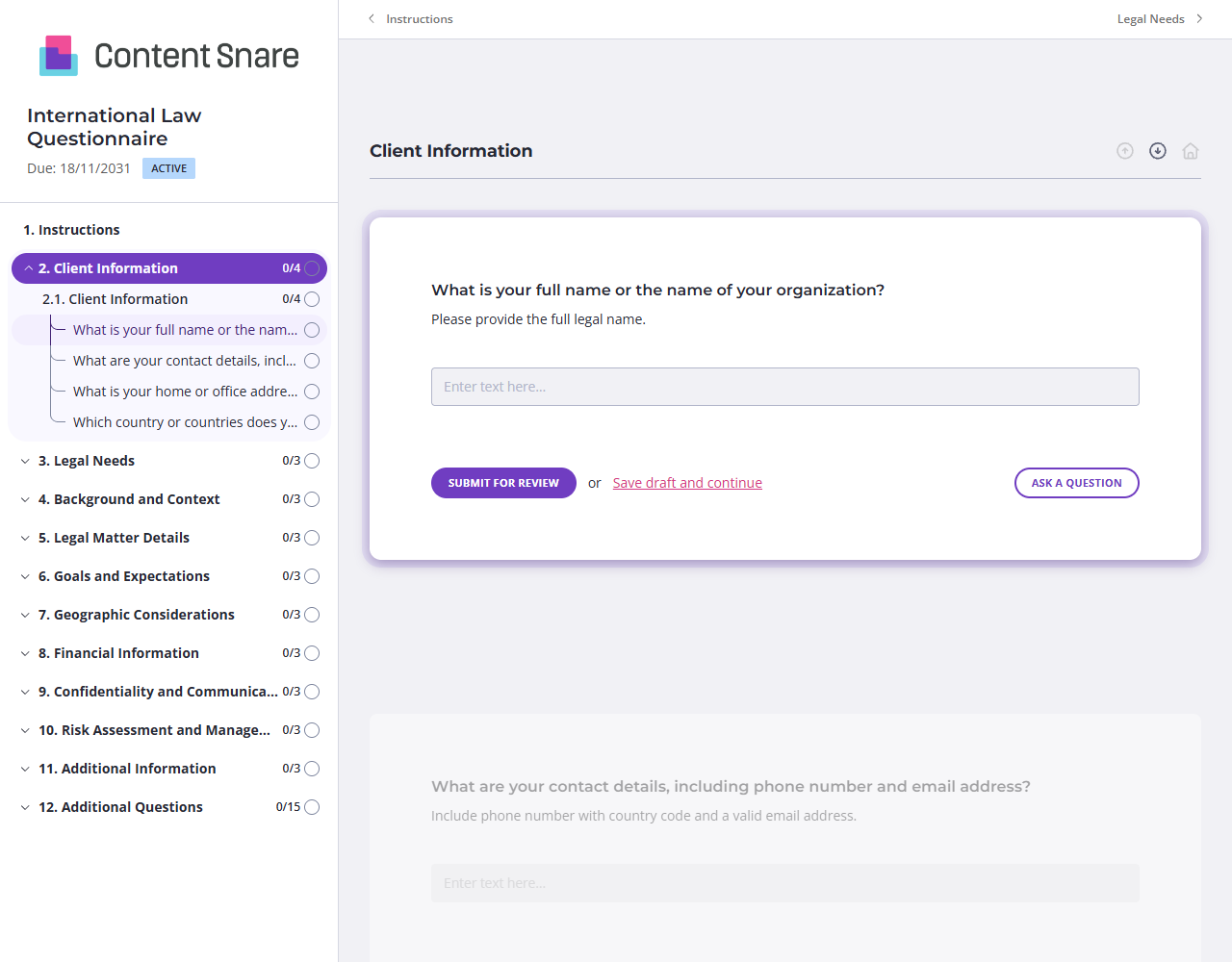
International law questionnaires cover a lot of ground - client details, jurisdictional issues, financial constraints, risk assessment. Split these into separate pages rather than presenting one overwhelming list. Group related questions together: put all geographic considerations on one page, legal matter details on another, and goals and expectations on their own page. Clients can save progress and return later, which matters when they need to consult colleagues or dig up documentation.
You likely already have basic client information from initial emails or phone calls - names, contact details, business operations, maybe even the legal services they're seeking. Delete or pre-fill these questions before sending the form. Your clients skip the repetitive data entry, and you get straight to the valuable information: jurisdictional complexities, existing documentation, risk factors, and strategic preferences.
The geographic considerations and legal matter details sections can confuse clients unfamiliar with legal terminology. Add brief instruction text above these question groups explaining what you need and why. For "Which jurisdictions are relevant to your legal issue," include a quick note like "List all countries where contracts were signed, services performed, or parties are located." For documentation questions, clarify acceptable formats or whether summaries work. Clear instructions mean fewer incomplete responses and follow-up calls.
Clients often need days to locate contracts, agreements, arbitration notices, or past legal correspondence mentioned in the Legal Matter Details section. Automatic reminders keep your intake moving without you having to chase people down. Configure gentle nudges every few days - Content Snare handles the follow-up while you focus on billable work.
Email threads and Word documents create chaos for international law intake. Clients send partial information across multiple messages. You waste time consolidating responses and following up on missing details. Content Snare centralizes everything in one secure place, automatically tracks what's complete, and reminds clients without you lifting a finger.
Security matters for cross-border legal work. Content Snare is ISO 27001 certified and trusted by thousands of businesses worldwide, including law firms handling sensitive international matters. Your clients' confidential documentation, jurisdictional details, and financial information stay protected.
Files can sync to Google Drive, Dropbox, OneDrive or SharePoint, and Zapier, Make and the API connect Content Snare to your other tools. Customization is straightforward. You can adapt forms for specific practice areas, add your firm's branding, and modify questions without technical skills.
Hundreds of 5-star reviews across G2, Capterra, and Trustpilot confirm what legal professionals already know: chasing clients for information damages relationships and delays billable work. Content Snare handles the grunt work so you can focus on casework.
This international law questionnaire is just one application. Legal teams also use Content Snare for:


