


A comprehensive questionnaire that collects detailed financial data from legal firms, covering revenue sources, expenses, assets, billing practices, accounting systems, risk management, and compliance procedures.

Law firms, legal practices, and attorneys who need to gather structured financial information from clients or document their own firm's financial position for audits, reviews, or regulatory compliance.

Before quarterly or annual financial reviews, during client onboarding, when preparing for audits, or when assessing a firm's financial health and compliance status.
How confident are you in your firm's financial compliance when regulators, clients, or partners come calling? Legal practices face intense scrutiny around revenue recognition, client billing accuracy, and trust account management. One missed detail in your financial reporting can trigger audits, damage client relationships, or expose your firm to liability.
A financial reporting questionnaire streamlines the entire process. It captures critical data - from revenue streams and expense tracking to risk management and billing policies - in one organized place. This post covers what a financial reporting questionnaire includes, practical tips to implement it effectively, and a free template you can customize. Let's dive in.
Client Information
Start with the basics that identify the client and the right person to deal with on financial matters.
Revenue and Income
These questions show where the money comes from and how reliable it is.
The non-recurring question flags one-off income that can distort the picture if you treat it as steady revenue.
Expenses and Liabilities
Use this group to understand the client's cost base and what they owe.
Assets and Investments
This group covers what the client owns and how those holdings are performing.
Financial Controls and Policies
These questions show how well the client governs its own finances.
Accounting Practices
Collect the systems and conventions you'll be working within.
The tax compliance answer tells you how much of the filing workload sits with the client and how much will land on you.
Risk Management
This group surfaces exposure the client has already identified.
Reporting and Auditing
These questions cover how often reports are produced and who checks them.
The reporting standards answer sets the framework for everything you prepare, so confirm it before you start.
Client Billing and Collections
Use this group to see how the client turns work into cash.
Budgeting and Forecasting
These questions show how the client plans and how closely they track against the plan.
Financial Relationships
Find out who else is involved in the client's finances.
Future Financial Planning
This group looks ahead to changes that will affect your work.
Pre-populate client information before sending: Fill in basic details like legal name, business structure, and registered address yourself before sharing the form. This saves your clients time and shows you've done your homework, making them more likely to complete the rest thoughtfully.
Send it ahead of quarterly or annual reviews: Don't wait until you're sitting in a meeting to gather financial data. Distribute the financial reporting questionnaire at least a week before scheduled reviews. Your clients can consult with their accounting teams, pull reports from their software, and provide accurate answers about revenue forecasts, expense tracking, and investment performance without pressure.
Use responses to identify red flags early: Pay close attention to answers about financial controls, risk management, and audit frequency. If a firm reports weak internal controls or hasn't conducted an audit in years, flag this for a deeper conversation. The questionnaire becomes a diagnostic tool, not just a data collection exercise.
Create a follow-up checklist based on gaps: After reviewing submissions, note what's missing or vague - maybe they skipped questions about unusual revenue streams or didn't clarify their collections policies. Schedule a brief call to address these gaps specifically. This targeted approach is more efficient than generic follow-ups.
Archive responses for year-over-year comparison: Keep completed questionnaires organized by client and date. When next year's reporting cycle comes around, compare how their revenue sources, expenses, or financial goals have evolved. This historical perspective helps you provide more strategic advice and demonstrates your long-term value as a trusted advisor.
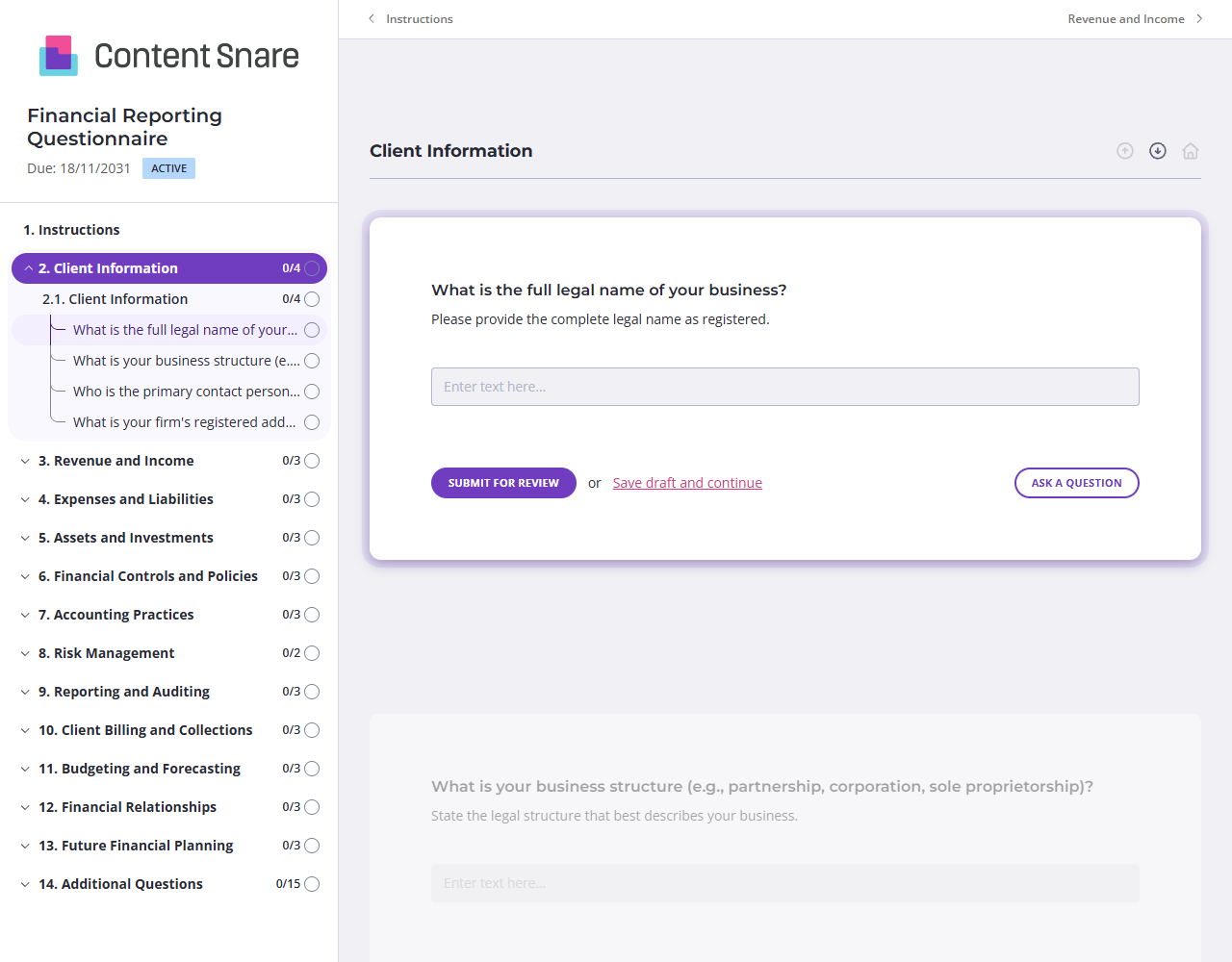
Financial reporting covers a lot of ground - from revenue and expenses to risk management and future planning. Use pages and sections to organize the questionnaire logically. Group related questions together: put all "Revenue and Income" questions on one page, "Expenses and Liabilities" on another, and "Reporting and Auditing" separately. Your clients won't feel overwhelmed scrolling through dozens of questions at once, and they can tackle each section when they have the relevant documents or team members available.
Financial terminology can be interpreted differently. Add brief instructions to clarify exactly what you need. For questions about "primary sources of revenue," specify whether you want broad categories (litigation, corporate work, estate planning) or detailed breakdowns. When asking about accounting software, note whether you need version numbers or integration details. Clear guidance upfront means fewer incomplete answers and less time spent requesting clarifications later.
Not every legal firm has the same structure or financial complexity. Use conditional logic to tailor the questionnaire based on initial answers. If a firm indicates they don't have ongoing investments, skip those follow-up questions about investment performance. If they select "sole proprietorship" as their business structure, hide questions about shareholder relationships or partnership agreements. Clients only see what applies to them, making the process faster and less confusing.
Financial reporting questionnaires often get buried under billable work. Automatic reminders keep the process on track without you having to send awkward follow-up emails. Schedule gentle nudges at intervals that make sense - maybe 3 days, then 7 days after sending. Your clients get the prompts they need, and you maintain momentum without micromanaging or damaging the relationship.
Email chains and Word documents create chaos when collecting financial data from legal clients. Attachments get lost, version control becomes a nightmare, and sensitive information sits unsecured in inboxes. Content Snare centralizes everything in one place, tracks progress automatically, and keeps client data protected with ISO 27001 certification - critical when handling financial details for law firms.
Legal practices deal with sensitive information daily, and your tools need to reflect that standard. Content Snare is trusted by thousands of businesses worldwide and has earned hundreds of 5-star reviews across G2, Capterra, and Trustpilot. Clients appreciate the professional experience, and you gain efficiency without compromising security.
The platform syncs files to cloud storage like Google Drive, Dropbox, OneDrive and SharePoint, and connects to other apps through Zapier, Make or the API.
Beyond financial reporting questionnaires, legal professionals use Content Snare for:
The flexibility means you can streamline multiple touchpoints with clients, not just financial reporting. One platform handles the repetitive information gathering that slows down your practice.


