


A client intake questionnaire that gathers essential information about agricultural operations, regulatory compliance, property matters, contracts, employment practices, and intellectual property issues.

Agricultural law attorneys and legal teams who represent farmers, ranchers, and agribusiness clients facing compliance issues, contract disputes, land use matters, or operational legal challenges.

Send before initial consultations to identify licensing gaps, zoning violations, contract deadlines, employment law risks, and multi-jurisdictional regulatory issues that require immediate attention or specialized expertise.
Your client's agricultural operation faces a licensing gap, an unsigned distributor contract sits in limbo, and potential zoning violations could derail their expansion plans. Agricultural legal matters are complex - spanning compliance, land use, contracts, employment law, and intellectual property. Miss one detail and your client faces costly disputes or operational shutdowns.
An agricultural questionnaire streamlines your initial client intake and due diligence. It captures essential information about farm operations, regulatory compliance, existing agreements, property issues, and risk exposure - all before your first meeting. This post covers what an agricultural questionnaire should include, practical tips for implementation, and a free template you can customize. Let's break it down.
Business Information
Start with the basics so you know who you're advising and what the operation looks like.
Legal Compliance
These questions show how well the client understands their regulatory position and where gaps might sit.
Past disputes and zoning problems tell you early whether you're dealing with a clean slate or an existing issue.
Contracts and Agreements
Use this group to map the client's commercial relationships and any contract risk.
Renewal dates and past breaches show where you'll likely need to step in first.
Land and Property
Land tenure and property constraints shape most of what a client can do, so confirm them upfront.
Risk Management and Insurance
These questions cover the client's exposure and how well it is protected.
The open risk question shows what the client worries about, which helps you prioritise your advice.
Employment and Labor
Workforce size and employment arrangements affect the client's compliance obligations.
Intellectual Property
Agricultural clients often hold valuable processes or genetics they haven't thought to protect.
Future Planning and Development
Finish with where the client is heading so you can plan ahead of their growth.
The last question tells you whether the client wants ongoing support or a one-off engagement.
Send it before the initial consultation: Get the agricultural questionnaire to prospective clients as soon as they schedule their first meeting. You'll arrive prepared with a clear picture of their operation type, compliance status, and potential red flags - turning a general intake call into a focused strategy session.
Flag multi-jurisdictional issues early: Pay close attention to responses about property location, land use restrictions, and environmental concerns. Agricultural operations often span county lines or fall under overlapping federal, state, and local regulations. Use their answers to identify which regulatory bodies you'll need to research before advising on expansions or compliance matters.
Cross-reference contract timelines with renewal dates: When clients indicate contracts up for renegotiation, note those dates immediately in your case management system. Supplier and distributor agreements often have narrow renewal windows - missing one could leave your client without critical market access or input supplies during peak season.
Treat IP questions as discovery opportunities: Most farmers don't realize their proprietary seed selection methods, unique livestock breeding programs, or specialized growing techniques might warrant legal protection. If they mention innovations in the questionnaire, schedule a separate conversation about trademark or patent possibilities. It's often an overlooked revenue stream and competitive advantage.
Use employment answers to assess labor law exposure: The responses about employee count, contracts, and disputes tell you whether this client needs immediate attention on H-2A visa compliance, wage-and-hour issues, or worker safety protocols. Agricultural employment law is highly specialized - these answers help you decide whether to handle it in-house or loop in an employment specialist early.
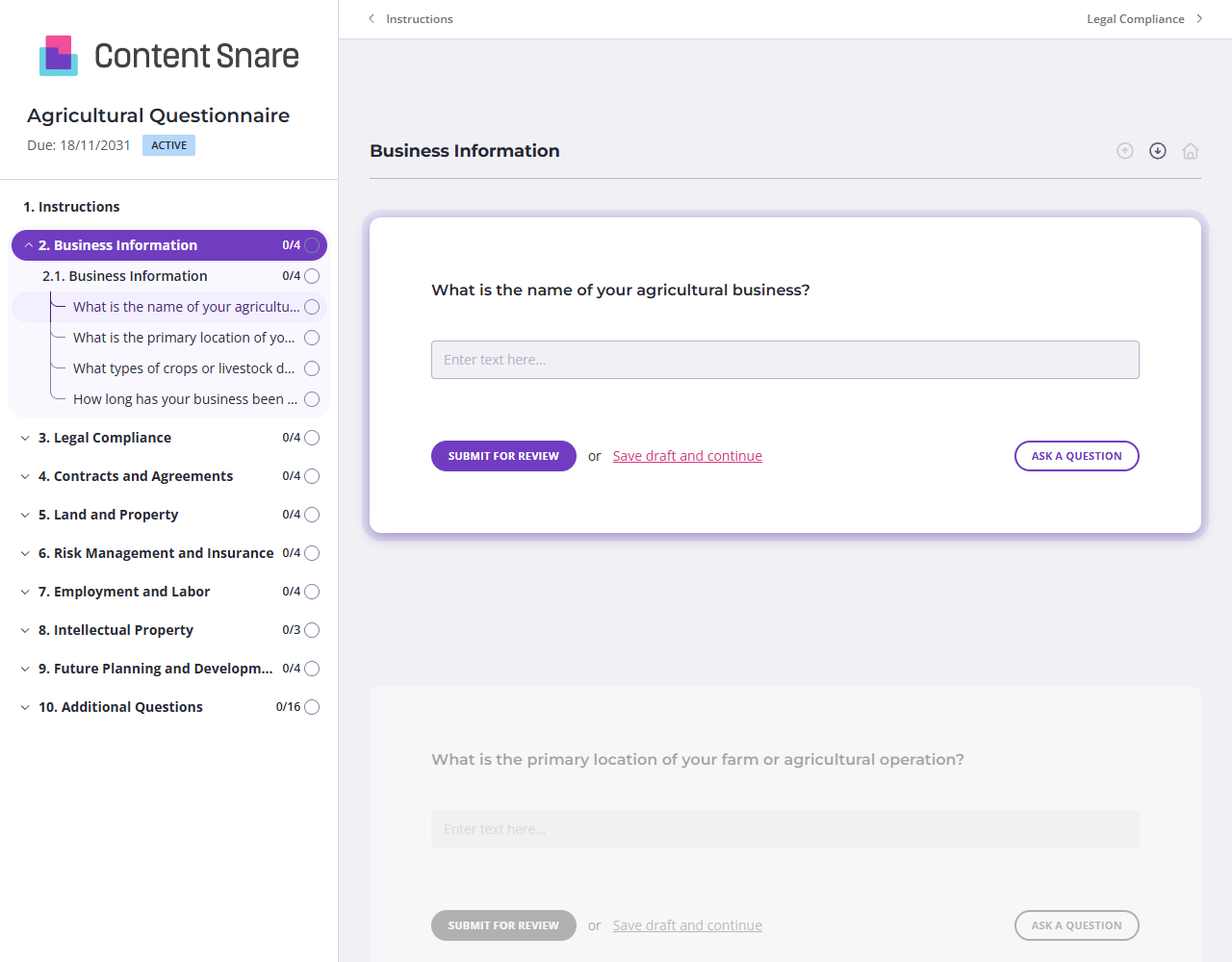
Agricultural law touches everything from land use to intellectual property. Don't overwhelm clients with a single endless scroll. Group related questions into separate pages: one for business basics, another for compliance and licensing, a third for contracts and agreements, and so on. Clients can tackle one area at a time, save their progress, and return when they've gathered the necessary documentation. This structure also mirrors how you'll organize their matter internally.
Farmers aren't lawyers - terms like "easements," "zoning restrictions," and "H-2A compliance" may be unfamiliar. Use the instruction areas above each section to clarify what you're asking for and why it matters. Upload a quick screenshot showing where they'd find permit numbers on their agricultural license. Drop in a short video explaining the difference between owning and leasing land, or what counts as an environmental issue worth disclosing. These small touches reduce back-and-forth emails and help clients provide accurate information the first time.
Harvest schedules, planting windows, and livestock care don't pause for paperwork. Your agricultural clients are juggling operational demands that make legal forms easy to forget. Configure Content Snare to send gentle automatic reminders at intervals you choose. Clients stay on track without you having to chase them down, and you avoid the awkward follow-up calls that make both parties uncomfortable. The system handles the nagging so you can focus on the substantive legal work.
Not every agricultural operation faces the same legal issues. A cattle ranch has different concerns than a row crop farm or an organic vegetable operation. Use conditional logic to tailor the questionnaire based on early responses - if they indicate livestock production, show questions about disease management and animal welfare compliance. If they're leasing land, skip the property survey questions meant for landowners. Clients complete the form faster, and you collect only the information that actually applies to their situation.
Email threads spiral out of control. Word documents get lost in attachments. Clients forget what they've already answered and what's still missing. Content Snare eliminates the chaos by giving you a single organized platform where agricultural clients can submit information at their own pace while you track exactly what's outstanding. No more playing detective through your inbox or sending awkward "just following up" emails for the third time.
The platform is ISO 27001 certified and trusted by thousands of businesses worldwide, including law firms handling sensitive client data. Your agricultural clients can upload contracts, property surveys, and financial records knowing their information stays secure. Content Snare syncs files to cloud storage like Google Drive, Dropbox, OneDrive and SharePoint, and connects to other apps through Zapier, Make or the API.
Hundreds of 5-star reviews across G2, Capterra, and Trustpilot highlight what legal professionals value most: clients actually complete their forms, follow-up happens automatically, and the entire intake process feels more professional than cobbled-together emails and spreadsheets.
This agricultural questionnaire is just one application. Legal professionals use Content Snare for estate planning intakes, corporate formation documents, litigation discovery requests, due diligence checklists for M&A transactions, client onboarding for family law matters, and compliance documentation for regulatory filings. Any time you need structured information from clients, Content Snare turns a frustrating back-and-forth into a streamlined process that respects everyone's time.


