


A comprehensive intake questionnaire that collects client information on environmental compliance, permits, audits, risk management, sustainability practices, waste control, biodiversity impact, and current legal challenges.

Environmental lawyers, corporate counsel, and legal advisors who need to assess client compliance with environmental regulations and identify potential legal risks across operations.

At the start of a new client engagement, before compliance audits, when clients face regulatory changes, or when planning expansions that may trigger new environmental requirements.
How confident are you that your clients are actually compliant with the environmental regulations that could make or break their operations? Legal professionals face a growing challenge: environmental law is complex, constantly evolving, and non-compliance can mean devastating penalties. Gathering the right information upfront is critical - but piecing together compliance details, risk assessments, and sustainability practices across dozens of client touchpoints wastes time and leaves gaps.
An environment law questionnaire streamlines this entire process. It helps you collect comprehensive client data on permits, audits, waste management, biodiversity impact, and legal strategies - all in one structured form. This post covers what the questionnaire should include, how to use it effectively with clients, and a free template you can customize. Let's break it down.
Client Information
Start with the basics so you know who you're advising and who to deal with on their side.
Size and locations tell you which regimes and regulators are likely to apply.
Environmental Compliance
These questions show how well the client understands their obligations and whether they're meeting them.
The permit and audit answers point to gaps you can scope work around early.
Environmental Impact and Risk Management
This group covers how the client identifies and handles environmental risk day to day.
The incident plan question shows whether the client is ready to respond when something goes wrong.
Sustainability Initiatives
These questions cover the client's sustainability commitments and how openly they report on them.
Public reporting creates its own disclosure exposure, so the last question matters for advice on claims and accuracy.
Waste Management and Pollution Control
This group shows how the client handles waste and emissions.
The last question often surfaces live compliance problems before you ask about them directly.
Biodiversity and Ecosystem Management
These questions cover the client's effect on local ecosystems and what they've done about it.
Water and Energy Use
This group covers resource consumption and how the client measures it.
Land Use and Rehabilitation
These questions cover the client's land footprint and their obligations once operations end.
Rehabilitation policies show whether the client has planned for end-of-life obligations.
Legal Compliance and Challenges
This group covers the client's current legal position and how they keep up with change.
Ongoing challenges tell you about existing exposure and any matters already in progress.
Consultation and Reporting
These questions show how the client documents compliance and how often they get it checked.
Training and Awareness
This group covers how the client keeps staff informed and who owns environmental compliance internally.
Future Planning
These questions look ahead to projects and regulatory change that could affect the client.
Upcoming projects and expansions are the main source of new approvals work, so it pays to ask early.
Send a pre-questionnaire brief to set context: Before your client sees the form, send a quick email explaining why you need this information and how it protects them. Mention that you'll be covering compliance audits, permits, risk management, and sustainability practices - so they know to loop in their operations, environmental, and risk teams early. This prevents incomplete answers and reduces back-and-forth.
Break the form into stages for complex clients: If you're working with a large organization or one with multiple sites, don't expect them to complete everything in one sitting. Ask them to tackle sections sequentially - start with Client Information and Environmental Compliance, then move to Risk Management and Sustainability Initiatives once they've gathered internal data. You'll get more thoughtful, accurate responses.
Flag high-risk areas during your initial review: As soon as the form comes back, scan the Legal Compliance and Challenges section first. Look for mentions of ongoing legal issues, missing permits, or pollution control problems. These need immediate attention and often shape your entire legal strategy, so prioritize follow-up questions here before diving into the rest.
Use responses to build a compliance roadmap: The questionnaire isn't just intake - it's a diagnostic tool. Map answers from Environmental Impact, Waste Management, and Water and Energy Use against current regulations to identify gaps. Then present clients with a prioritized action plan that shows exactly where they're exposed and what steps come next.
Schedule a debrief call for nuanced issues: Biodiversity assessments, land rehabilitation policies, and future planning questions often need clarification. Don't rely solely on written answers for these - book a 30-minute call to walk through their responses, probe vague areas, and uncover risks they might not realize they've flagged. This also builds trust and positions you as a strategic partner, not just a form processor.
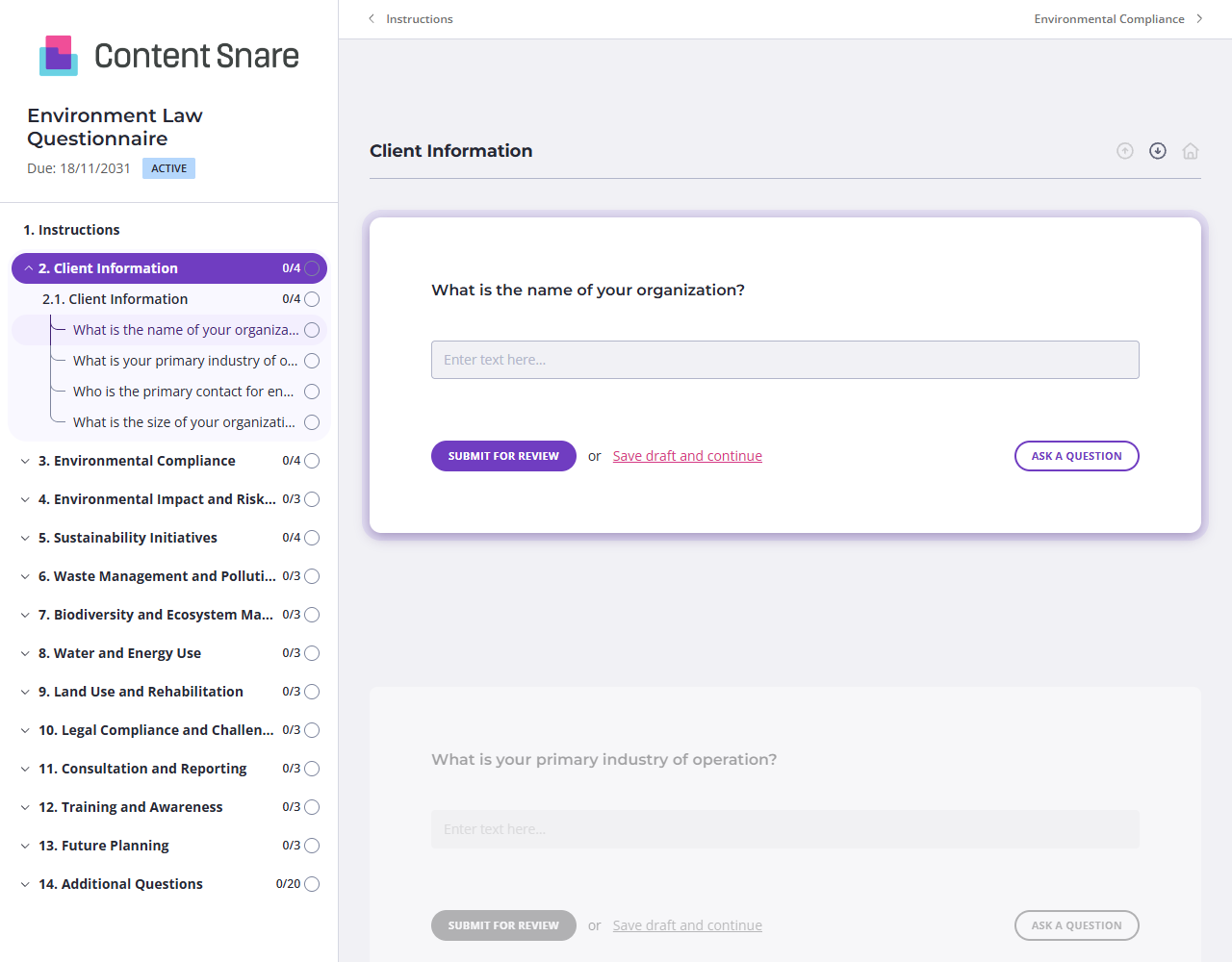
Environmental law questionnaires can overwhelm clients fast. Content Snare lets you split questions into logical pages - one for Environmental Compliance, another for Risk Management, a third for Waste and Pollution Control, and so on. Clients see one focused topic at a time instead of a massive scroll. They can save progress and return later without losing work, which matters when they need to pull data from multiple departments or dig up audit reports from last year.
Not every client needs to answer questions about biodiversity assessments or land rehabilitation. Set up conditional logic so the form adapts based on their answers. If they select "No" when asked whether they operate in areas affecting local ecosystems, skip the entire Biodiversity and Ecosystem Management section. You get cleaner data, clients spend less time on irrelevant questions, and everyone stays focused on what actually matters for their compliance profile.
Questions about permits, audit frequencies, and pollution monitoring can trip up clients who aren't environmental specialists. Use Content Snare's instruction areas to clarify what you're asking for. Under "Have you conducted any environmental compliance audits in the last year?" add a note explaining what counts as an audit versus an internal review. For permit questions, include examples or a link to relevant regulatory bodies. Clear instructions mean fewer "I'm not sure what you need here" emails and more accurate first-time submissions.
Environmental legal work is time-sensitive - missed deadlines can mean regulatory violations. Content Snare sends automatic reminders to clients who haven't completed the questionnaire, so you're not chasing them down manually. You stay the helpful advisor, not the nag. Clients get gentle nudges, and you maintain momentum on compliance assessments without adding follow-up emails to your task list.
Email threads and Word documents create chaos when you're gathering sensitive compliance information. Content Snare gives you a single, structured platform where clients fill out your environment law questionnaire, upload supporting documents, and you track progress in real time. No more digging through attachments or wondering if you got the latest version.
Security matters in legal work. Content Snare is ISO 27001 certified and trusted by thousands of businesses worldwide, including law firms handling confidential client data. Your clients' compliance records, audit reports, and risk assessments stay protected with enterprise-grade security.
Files can sync to Google Drive, Dropbox, OneDrive or SharePoint, and Zapier, Make and the API connect Content Snare to your other tools.
Content Snare has earned hundreds of 5-star reviews across G2, Capterra, and Trustpilot because it's built for exactly this: collecting detailed information from clients without the pain of follow-ups and file hunting.
This form is just one way to leverage Content Snare in your legal practice. Use it for:
The same structure that makes environmental compliance easier works across every information-heavy legal process.


