
Accounting professionals spend their careers helping others build great businesses, but only a handful ever consider using their own expertise to buy or grow a business themselves. One person who saw that opportunity early is Chris Davey, founder of Accountica and Search Fund Oz.
In our recent conversation, Chris shared how accountants can apply their analytical strengths to business buying and ownership, and how to start learning the ropes of search funds and entrepreneurship through acquisition.
Why accountants are built for buy-side work

Most professionals spend years helping clients clean up books or plan tax strategies without realizing they’re sitting on a goldmine of transferable skills. For instance, accountants already know how to read between the lines and understand what drives profit, which is priceless when you’re on the buying side of a deal. As Chris puts it:
“We see many different businesses, different industries and sizes. We’ve all dealt with clients who fell into a business that’s just really hard. Those same people, or accountants advising them, can make amazing operators in other industries that are so much easier.”
That perspective gives accountants a leg up when assessing whether a business is worth the plunge. When it comes to buy-side work, they’ve already done the heavy lifting: now it’s just a matter of turning that knowledge inward and putting their money where their mouth is.
Niching by service, not by industry
Many advisors think about niching in terms of who they serve, like SaaS, e-commerce, tradies, and so on. But Chris takes a different tack: instead of narrowing by industry, he focuses on what his firm does best. That shift in thinking turns heads and opens doors.
The niche isn’t a market - it’s a service offering built around buy-side advisory and exit optimization. In plain English, that means helping clients understand their business the same way a buyer would. As Chris explains, it’s about reverse-engineering what makes a company attractive to an investor.
Here’s how that plays out in practice:
- Look through a buyer’s lens: Identify where value is leaking and where quick wins exist.
- Close the gaps: Strengthen the weak spots buyers always flag, from documentation to recurring revenue.
- Build transferable value: Shape the business so it’s easier to sell or scale later.
According to Chris, this kind of niching is a win-win. It helps accountants move up the value chain, and it gives clients a clear picture of what “investment-ready” really looks like. At the end of the day, it’s less about picking an industry and more about designing a repeatable process.
Understanding the search fund model in Australia
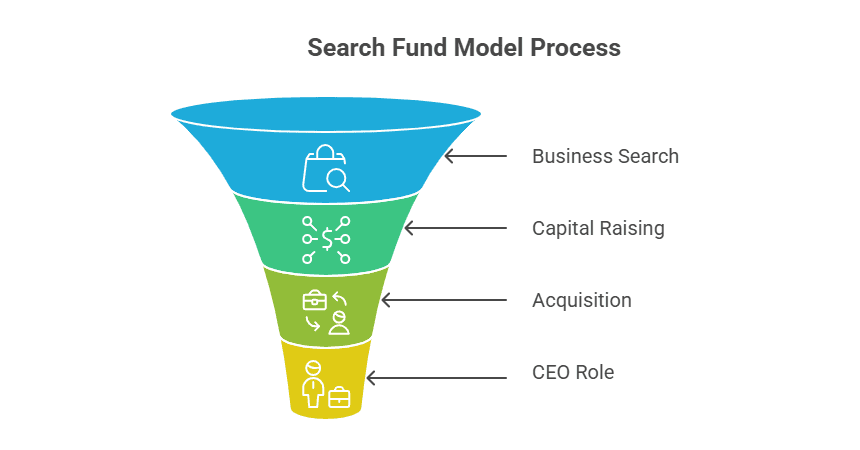
At first glance, the term “search fund” can sound like something reserved for Wall Street or MBA programs. But as Chris explains, it’s really just a structured way to buy a small, profitable business, and it’s well within reach for financially minded professionals. In his words, a search fund is “literally just a company with a fancy shareholders agreement.”
It works like this:
- An operator (the searcher) raises a small pool of funds to spend one to two years searching for a business to buy.
- Once they find the right fit, they raise additional capital from investors to acquire and run that company.
- The searcher then becomes the CEO, typically earning equity based on performance and long-term growth.
Bear in mind it’s not a get-rich-quick scheme. As Chris points out: “It's hard, it's a grind and we say grit is kind of the main attribute you could have.”
However, it’s also a path that rewards persistence and smart financial analysis, two things accountants have in spades. Think of it as turning your advisory experience into ownership, without having to reinvent the wheel.
Note: Capital is the new constraint
When the search fund model first took root in Australia, the main challenge was finding qualified operators. That’s changed, according to Chris Davey:
“The constraint’s shifted. Three years ago it was talent; now it’s capital.”
Securing funding has become the biggest hurdle with higher interest rates and investors tightening their wallets. The good news is that accountants already speak the language of trust and numbers, two things investors care about most. Building credibility early, understanding risk, and demonstrating financial discipline can make all the difference when raising capital.
In Chris’s case, that’s exactly why he launched Search Fund Oz - to pool resources and back promising searchers. It’s a practical reminder that even when money’s tight, there’s always room for professionals who know how to make every dollar pull its weight.
Accountants in buy-side advisory: Learning the ropes and finding your fit
Getting into buy-side advisory or search funds isn’t something you rush into, but rather something you grow into. As Chris often reminds new entrants, it’s best to take the time to learn the landscape before you dive in headfirst.
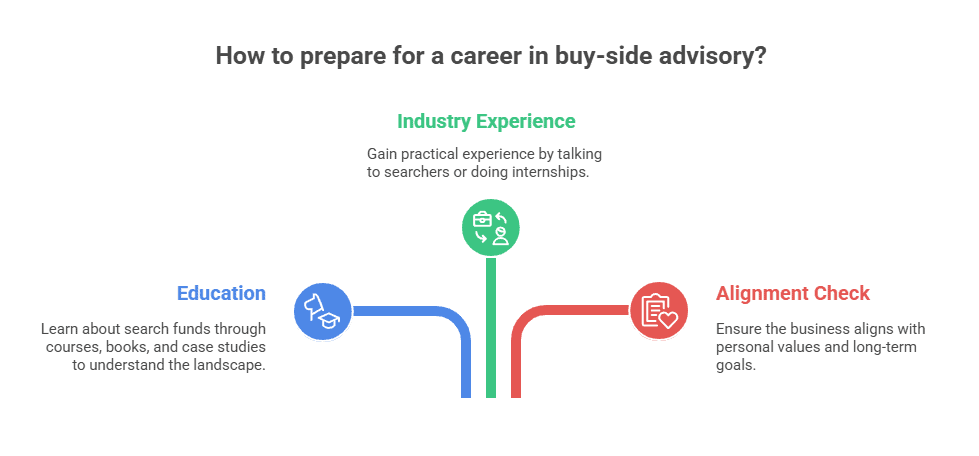
1. Start with education
The first tip is simple, and that is to learn everything you can about how search funds work. Luckily, there’s no shortage of material out there, including courses, books, podcasts, and real-world case studies. The goal isn’t to become an overnight expert, but to understand the moving parts well enough to make confident decisions when the right opportunity comes along.
2. Gain real industry experience
Once you’ve done your homework, it’s time to put theory into practice. Chris encourages newcomers to “talk to any and every searcher” or do an internship to find out what a day in the life of a searcher actually looks like.
3. Check for alignment
A deal can look great on paper but still not be your cup of tea. As Chris puts it plainly: “The numbers can make sense, but you have to ask yourself - if you’re at a networking event in two years, are you happy and proud to say you own this kind of business?” The point is to know your non-negotiables before you sign on the dotted line.
Final thoughts: From advisor to owner
Chris Davey’s journey shows that accountants don’t have to stay behind the desk - they can step into the driver’s seat. With the right mix of curiosity, patience, and grit, the same skills used to analyze a client’s business can be used to build or buy one.
At its core, this is about shifting from being the person who reports on growth to being the person who creates it. Chris sums it up like this:
“It’s not about finding the perfect business. It’s about finding one that’s good enough and making it better.”