
Accounting firms run several checks when onboarding a new client. Two of the most common are politically exposed person (PEP) checks and sanctions screening. These procedures confirm that your client isn’t subject to government sanctions and identify individuals who may require enhanced due diligence because of political exposure.
The challenge is to run the process efficiently, while keeping a clear record of the results. This article explains what PEP and sanctions checks involve and how to run them directly within the existing client onboarding workflow using Content Snare.
What is a Politically Exposed Person (PEP)?
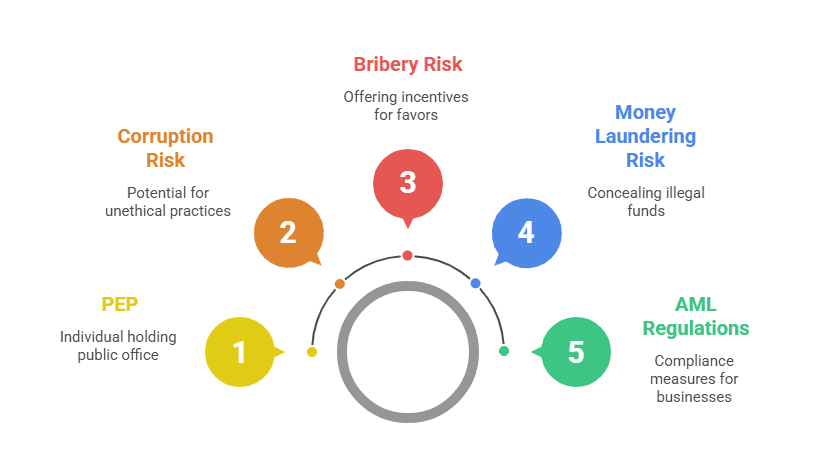
A politically exposed person, or PEP, is someone who holds - or has held - a prominent public position. PEPs are considered to present a higher risk of corruption, bribery, and money laundering because of their influence and access to public resources. For that reason, AML regulations require businesses to identify when a client is a PEP and apply additional scrutiny if necessary. Common examples of PEPs include:
- Heads of state or government
- Senior politicians
- High-ranking government officials
- Senior military officials
- Judges and senior members of the judiciary
- Central bank officials
- Executives of state-owned enterprises
Another point worth noting is that PEP classification extends beyond the individual: regulations also cover family members and close associates. This can include spouses, children, business partners, or individuals who are closely connected to the PEP.
If a client falls into any of these categories, it doesn’t mean you can’t work with them. It just means you need to do a bit more checking before proceeding, which involves gathering additional documentation and conducting more frequent reviews.
What is sanctions screening?
Governments and international organizations impose sanctions to restrict financial dealings with certain individuals, organizations, or countries. These restrictions are tied to terrorism financing, corruption, human rights violations, or geopolitical conflicts. Sanctions screening means checking whether a client appears on official sanctions lists.
Several major sanctions lists are commonly used for screening:
- Australia: Accounting practices must check the Consolidated List, maintained by the Department of Foreign Affairs and Trade
- United States: Firms typically screen against the OFAC Specially Designated Nationals (SDN) List, along with other OFAC watchlists
- United Kingdom: The Office of Financial Sanctions Implementation (OFSI) manages the UK Sanctions List
- International: The United Nations Security Council Consolidated List applies internationally
The lists you need to check depend on where your firm operates and where your clients have connections. Most screening systems combine multiple lists so the checks can run at the same time.
How to run PEP and sanctions checks using Content Snare
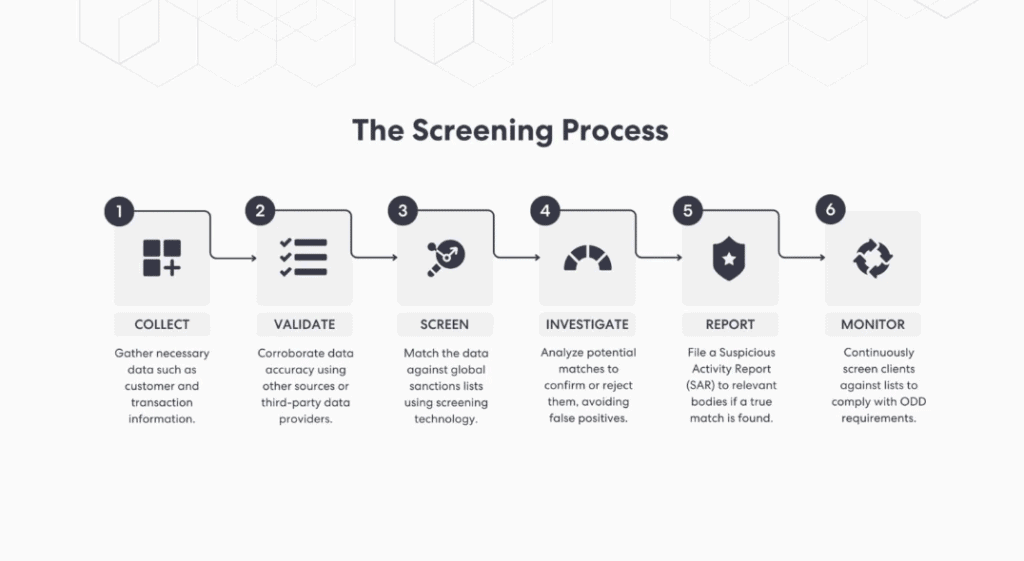
The traditional approach to screening involves several disconnected steps: collecting client details, manually searching sanctions databases, running separate PEP checks, and then documenting everything for compliance records. Content Snare makes this a lot simpler because it brings screening directly into the client onboarding workflow.
Instead of using separate systems, your accounting firm can run PEP and sanctions checks inside the same platform you already use to collect client information. Here’s how the process typically works.
Step 1: Send your client information request
Start by sending a structured request to your client. This request collects the basic details needed to begin onboarding, such as name, date of birth, and contact information.
When you’re ready to run AML checks, the built-in AML field handles the rest of the process. It guides the client through submitting identification documents and completing the required verification steps. Because the process is structured and built into the workflow, you don’t need to chase missing details or reformat data before screening.
Step 2: Run PEP and sanctions screening
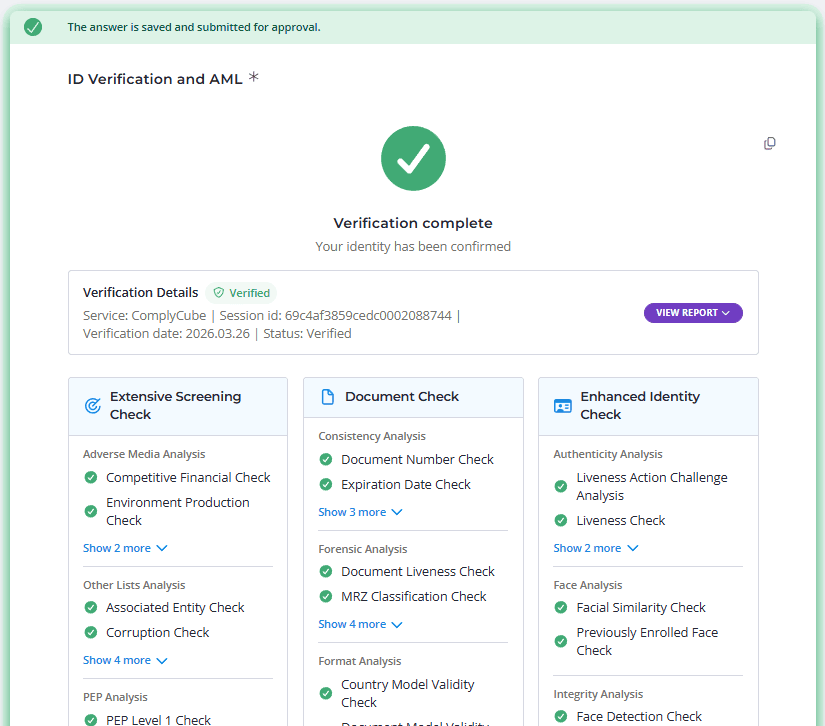
Source: ComplyCube
Once the client submits their details, screening can be run directly within Content Snare. The checks cover:
- Global PEP data across more than 250 countries and territories
- Sanctions lists and other relevant watchlists across multiple jurisdictions
The screening also includes additional checks such as adverse media and other financial crime signals, but these run in the background as part of the same process. All checks run at the same time, so there’s no need to use separate systems or manually search individual lists.
Step 3: Review matches with fewer false positives
The screening results appear inside the client request. The system uses structured matching and context to reduce irrelevant matches, so you can focus on results that are more likely to be genuine. If a potential match appears, you can review the details directly within the platform and compare them with your client’s information.
Step 4: Take action based on the results
If the client is identified as a PEP, you can proceed with additional checks as part of your normal due diligence process. If a potential sanctions match appears and is confirmed after review, you should not proceed with the engagement and should follow appropriate compliance or legal steps.
Step 5: Keep a clear record of the screening
All screening results are stored within the Content Snare request. This gives you a clear record of details like:
- When the screening was performed
- What the results were
- How any matches were reviewed or resolved
You don’t need to maintain separate records across different systems because everything is tied to the client’s request in Content Snare:
Step 6: Repeat screening as needed
PEP status and sanctions lists can change over time. Content Snare supports consistent screening as part of your onboarding and ongoing client review process, so checks can be repeated when required without rebuilding the workflow.
Handling false positives in screening
False positives are a common challenge in PEP and sanctions screening. When a client has a common name, screening systems may flag individuals with similar names who appear on watchlists. For example, a client named “Michael Smith” could trigger multiple potential matches across sanctions or PEP databases.
The key is to review the additional information associated with each match. Details such as date of birth, nationality, and location usually make it possible to determine whether the match is legitimate. Screening providers like the one used within Content Snare apply structured matching and contextual data to reduce irrelevant results, which helps limit the number of false positives you need to review.
However, it’s still important to double-check each potential match before making a decision. Even when a match is cleared as a false positive, you should document how that decision was made. This shows that you carried out proper due diligence and helps support your compliance records.
PEP and sanctions checks are only one part of client onboarding
While PEP and sanctions screening are important, they represent just one step in the broader client onboarding process. The bigger challenge many accounting firms face is simply collecting the information they need from clients in the first place.
Content Snare solves this problem: a survey shows that firms using our software spend 71% less time gathering information and see a 67% reduction in stalled projects. That’s because Content Snare manages structured requests that guide clients through exactly what needs to be submitted. In addition, the system provides a range of additional features such as:
- A library of fully editable form templates for accountants
- Automatic saving of your clients’ responses
- Automatic reminders that gently nudge clients to provide responses
- Real-time progress tracking
- Bank-level security backed by ISO 27001 certificate
You can also communicate with clients directly within each request, validate submitted documents, and keep a complete record of all information related to the engagement. PEP and sanctions screening aren’t standalone tools here - they just fit naturally into the existing workflow.
If you’d like to see how the full onboarding workflow works, you can explore the platform’s features on the Content Snare tour page.