
Many accountants dislike sales, because they associate it with pressure and uncomfortable conversations. In a recent episode of Between Two Ledgers, James Rose sat down with James Sundin, co-founder and chief evangelist at R.E.P.R.E.S.E.N.T, to discuss sales, marketing, client acquisition, and the challenges accounting firms face when trying to communicate their value.
Despite spending more than a decade helping firms grow, Sundin doesn't subscribe to the stereotypical image of sales. His approach is built around positioning and attracting the right clients, long before any sales conversation takes place. Rather than teaching firms how to become more aggressive, he focuses on helping them become more visible, more relevant, and more appealing to the businesses they actually want to work with.
The conversation covered everything from websites and networking, to client selection and sustainable growth. Here are some of the biggest lessons from the discussion.
ABOUT JAMES SUNDIN
James Sundin is co-founder and Chief Evangelist at R.E.P.R.E.S.E.N.T, a global group helping accounting and bookkeeping firms win, deliver, acquire, automate and exit. He's spent 16 years in sales and marketing, from knocking on doors to global teams, and is also a trained chef.
Great sales starts before the first conversation

According to James, a lot of firms jump straight into lead generation before they've established the foundations needed to convert those leads into clients. They invest in networking, advertising, or SEO without first thinking about what prospects see when they search for them online. His view is that prospects should already have a positive impression of a firm before they ever make contact.
"Let's enrich that client as to who we are, the value that we can provide, the energy that we have. It's only after they get a good energy about who we are, can we then be like: 'Here's our credibility, and most importantly, here's the social proof.'"
That means making sure websites, LinkedIn profiles, case studies, testimonials, and client success stories all work together to demonstrate expertise and build trust. Sundin believes too many firms focus on talking about services rather than showing how they've helped businesses solve real problems.
The firms that do this well make it easier for prospects to self-qualify and arrive at a conversation already convinced they're speaking to the right people. As he explains, that's how firms can effectively win clients before they've even spoken to them.
Most firms don't need more clients, they need better clients
One of the most interesting parts of the conversation was Sundin's argument that client acquisition isn't usually the biggest problem facing accounting firms. In his experience, many accounting practices have plenty of work, but continue accepting clients who are difficult to serve, don't pay on time, or create unnecessary stress.
"The problem with firms is they have no problem winning clients, but they're winning the wrong clients."
Rather than focusing exclusively on growth, James encourages firms to define exactly what an ideal client looks like and then build their marketing, onboarding, and sales processes around attracting more of those businesses.
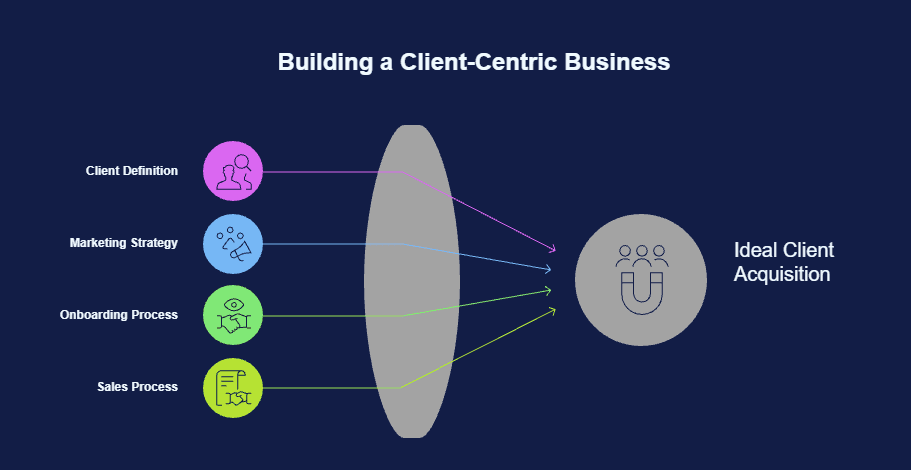
That often means making difficult decisions about who no longer fits. He argues that replacing poor-fit clients with better-fit ones can improve profitability, reduce workload, and create a much better experience for both the firm and its team.
Sometimes growth isn't the answer
Sundin also challenged the common assumption that every accounting firm should constantly pursue growth. He described working with firms that already have healthy revenue, strong profits, and financial security, yet still believe they needed more clients because growth felt like the default goal. Instead, he encourages firm owners to ask what they're really trying to achieve.
"Do you need more clients, or do you actually need more time in life to do things outside of work?"
The answer for some firms isn't adding more work at all. It might be improving margins, streamlining operations, reducing complexity, or removing problematic clients that consume disproportionate amounts of time and energy.
Win better clients
Customise a ready-made form and send your first request in minutes.
Find where your ideal clients already are

When firms do want to generate more business, James recommends keeping things simple.
Rather than trying every available marketing tactic, he advises firms to identify where their ideal clients spend their time and focus on a small number of channels they can execute consistently.
"Find out where your clients hang out, and look at the channel that you're most confident in. Then commit to two channels, but be consistent with them."
For some firms, that might mean attending industry events. For others, it could be LinkedIn, partnerships, direct outreach, content creation, or speaking opportunities. The key is not trying to do everything at once.
Sundin also offers a straightforward way to discover where ideal clients spend their time: ask the clients you already enjoy working with. By speaking directly to existing customers, your practice can learn where they consume information, how they choose advisors, which communities they belong to, and what influenced their buying decisions in the first place.
"Your existing clients know the answers to every problem or every question that you could have. Go and speak to them."
Those conversations often provide more valuable marketing insights than any external research project.
Good sales feels nothing like selling
Throughout the discussion, Sundin repeatedly returned to the idea that great sales isn't about pressure, persuasion tricks, or clever scripts. It comes down to understanding problems and communicating value clearly.
One concept he highlighted was "indifference": not in the sense of not caring, but in the sense of not desperately needing every prospect to become a client. That mindset allows firms to focus on whether a client is genuinely a good fit rather than trying to force a sale.
"The best salespeople are like, 'Yeah, I can help with that. Here's who else I do it for.'"
In his opinion, clients only care about the outcome your services create. That is why he spends so much time talking about client stories, social proof, positioning, and understanding customer problems. When firms can clearly communicate those things, sales conversations become far less about selling and far more about confirming a decision the prospect is already inclined to make.
For accountants who dislike the idea of sales, that may be the most useful takeaway from the entire conversation: the best sales process often feels less like selling and more like helping the right people understand why you're the right fit.