
It starts small. For instance, a client emails asking whether they should classify a purchase one way or another, or they text on a Sunday because something on their BAS doesn't look right.
None of it looks like work because it looks like a favour. And most firm owners answer it that way too, because saying no to a two-line email feels petty, and because the client genuinely isn't trying to take advantage. They just don't know where the line is, because nobody's ever shown them one.
The usual advice is to fix this with billing: charge for everything and tighten the engagement letter. However, that only treats the symptom. The real issue is that scope was never made visible in the first place, so here's how to set it at the start, decide what's actually billable, and say no without losing the client.
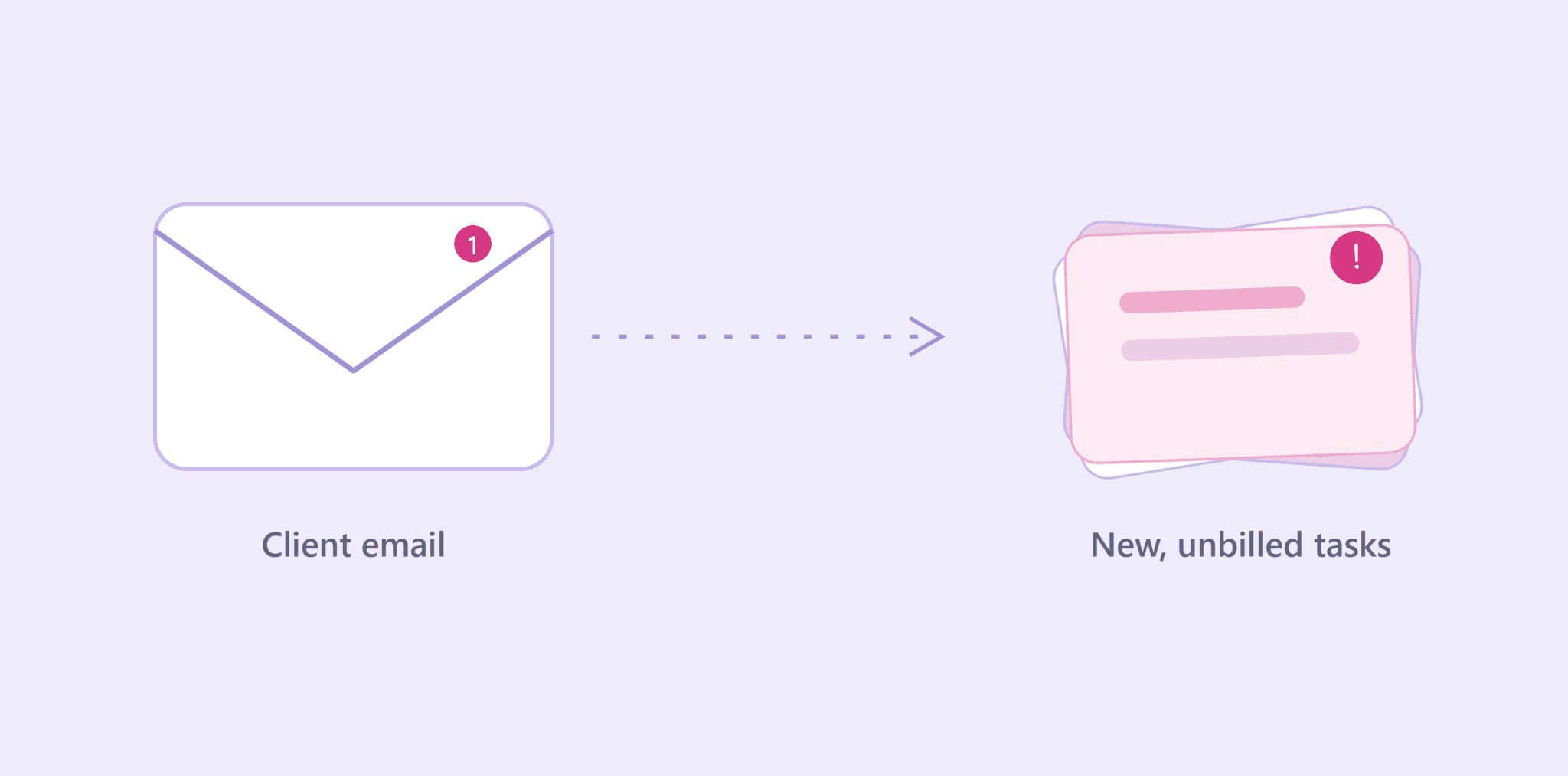
Two reasonable people with two very different ideas of what "quick" means
Scope creep’s a mismatch with both sides having a fair case. Search any accounting forum and the same tension keeps surfacing, in slightly different words each time:
- Accountants: How do you actually charge for the random one-off questions clients send between engagements?
- Accounting clients: Is it normal to get billed for a single follow-up email, or does that seem excessive?
From the firm's side, none of this feels unreasonable. Fifteen quick questions in a month add up to real unbilled hours, even if no single one felt worth mentioning. From the client's side, a short email rarely feels like billable work either, because they’re unaware of the context. So when a fee shows up for what felt like a two-minute exchange, the reaction is shock, sometimes loud enough to end up online, with someone publicly asking whether a few hundred dollars for a single email was fair.
Both reactions make sense, so what can you do about it?
Before getting to what actually works, it's worth looking at the fix most firms try first, and why it never quite closes the gap.
Charging for everything doesn't fix the problem, it just moves it
The standard fix for scope creep is almost always a billing fix, such as bill in fifteen-minute increments or charge for every email that isn't a one-word reply. It's sound advice as far as it goes, and most firms eventually adopt some version of it.
The trouble is that none of it touches the reason the question showed up in the first place. A client doesn't send a "quick question" because they're trying to get free advice out of you. They send it because, from where they're sitting, nothing marked that question as work. There was no moment at onboarding, or since, where the line between "included" and "billable" was ever drawn. So when the invoice shows a new line item for it, it doesn't read as fair.
That’s why billing rules are a downstream fix for an upstream problem. They control what happens after the question lands, but they do nothing to change what the client believed was included when they picked up the phone. Until scope is visible before the question gets asked, tighter billing just changes where the friction shows up.
Make scope visible before the first invoice ever goes out
None of this gets easier by hoping clients read the engagement letter closely. Most don't, and even the ones who do forget the details within a month. Scope has to be visible in the moment it matters, not buried in a document signed once and never opened again.
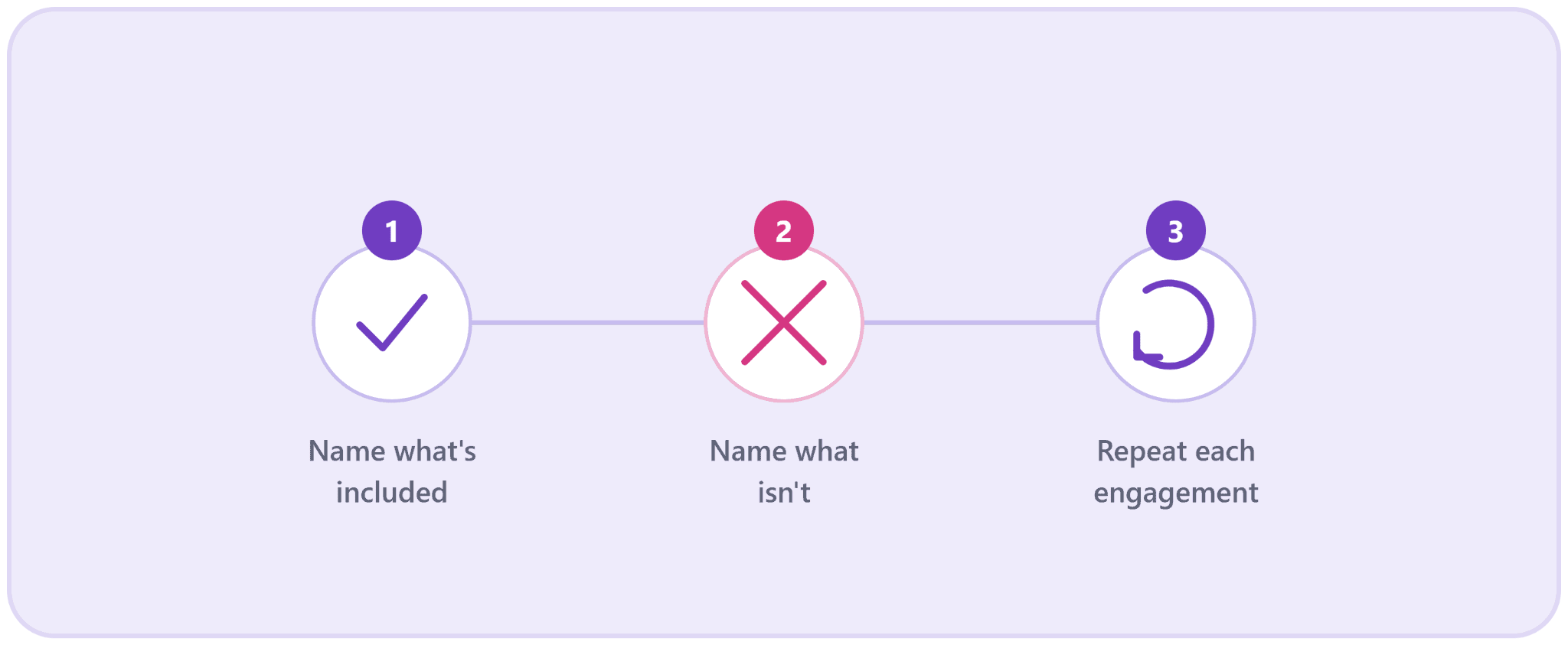
That starts at onboarding, and it doesn't need to be complicated:
-
Name what's included, plainly
Skip the legal phrasing. Tell the client, in one or two sentences, what's covered under their current fee: bookkeeping, quarterly reviews, tax lodgement, whatever applies.
-
Name what isn't, just as plainly
Advisory calls, one-off strategy questions, anything needing research: say upfront that these sit outside the base fee, and roughly what they cost when they come up.
-
Repeat it at each new engagement
Scope resets with every new project or year, not just once at signup. A short reminder at the start of each engagement keeps it current instead of something the client half-remembers from twelve months ago.
Keep in mind that this doesn't stop quick questions from happening - clients will always have questions, which is fine. What it does is make sure that when one crosses into billable territory, it isn't a surprise to either side, because the line was drawn before anyone needed it.
Draw the line once, with a small allowance and one clear rule
Another thing worth noting is that you don’t need to bill for every single interaction or absorb them for free. The point is to define, in advance, where a quick reply ends and billable work begins while giving clients a small amount of room before that line kicks in.
Two things do most of the work here. The first is a defined ad-hoc allowance: a set amount of advisory time built into the engagement each month or quarter, so low-maintenance clients aren't being charged for the odd short question. The second is a simple, consistent trigger: a quick reply is free, but anything that needs research, calculation, or a proper look at the file gets quoted first.
That one distinction covers almost every situation that used to feel like a judgement call.
Scripts that redirect without sounding like a rejection
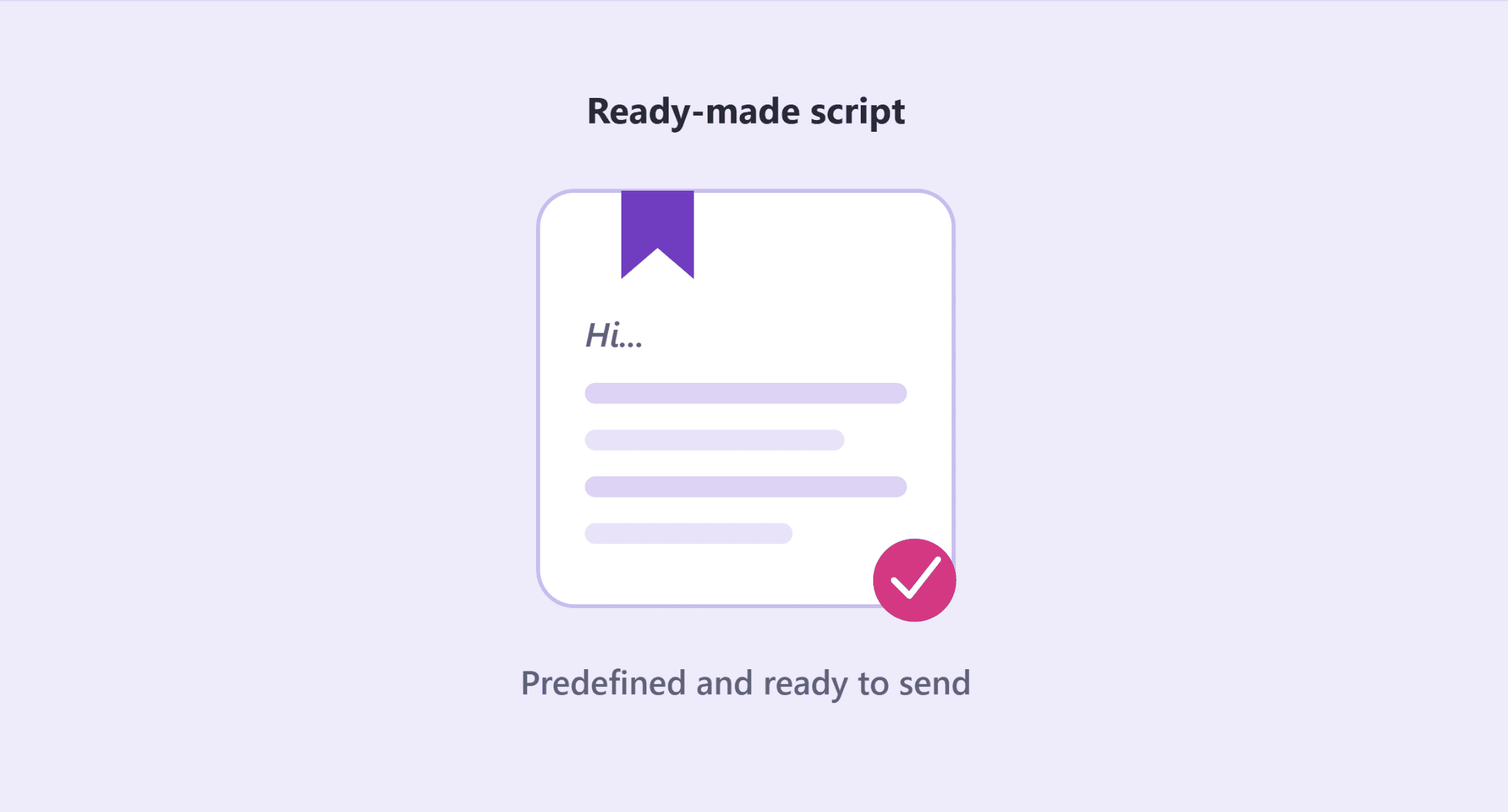
Having the rule isn't enough if it's never actually said out loud. A short and polite reply does more to protect the relationship than a stiff policy line ever will:
- Good question. That one's quick, happy to answer it now, no charge.
- That's a bit bigger than a quick answer, it'll need a proper look at your file. I'll put a quote together and get it back to you today.
- Since this touches on [X], it's outside what's covered in our current agreement. Want me to scope it and send a quote?
None of these say no. They just make the line visible in the moment, which is exactly what was missing before.
Keep the channel working in your favour
Where a question lands changes how easy it is to manage. A text message invites an instant, off-the-cuff reply. A booking link or an email invites a considered one. Small shifts here go a long way: keep the mobile number off client-facing signatures, route non-urgent questions to a booking link instead of a call, and let email be the default channel rather than the exception.
This isn't about being harder to reach. It's about being reachable in a way that leaves room to apply the rule instead of reacting on the spot.
A structured request can do most of this work for you
This doesn't require new software to work, but the right structure helps. When a request for information is scoped clearly from the start, a client can see exactly what's being asked for and why, so a follow-up question is less likely to turn into an open-ended thread.
And when questions do come up, keeping them attached to the actual request, rather than scattered across texts and after-hours emails, makes it far easier to see what's a quick reply and what actually needs a proper look.
That's the kind of structure Content Snare is built for: a client fills in one scoped request instead of a loose back-and-forth, and any questions they raise stay attached to that request rather than drifting into a text thread or an inbox. That's really the throughline of this whole piece.
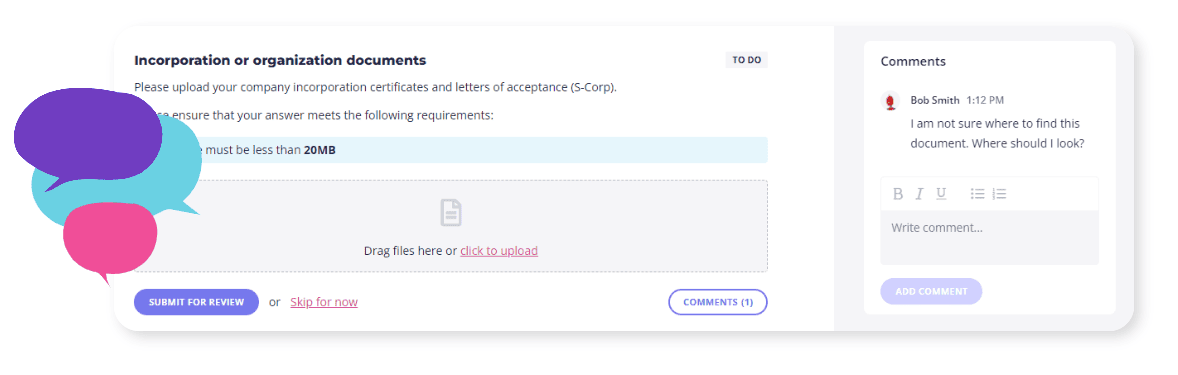
Content Snare allows clients to ask questions when they get stuck
You don’t solve scope creep with a stricter invoice. The only way to do it is by making the shape of the work visible before anyone has to guess at it.
Stop the quick questions
Send a structured request that shows clients exactly what's included, so follow-up questions stay attached to the job instead of your inbox.