
AI isn’t just knocking on the door of accounting firms: it’s already halfway through the front office. According to a study by Thomson Reuters Institute, more than 50% of tax and accounting companies see automation as an investment priority that will help them improve workflows. But when it comes to implementation, many practices still aren’t quite sure what to do with it.
The real question is: Are your processes ready for it? Or will you just end up automating chaos?
That’s exactly what we unpacked with Marco Fiumara at this year’s Content Snare AI & Automation Summit. In this post, we’re sharing his step-by-step framework for preparing your firm to use AI the right way - by fixing what’s broken first.
Marco Fiumara is the Director and Co‑Founder of Cimplico, where he leads the development of Cimplico Workpapers, a cloud-based workpaper solution designed specifically for accounting firms. A QUT graduate with over a decade of industry experience, Marco specializes in aligning software tools with real-world workflows to boost efficiency, visibility, and control in firms of all sizes.
Why your firm needs a process-first automation strategy
It’s tempting to see AI as a silver bullet: just plug it in and you’ve just bought back 10 hours a week. However, AI tech can’t save a broken process. In fact, it’ll just make the mess happen faster. This results in more errors and more time spent fixing things that shouldn’t have gone wrong in the first place. Marco Fiumara’s tip is simple but powerful:
“Tech works best when it enhances a well-designed process. If you automate before fixing, you're just speeding up waste.”
That’s why it’s highly recommended to embrace a process-first automation approach, one that forces you to slow down, ask better questions, and make sure what you're trying to fix actually needs automation.
Related: Accounting automation software: Industry experts reveal their favorites
5 steps to evaluate and implement AI and automation in your accounting practice
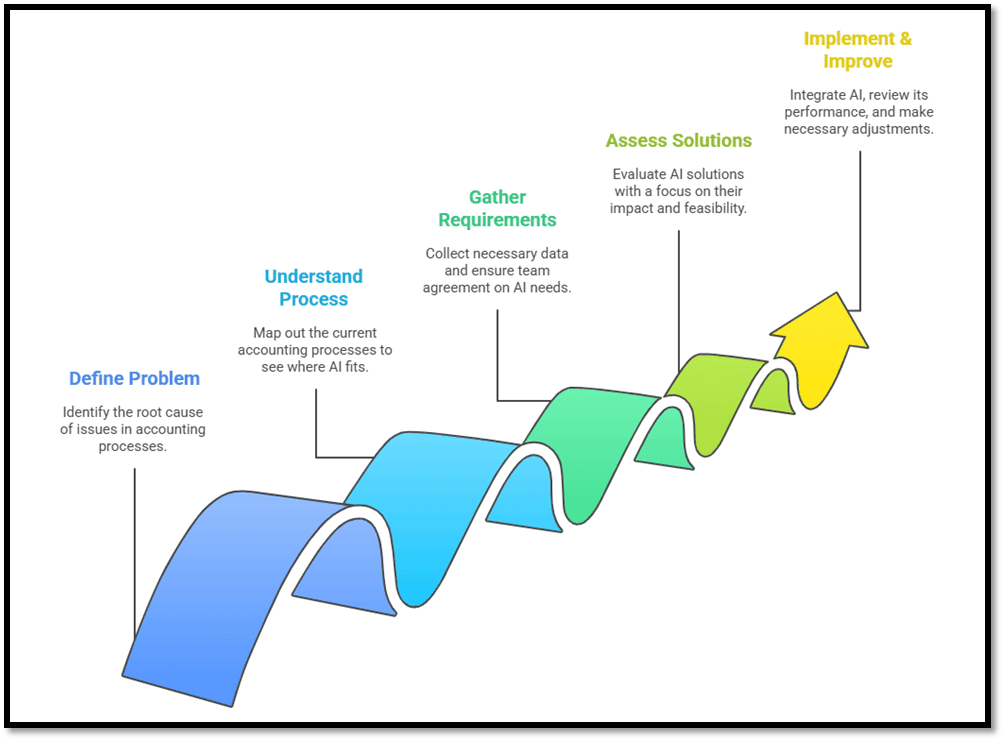
AI and automation provide tremendous potential to improve accounting workflows. But without a clear framework, firms risk adopting technology for its own sake, solving the wrong problems or even creating new ones. These five practical steps will help you take a methodical and outcome-driven approach to automation.
Step 1: Define the real problem (not just the symptom)
Before evaluating tools or sketching out a solution, pause and ask: What are we actually trying to fix here? Too often, firms get caught up in surface-level complaints like “this task takes too long” or “the workflow is frustrating,” but the root cause remains unknown.
To dig deeper, keep asking the “why” question until you reach the foundational issue. That’s why this step ends with a clear, no-fluff problem statement. One sentence, specific and actionable.
Here's an example of a clear and no-fluff problem statement: “Our client onboarding process takes an average of 12 days due to repeated email follow-ups and missing documents.”
This kind of statement is:
- Specific (focuses on onboarding delays)
- Measurable (12 days on average)
- Actionable (points to where the breakdown happens - email and document gaps)
With a statement like this, your team knows exactly what success looks like: reducing onboarding time by addressing communication gaps.
Related: How to get the client onboarding process right
Step 2: Understand where the process lives in your business
Another thing to do before diving into automation is to understand where a process fits within the bigger picture of your firm. It’s not just about what the task is, it’s about its function and relationship to other operations. One useful framework is Marco’s Three Capability Types, which helps categorize processes based on their role in the business:
- Strategic: These are high-value, advisory-level tasks that require human insight and judgment. Think tax planning or business consulting. These aren’t suited for automation because their value lies in deep thinking and relationship building.
- Core: These are high-volume, rules-based processes that follow consistent patterns. They’re time-consuming but structured, which makes them ideal candidates for automation. Think bank reconciliations and invoice processing.
- Supporting: These are internal operations that keep your practice running but don’t directly serve clients, such as timesheets, scheduling, and admin. These processes often benefit from either outsourcing or lightweight automation.
Let’s apply this to a common area: client onboarding. The act of collecting client documents and chasing missing information is a core process because it’s repetitive, rules-based, and necessary to move forward.
Automating this part using a tool like Content Snare makes sense because it streamlines data collection, without sacrificing accounting client experience. It automates communication, tracks request status, autosaves progress, and guides clients through the form, all while freeing your team from the admin burden. This is how one of our clients described their very first Content Snare experience:
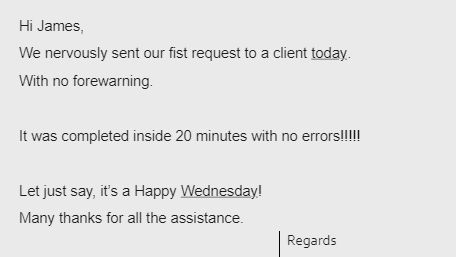
When paired with clever AI-driven workflows, these kinds of targeted automations can quietly eliminate bottlenecks and give your team more space to focus on higher-value work.
Step 3: Gather requirements (and get team buy-in early)
The next step is to define what success looks like by capturing both functional requirements (what the tool needs to do) and non-functional requirements (how well it needs to do it). In essence, functional requirements include things like form logic, API integrations, or task automation. On the other hand, non-functional ones cover aspects like speed, usability, scalability, and security.
When AI is involved, there are a few extra factors to account for early on:
- Input quality: Poor inputs lead to poor outputs, so make sure your data is clean and consistent.
- Transparency of AI decisions: Can you explain why it made that choice to a client or regulator?
- Error handling: What happens when the AI gets it wrong? Who’s responsible for catching and correcting it?
Equally important is looping in the right people from the start. This includes the process owners (who understand the day-to-day), leadership (who shape strategy), and implementers (who make the change happen). As Marco Fiumara put it:
“Without trust and understanding from the people who work with this, people will resist it — they’ll find ways to work around the automation. So buy-in isn’t just approval. Buy-in is building trust, ensuring adoption, and setting things up for long-term success.”
Simply put, buy-in lays the groundwork for long-term adoption.
Step 4: Assess solutions with the right lens
With your problem clearly defined and your requirements mapped out, it’s time to look at potential solutions. However, resist the urge to jump straight into shiny new software: many firms already have tools in place that are underused, misconfigured, or simply not understood well enough to be effective.
Before adding to your tech stack, we encourage you to audit what you’ve already got. You might be sitting on functionality that solves the problem without a single extra subscription.
When you do start comparing options, use a structured approach like a decision matrix. This helps remove bias and emotional decision-making by scoring tools based on objective criteria such as functionality, ease of use, cost, vendor support, integration potential, risk, and scalability.
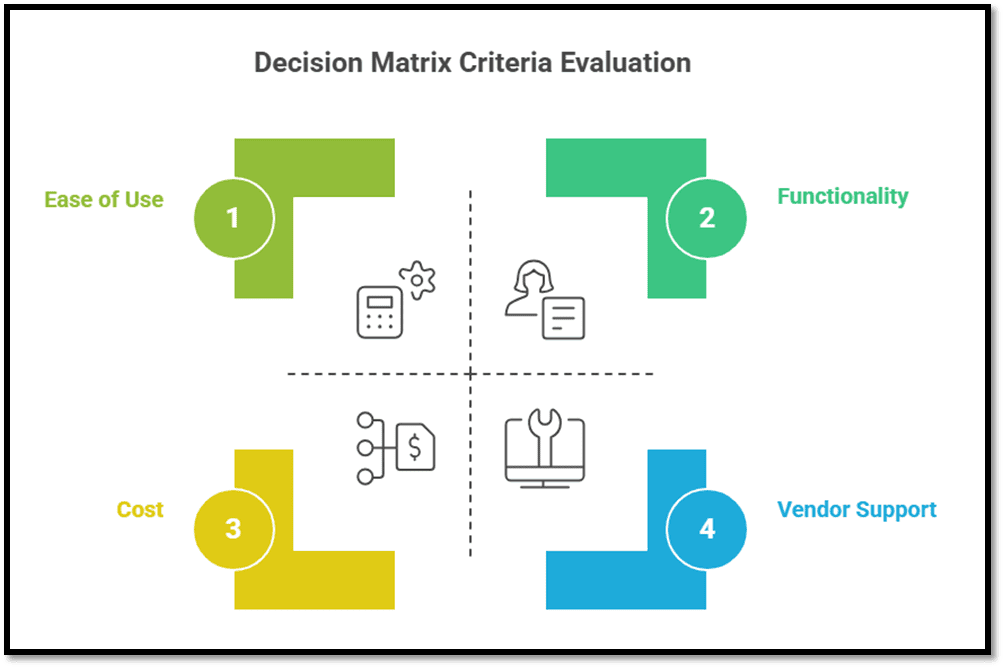
The decision matrix is a simple but powerful way to bring clarity to what can often become a tech popularity contest.
Step 5: Implement and improve
Once the automation is live, your job isn’t over - it’s just shifted. Now’s the time to return to your original problem statement and ask the most important question: Did this actually fix it? If the issue still lingers, or new pain points have surfaced, that’s your cue to dig deeper and adjust.
One common challenge is automation drift, where the original process slowly changes over time, but the automation doesn’t keep up. Beware of this issue: if the automation stays static, it risks becoming outdated or even counterproductive.
That’s why we encourage you to build in regular checkpoints. For instance, you can capture user feedback and check in with process owners to see how the automation is performing in the real world, not just on paper.
Wrapping up
The bottom line is that AI and automation hold immense potential, but they’re not magic wands. The real transformation happens when you take advantage of technology to amplify what already works. The firms that win with AI won’t be the fastest adopters, but rather the ones who built the strongest foundations first.