




Last Updated April 10, 2026
In a recent episode of Between Two Ledgers, James Rose sat down with Meryl Johnston to talk about building an accounting business that’s designed to support real life. Meryl, co-founder of Bean Ninjas and a co-founder at TeamUp, shares why recurring revenue and systems mattered more than being busy, and what changed once kids brought fixed routines into the mix.
The thing that stands out is how honest the conversation is about the messy middle: pricing experiments that didn’t work and the constant need to delegate and refocus when urgent tasks start crowding out what’s important. In this post, we pulled out the most useful takeaways from the episode, the kind you can apply even if you’re not chasing a four-hour workweek.
| About Meryl Johnston Meryl Johnston is an accountant and business owner known for designing firms around lifestyle, flexibility, and long-term sustainability, with a focus on systems, remote teams, and recurring revenue models. |
Working backwards from an ideal lifestyle

The business didn’t come first for Meryl Johnston: life did. Long before thinking about growth targets or service lines, she was focused on what she wanted her days to look like. Her main goal was flexibility, and the freedom to move things around without constantly asking permission from a calendar packed with client work.
Related: Creating a memorable accounting brand - Expert lessons from building businessDEPOT
That thinking shaped the way Meryl approached building her firm from the start. Instead of chasing busyness or trying to fill every hour, she was more interested in creating a structure that would give her control over her time. In her own words, the early motivation was simple and very personal:
“I just wanted to have flexibility in my schedule so that if the surf was gonna be good at 10:00 AM then I didn’t have something on my calendar and I could go surfing.”
It wasn’t about doing less work for the sake of it. The purpose was to enjoy the option of prioritizing what mattered outside the business without everything falling apart.
Scale over busyness
Meryl understood that staying busy wasn’t the same as building something sustainable. That’s why she avoided filling her days with client work, and focused on creating a model that could grow without depending entirely on her time. That meant prioritizing recurring revenue, building a client management system early, and thinking about how a team could eventually take over delivery. It wasn’t a fully formed plan on day one, but there was a clear direction:
“The original goal was to build this to seven figures, work a 20 hour work week.”
Of course, the path to that kind of model involved a lot of experimentation. Some ideas worked, others didn’t, while pricing in particular took time to figure out. Early on, the team leaned heavily into productization, testing simple packages and seeing what the market would accept.
Learning by testing (and getting it wrong)
Those early experiments were useful, but not always practical. The goal was to make services feel as easy to buy as software, with clear tiers and predictable pricing, but some of those early decisions simply weren’t sustainable.
“When we launched our website, we had three pricing tiers on the website, and one of them was bookkeeping for $99 a month. Do not do that. That was a terrible idea.”
Over time, those lessons helped shape a more realistic approach: raise prices and focus on services that could be delivered consistently by a team. The entire process required a lot of testing, learning quickly, and adjusting course before getting stuck on a path that didn’t scale.
How Meryl stepped back without disrupting the business
One of the most obvious signs that the model was working came later, when Meryl began gradually stepping away from the day-to-day operations. It was something she had planned for years, and she did it by building a team and gradually replacing herself in the parts of the business that once depended entirely on her.
According to Meryl, this process took time. Names were penciled into roles on an org chart long before those roles were actually filled, and each hire moved the business one step further from being founder-dependent. Her involvement changed along the way, moving from full-time leadership to a more strategic and part-time role focused on accounting firm marketing and partnerships.
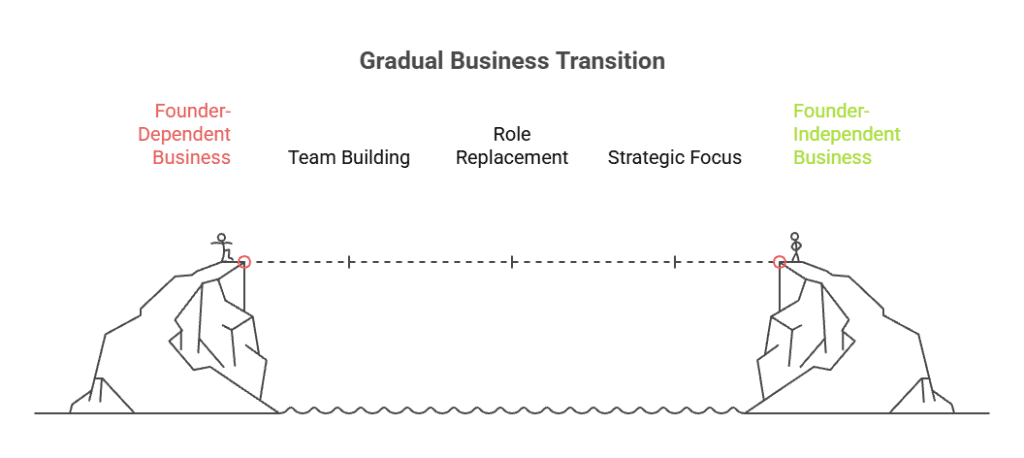
What made the transition work was the same discipline that shaped the early years: investing in people, documenting systems, and trusting others to take ownership. Over time, the business became less about one person carrying the load and more about a structure that could keep adapting and growing on its own.
Stay aligned with what matters
Meryl adds that lifestyle design isn’t something you set once and forget, even if you build the right structure and the right team. As life changes, so do priorities. For instance, kids bring fixed routines while new projects create new demands. Opportunities that look exciting on paper can slowly start pulling time away from the things that mattered in the first place.
Meryl spoke openly about how easy it is to drift: you take on one more responsibility, then another, and before long the calendar starts to fill up again. That’s when she finds it’s time to pause and ask a simple question: does this still match the kind of life I’m trying to build?
Sometimes the answer means delegating more, but sometimes it means cutting things entirely. Either way, it’s a reminder that building a lifestyle-first business is less about one big decision and more about regularly recalibrating. It’s all about creating days that feel intentional and sustainable over the long run. As Meryl put it:
“I don’t wanna feel like I have to have a holiday from my life. I just wanna enjoy every day and not be rushed in the morning, be outside, surf, chat with friends, enjoy family, and then have fun, interesting work.”
Related: How to automate your firm the right way with Isaac Perdomo
