
The day-to-day reality of client onboarding is time-pressured, while compliance expectations continue to rise for accounting firms. According to the 2024/25 ICAEW supervisory report, only 19% of firms were assessed as fully compliant, while 20% were classified as outright non-compliant. This goes to show how difficult it is to build a consistent client verification process.
However, there’s a tool that removes a lot of friction in this area: a Know Your Client (KYC) checklist for accountants. It’s a simple document that makes every client go through the same verification steps. In this post, we’ll show you a checklist template that makes compliance a repeatable part of accounting client onboarding, so you don’t need to do it differently each time.
Ready-made KYC checklist for accountants

A well-structured KYC checklist helps accounting firms collect key documents while establishing an understanding of who they are working with.
Related: How Liston Newton Advisory achieved a 50% efficiency boost with Content Snare
Besides that, it will protect your firm with a repeatable process that reduces risk and improves compliance. With that said, let’s explore a practical KYC checklist accountants can use during onboarding.
Identity verification tasks
The first set of tasks confirms that your client is who they claim to be. The goal is to protect your firm from fraud and make sure you have accurate personal details before any work starts.
- Request government-issued photo ID (passport or driver’s license)
- Confirm full legal name and date of birth
- Verify residential address using a utility bill or bank statement
- Confirm phone number and email address
Business verification tasks (for business clients)
These steps help you understand the legal structure and key people behind a company.
- Collect company registration documents
- Confirm registered business address
- Identify directors and key decision-makers
- Verify beneficial ownership details
- Request tax identification numbers
Risk assessment tasks
The following checks evaluate whether your client presents any compliance or reputational risks. If you document risk factors upfront, you can quickly spot unusual changes later.
- Determine nature of the client’s business activities
- Identify the source of funds and income streams
- Screen for politically exposed persons (PEPs)
- Check for sanctions or high-risk jurisdictions
- Document any potential compliance concerns
Engagement readiness tasks
These items make sure you have the right information, so you can avoid possible delays.
- Confirm services requested and expected scope
- Collect prior accountant details (if applicable)
- Request authorization to communicate with tax authorities
- Gather historical financial records and tax filings
- Document internal risk rating for the client
The importance of a standardized KYC checklist for accounting firms
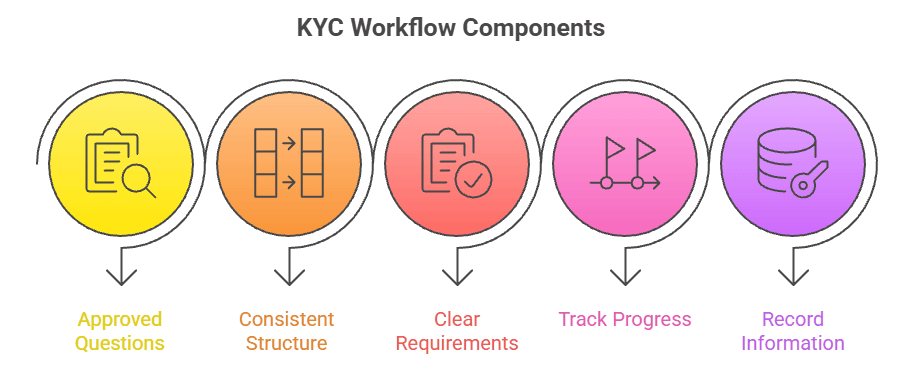
Many accounting practices already have some version of a KYC checklist, but it’s often loosely followed, mainly due to scattered files or non-consistent workflows. The real value comes from standardizing the process because it guarantees that every team member follows the same steps every time. This means a KYC workflow should:
- Use approved question sets and document requests
- Follow the same structure across all clients
- Make it clear what is required before work begins
- Track progress and completion status
- Create a record of collected information
This approach reduces confusion for your staff and your clients. It’s also likely to prevent scope creep, where additional requests get added informally.
How Content Snare helps accountants manage KYC checklists
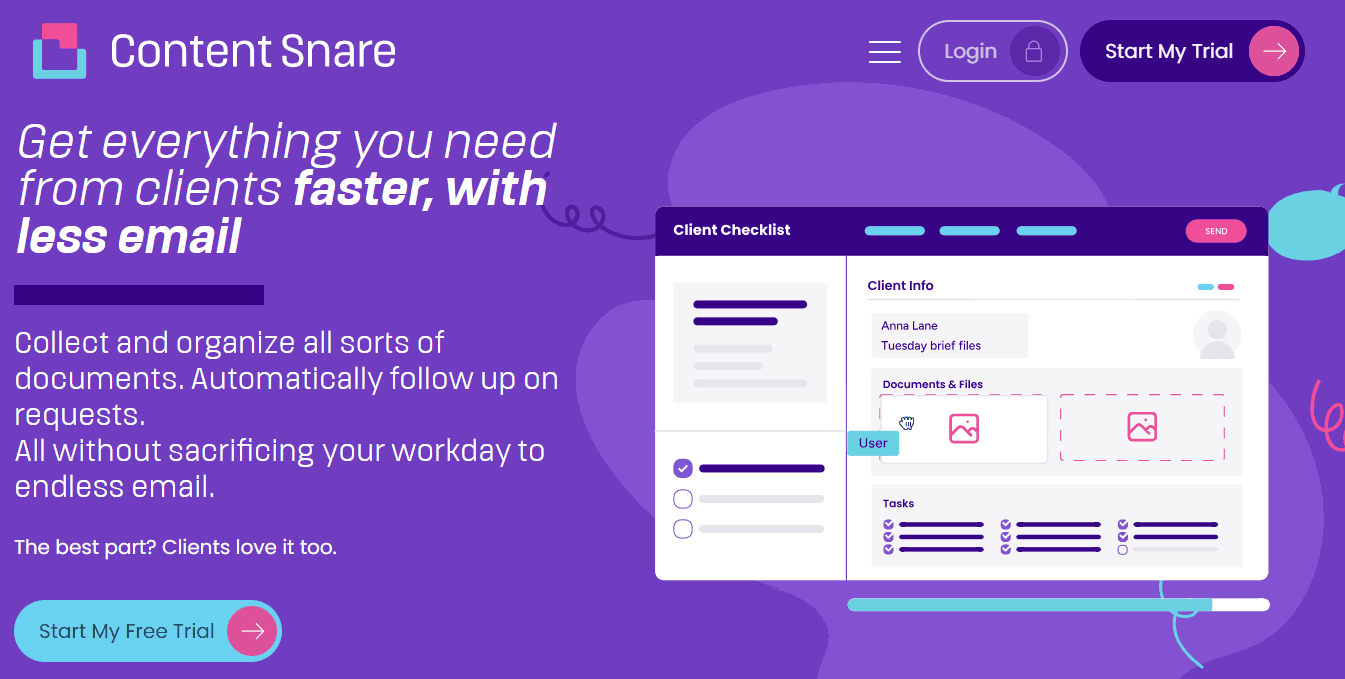
Turning a KYC checklist into a structured client workflow can drastically improve onboarding success. Content Snare enables accounting practices to:
- Build reusable templates from KYC checklists
- Send structured information requests to clients
- Automatically remind clients about missing items
- Track progress in real time
- Maintain a clear record of what was provided
Over 1,600 firms globally use Content Snare. More importantly, businesses using Content Snare report spending 71% less time gathering information, reducing data gathering costs by 77%, and seeing 67% fewer stalled projects. The platform is also ISO 27001 certified, which makes it a secure choice for collecting sensitive client information.
Turn your checklist into structured requests with automatic reminders and a clear audit trail.
FAQs
What documents are typically required for KYC checks?
Common KYC documents include government-issued identification, proof of address, company registration documents, ownership details, and tax identification numbers. The exact requirements depend on whether the client is an individual or a business, and they can also vary based on local regulatory expectations.
What else can Content Snare do for accounting firms besides managing checklists?
Content Snare supports a range of accounting workflows through built-in questionnaires and a secure client portal software for both sending and receiving files. Firms use it for client onboarding, ATO/client-agent linking, ethical clearance, tax preparation intake, PBC requests, tax planning questionnaires, new company or trust setups, and ongoing compliance data collection.