
Pull the timesheet from your last new client, if you tracked one. Rest assured it's not pretty.
You're reconciling opening balances that don't tie out, chasing down why last year's trial balance doesn't match what the client swears is right, and figuring out which of their three "final" P&Ls is actually final, all before you've touched a single billable engagement task.
Here's the reframe. You're not being onboarded by the client, you're onboarding them, and that one shift in framing is what makes the whole thing your scope to define and your work to price, the same as a cleanup or a catch-up.
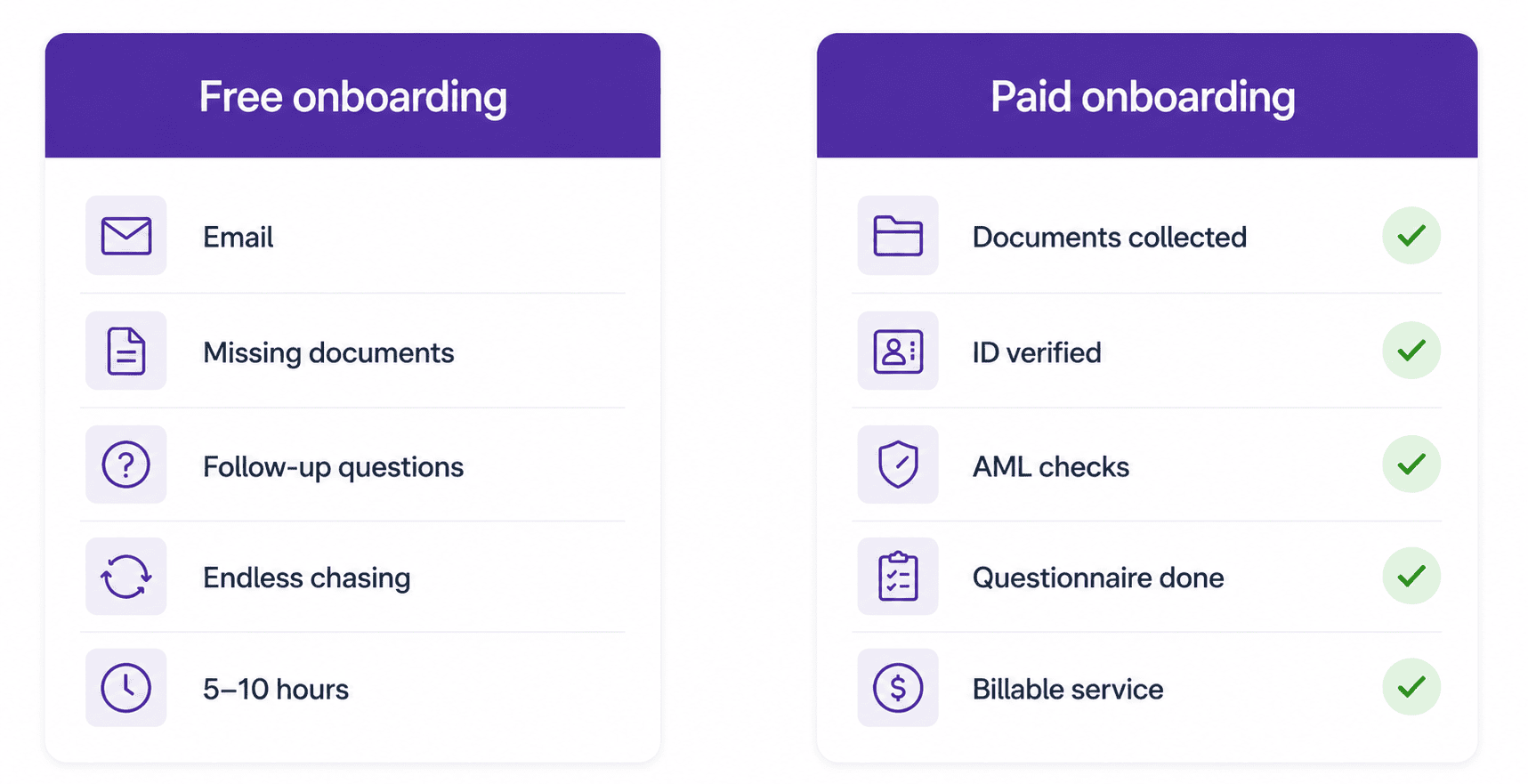
Why charge for onboarding
Skip the fee and you haven't skipped the cost. You've just decided to eat it. Ask around and you'll hear some version of the same regret from practitioners who've been through it - they gave away far more free onboarding than they ever meant to before they started charging for it.
- The maths is already against you. First-year clients carry lower realisation than an established file, so free onboarding stacks a second discount on top of one you're already absorbing without noticing.
- A visible fee filters for commitment. Even a modest one does real work here, especially on heavier onboarding like a cleanup, separating people ready to commit from people still collecting quotes.
- The "I'll lose clients" fear rarely plays out. Plenty of firms report adding a fee with little pushback, and the difference usually comes down to framing it as a deliverable, not an admin surcharge.
The best part is that none of this requires charging a fortune. It just requires charging something, on purpose, instead of by accident.
Tranche 2 changes the calculus
Another detail worth noting: from 1 July 2026, Tranche 2 of the AML/CTF reforms flipped the usual order of operations for accountants and bookkeepers. You verify identity and collect customer due diligence information before you provide the service, not after, and that's not optional. It's genuinely new work, per client, and someone has to absorb the cost of doing it properly:
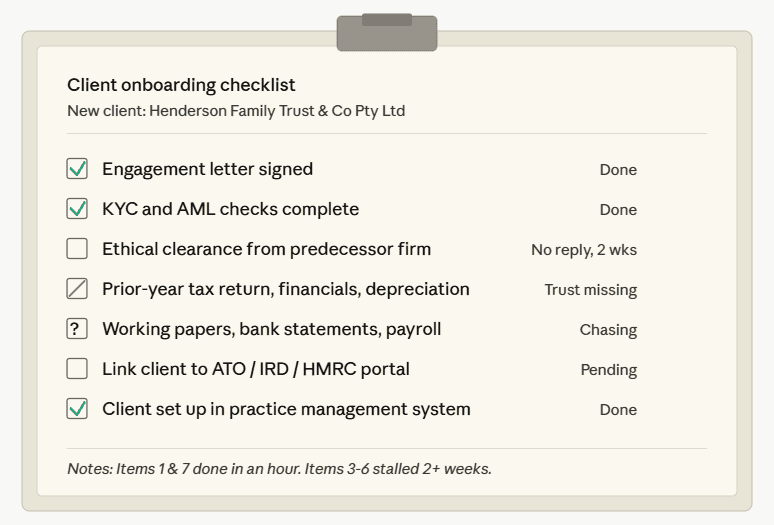
Some firms are getting quoted four figures a month by compliance specialists and understandably baulking at the number. For most small and mid-sized practices, the more sensible path is software that folds ID verification and information collection into the onboarding process you're already running, rather than layering on a separate compliance product.
The real question isn't whether to charge for this. It's how you recover the cost of work you now have to do regardless.
Here's the nuance worth sitting with, though: the usual "a fee filters tyre-kickers" logic doesn't map cleanly onto AML. A client only goes through identity verification once, at the point they've accepted your proposal, so they're not shopping the AML step around three competing firms the way they might shop a quote.
That makes bundling the cost into your overall engagement price the natural default for most firms. A separate, visible AML line item is still a legitimate, transparent choice, just not the obvious one the way it is for something like a genuine cleanup.
Related: Accounting client onboarding: A working guide for tax and audit firms
How to charge for client onboarding: Three models
There's no single right answer here, and reasonable firms land in different places depending on how heavy their onboarding actually is. Three approaches show up most often in practice.
1. Bake it into the price
No separate line item, no extra conversation. The first invoice, or the year-one fee, simply runs a bit higher to account for the setup work behind it. This is the lowest-friction option of the three, and it's the natural home for AML and CDD costs specifically, since clients only go through identity verification once, at the proposal stage.
2. Charge a separate onboarding fee
This might be a flat setup charge, or something framed as "the first month's fee, plus a bit." It's the most transparent of the three models, and it works best when onboarding is genuinely substantial: a messy-books cleanup, a full migration off another system, anything with real, visible effort behind it.
3. Run a paid, creditable diagnostic
Offer a free discovery call, then a paid scoping or diagnostic session that gets credited back against the engagement if the client goes ahead. If they don't, they still walk away with something useful, a roadmap for whoever picks up the work next. This suits messy situations where the scoping itself is real effort, and where you want a natural filter for who's serious.
None of these is correct on its own. What matters is choosing one deliberately, instead of defaulting into free onboarding because nobody ever sat down and decided otherwise
Cutting out the back-and-forth with Content Snare
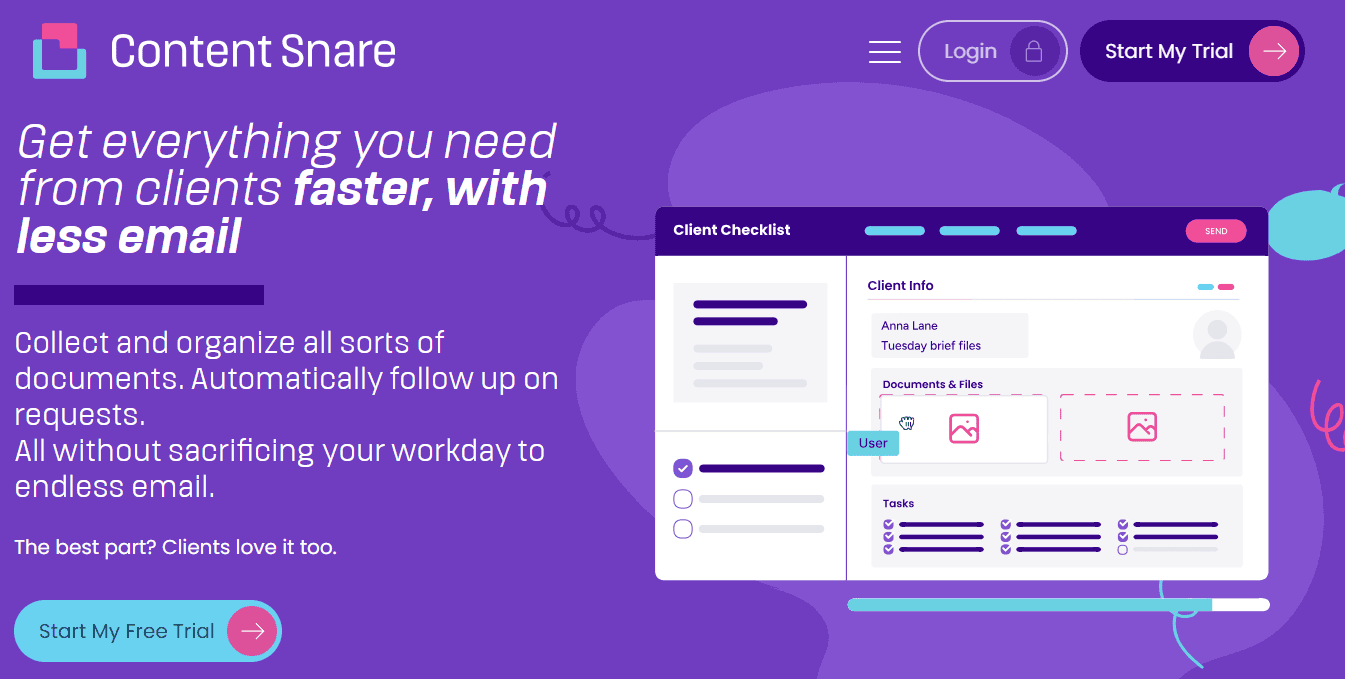
Whichever model you land on, the thing that actually makes onboarding expensive isn't the pricing decision. It's the chasing. Rounds of emails, half-answered questionnaires, documents trickling in one at a time over three weeks instead of arriving in one go. The fix is to collect everything in a single structured request, including identity verification, CDD information, and your onboarding questionnaire, all at once, with no work starting until it's all in.
That's the model Content Snare is built around, and for firms working through Tranche 2, it's not aspirational. Content Snare includes built-in PEP and sanctions screening alongside identity verification, so the AML piece sits inside the same request as everything else, not bolted on as a separate compliance product.
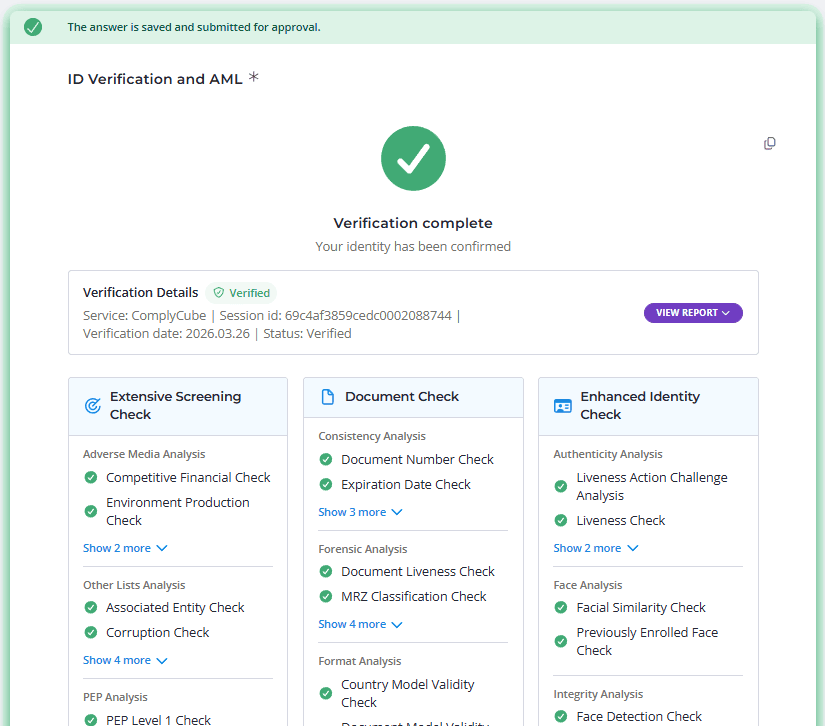
Jacqui Trumper, a Content Snare customer, runs onboarding exactly this way: documents, onboarding information, and ID verification collected at the same time, no back-and-forth, and no work beginning until every question is answered. If you want more on the AML side specifically, here's a closer look at the Tranche 2 changes, along with pieces on structuring KYC onboarding.
Sign up for a 14-day free trial to explore how Content Snare can streamline your Tranche 2 compliance workflows.
Charge for the work you're already doing
You're already doing this work. That was true in the first paragraph and it's still true now. The only real decision left is whether you keep doing it for free by accident, or price it on purpose.
Bake it in, break it out, or run it as a credited diagnostic. The model matters less than the decision itself. Pick one deliberately, and if you're using Content Snare to run the collection side of onboarding, that decision gets a lot easier to act on, since the pricing conversation and the process itself stop competing for your time.